Tanzania Prisons Service unveils nationwide drive for food self-sufficiency
Commissioner of Rehabilitation Services (CRS) at the Tanzania Prisons Service, Ms Amina Kavirondo, speaks to journalists in Dodoma on Wednesday, April 29. 2026. PHOTO | KATARE MBASHIRU
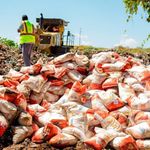
Dodoma/Morogoro. The Tanzania Prisons Service (TPS) has launched an ambitious nationwide agriculture and livestock programme aimed at achieving full food self-sufficiency across all prisons by July 1, 2026, a move expected to significantly cut government expenditure while strengthening inmate rehabilitation.
The initiative, which spans multiple regions, is part of a broader strategy to ensure prisons produce enough food to sustain their populations, with surplus output directed to commercial markets to support national food security.
The Commissioner of Rehabilitation Services (CRS) at TPS headquarters, Ms Amina Kavirondo, said the programme is firmly embedded in the institution’s rehabilitation framework, equipping inmates with practical, income-generating skills while preparing them psychologically for reintegration into society.
Speaking to journalists in Dodoma on Wednesday, April 29, 2026, ahead of a media tour of project sites in Morogoro, Iringa, Dar es Salaam, and Mbeya, Ms Kavirondo said the initiative follows a directive from the Commissioner General of Prisons (CGP), Jeremiah Katungu.
“The projects seek to implement our bold plan to become self-sufficient in feeding prisons nationwide, with surplus food entering the market to ease the government’s burden and contribute to national food security,” she said.
She added that the programme prioritises the production of key crops such as maize, rice, legumes, and sunflower, the latter supporting edible oil production.
Beyond food supply, the initiative is designed to equip inmates with agricultural skills that will enable them to sustain themselves upon release, thereby reducing the likelihood of reoffending.
At Mbigiri Agriculture and Livestock Prison in Morogoro Region, significant progress is already underway.
Prison Warden and Assistant Commissioner of Prisons, Mr Dominic Kazimili, said the facility is spearheading a large-scale sugarcane farming project in partnership with Mkulazi Holding Company Limited (MHCL).
The project aims to produce 4,000 tonnes of sugarcane this season, with an ambitious expansion plan targeting 1,000 hectares and an output of 20,000 tonnes in the next cycle.
“This project supports national efforts to ensure sufficient sugar supply while strengthening rehabilitation programmes for inmates nearing the end of their sentences,” said Mr Kazimili.
In addition to crop farming, Mbigiri Prison manages over 1,500 livestock, including cattle, sheep, and goats, further enhancing its self-reliance strategy.
The facility is also advancing a biogas project that utilises animal waste to generate clean cooking energy, aligning with national environmental goals championed by President Samia Suluhu Hassan.
Biogas expert, Mr Gadson Manase, said the project is currently 70 percent complete and that once finalized, it is expected to fully power the prison’s cooking needs.
Meanwhile, at Kiberege Agriculture Prison, large-scale rice farming is gaining momentum.
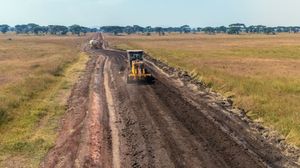
The facility spans 5,980 hectares, with 2,500 hectares allocated for agriculture.
Prison Warden Senior Superintendent, Mr Abasi Mikidadi, said 480 hectares were cultivated during the 2025/26 season, with plans to expand to 1,500 hectares in the next planting cycle.
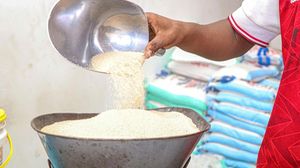
“From July 1, 2026, we do not expect to rely on external suppliers for rice, as we will have sufficient production to meet our needs,” he said.
Mr Mikidadi emphasised that the farming activities not only support inmate rehabilitation but also benefit surrounding communities, which increasingly depend on the prison for quality seedlings and agricultural knowledge.