Relief for adolescent girls and young mothers who dropped out of school

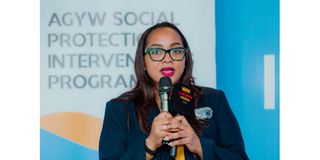
Executive Director of the Doris Mollel Foundation, Ms Doris Mollel. PHOTO | FILE

Dar es Salaam. It is a relief for adolescent girls and young women who dropped out of formal education due to various challenges, including pregnancy, after the Doris Mollel Foundation rolled out plans to implement a programme aimed at supporting their return to school across 47 councils in 15 regions.

The six-month project, funded by the Global Fund, will also support survivors of gender-based violence by linking them to safe houses, while helping reintegrate teenage mothers and other out-of-school girls back into the education system.

The foundation said the initiative will also encourage selected councils to become model areas in the provision of sanitary towels to schoolgirls.

These developments were shared on April 28, 2026, during a stakeholder working session that brought together government officials and partners to discuss implementation strategies, expected impact, and sustainability of the project after donor funding ends.

Opening the meeting, Ministry of Health Monitoring and Evaluation Officer, Paul John, said the government recognises and values the contribution of development partners in HIV and other health-related interventions.

“This intervention is critical for child protection. As the Ministry of Health, we recognise that adolescent girls remain behind in addressing HIV infections and are among the most affected groups,” he said.

He added that without strong protective measures for girls, national development would be at risk, stressing the need for coordinated interventions. He also welcomed plans to strengthen safe houses for survivors of violence.

From the President’s Office – Regional Administration and Local Government (PO-RALG), Social Welfare Officer Elias Masangora said adolescent girls and young women remain highly vulnerable due to exposure to risky behaviours and life challenges.

He noted that although the government has already issued guidelines allowing pregnant girls to return to school, community awareness remains low, making the intervention timely.

“Through these 47 councils and 15 regions, we will reach a large number of beneficiaries. This project will help ensure that girls who drop out due to pregnancy are supported to return to school,” he said.

Principal Social Welfare Officer from the Ministry of Community Development, Gender, Women and Special Groups, Sara Sanga, said the government is working closely with shelter operators, with 426 registered care homes and 19 safe houses currently in place.

She added that the government, with support from the World Bank, is also constructing 10 additional safe houses and welcomed the Doris Mollel Foundation’s focus on vulnerable children.

Christian Social Services Commission (CSSC) Project Manager, Dr Karugira Rweyemamu, said the project is timely and addresses both education disruption and HIV prevention among adolescents.

He said the initiative targets teenage girls and young women across Tanzania, focusing on returning school dropouts—especially those who left due to pregnancy—and providing safe shelter for those in unsafe environments.

“This project comes at the right time. While progress has been made in reducing new HIV infections, adolescents remain a high-risk group,” he said.

Dr Rweyemamu added that the programme will help provide long-term solutions for adolescent health and education, giving them renewed hope for a better future.

Doris Mollel Foundation Executive Director, Doris Mollel, said the organisation has been holding more than four annual forums bringing together over 100 organisations to address youth challenges.

She said the foundation’s new six-month Global Fund-supported project will focus on re-enrolling teenage mothers into school, supporting vulnerable girls, and advocating for access to affordable, girl-friendly services, including sanitary products.

“This project will restore hope to girls whose education has been interrupted. Safe houses will also play a key role in preserving the dignity of vulnerable girls,” she said.

According to data released earlier this year by the Institute of Adult Education Director General, Professor Philipo Sanga, about 13,000 girls aged between 13 and 21 who dropped out of secondary school due to various reasons, including pregnancy, have re-enrolled in school.

The girls have returned through the Secondary Education Quality Improvement Project – Alternative Education Pathway (SEQUIP-AEP), which began in 2022.