Tanzania rescues 160 from trafficking, 57 suspects arrested
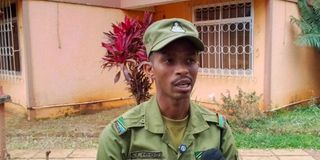
Police Gender and Children’s Desk officer, Corporal Seleman Kova, explains measures being taken to prevent human trafficking during a two-day training aimed at strengthening law enforcement officers’ capacity to prevent human trafficking, protect victims, prosecute offenders, and work with communities to end the practice held in Morogoro on Thursday, July 9, 2026. PHOTO | HAMIDA SHARIFF
Morogoro. The government rescued 160 Tanzanians between July 2025 and February 2026 after they were trafficked to various destinations within and outside the country for illegal, exploitative, and inhumane work, including sexual exploitation.
The victims included 96 women, four men, and 60 children, with 34 rescued outside Tanzania after being taken abroad and forced into different forms of labour.
An investigations officer from the Secretariat for Preventing and Combating Trafficking in Persons, Mr Daniel Zawadi, made the revelation on Thursday, July 9, 2026, while opening a two-day training aimed at strengthening law enforcement officers’ capacity to prevent human trafficking, protect victims, prosecute offenders, and work with communities to end the practice.
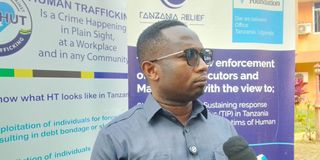
Secretariat for Preventing and Combating Trafficking in Persons investigations officer, Mr Daniel Zawadi, speaks to journalists on the government’s strategies to combat human trafficking during a two-day training aimed at strengthening law enforcement officers’ capacity to prevent human trafficking, protect victims, prosecute offenders, and work with communities to end the practice held in Morogoro on Thursday, July 9, 2026. PHOTO | HAMIDA SHARIFF
Mr Zawadi said human trafficking was a global challenge, adding that Tanzania had implemented various measures, including strengthening the capacity of institutions responsible for enforcing anti-trafficking laws.
He said the government had arrested 57 suspects linked to human trafficking, with investigations and prosecution processes ongoing.
"To ensure victims of this trade are protected, the government has established safe houses where they are kept while their cases are being handled in court,” he said.
“It has also established a centre for receiving all reports related to human trafficking. Through various stakeholders, communities have also been educated to understand that the practice is a crime like other offences," stressed Mr Zawadi.
Hanns Seidel Foundation monitoring and evaluation specialist Raphael Ami said the organisation had supported efforts to combat human trafficking through various projects funded under Tanzania Relief Initiatives.
However, he said public awareness of human trafficking remained low, with some communities unaware that certain actions amounted to criminal offences.
Mr Ami said the government and other stakeholders needed to intensify public education campaigns targeting different groups.
Tanzania Relief Initiatives board member, Mr Jones John, said the training brought together magistrates, lawyers, police officers, immigration officials, social welfare officers, and civil society organisations because they work closely with communities and are responsible for enforcing laws.
He said the training aimed to equip participants with knowledge and skills on systems, policies, and regulations established nationally and internationally to combat human trafficking.
Some participants from the police gender and children’s desk and the judiciary said communities were still not fully aware of human trafficking offences, calling for more education to help people identify, prevent, and report cases promptly while cooperating with authorities to ensure offenders face justice.