Dar es Salaam. Tanzania’s fast-expanding economy is driving a sharp rise in demand across key sectors, with transport and logistics emerging as one of the country’s fastest-growing industries.
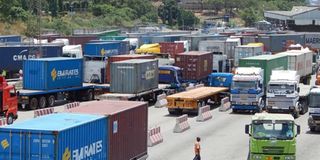
The country now requires an estimated 15,000 lorries annually to support increasing activity in trade, construction, mining and infrastructure development, placing Tanzania among Africa’s most dynamic lorry markets, second only to South Africa.
The demand is projected to continue rising in line with ongoing economic expansion and large-scale public and private sector investments.
Speaking during a business networking event with European investors in Dar es Salaam, Tanzania Investment and Special Economic Zones Authority (TISEZA) Director General Gilead Teri said Tanzania is positioning itself as one of Africa’s most attractive investment destinations.
He said the government is actively encouraging both local and international investors to tap into opportunities in transport, logistics, manufacturing, infrastructure, mining, tourism and urban development.
“The demand for lorries in Tanzania is 15,000 every year, and it is growing. It is one of the strongest markets on the continent, second only to South Africa, and it is not slowing down,” Mr Teri said.
He urged investors not to delay entering the Tanzanian market, saying the current growth trajectory presents a rare window of opportunity.
“If you are looking to invest or expand your business, this is the time. When you hesitate, someone else is already taking the opportunity. We are seeing growth in almost every sector,” he said.
Mr Teri said the surge in lorry demand reflects the pace of economic expansion, driven by major infrastructure projects, rising regional trade, industrialisation and the modernisation of ports and transport corridors.
He added that unlike many African economies dependent on a single commodity, Tanzania benefits from a diversified economic structure.
“Agriculture contributes around 20 to 25 per cent of GDP, mining about 10 per cent, tourism continues to grow, and rapid urbanisation is creating opportunities across multiple sectors,” he said.
He noted that Tanzania is among the few African countries with more than 10 regions each hosting over one million people, a demographic trend that is accelerating demand for housing, retail, manufacturing, banking, logistics and social services.
“Urbanisation means opportunities exist in almost every sector,” he added.
According to Mr Teri, investors from different regions are already positioning themselves in Tanzania’s expanding economy.
“Investors from Asia are focusing on manufacturing, Europeans are investing in tourism, while Canadians and Australians are active in mining and extractives,” he said. “This is a market with opportunities for everyone.”
He called on the private sector to work more closely with government institutions in shaping policies that improve the business environment and attract further investment.
“You are the ones in the market every day. You understand the realities better than we do sitting in offices and meetings,” he said.