Tanzania’s Masauni endorsed as UNEA-8 vice president
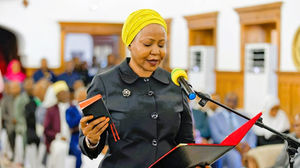
Deputy Minister of State in the Vice President’s Office (Union and Environment), Dr Festo Dugange (left) who represented the minister during the UNEA-7 discussions in Nairobi. PHOTO | COURTESY
Josephine Christopher is a senior business journalist for The Citizen and Mwananchi newspapers
Mwananchi Communications Limitted
What you need to know:
The endorsement followed the formal nomination process for the new UNEA Bureau
Nairobi. Tanzania’s Minister of State in the Vice President’s Office (Union and Environment), Mr Hamad Masauni, has been endorsed as one of the eight vice presidents for the eighth session of the United Nations Environment Assembly (UNEA-8).
The endorsement followed the formal nomination process for the new UNEA Bureau, which assumes office at the close of UNEA-7 at the United Nations Environment Programme (UNEP) headquarters in Nairobi.
Under UNEA rules of procedure, a new president, eight vice presidents and a rapporteur are elected at the end of each session.
For UNEA-8, the African Group was allocated two vice-presidential positions, both filled through endorsed nominations.
Mr Masauni will serve alongside Libya’s minister of Environment, Mr Ibrahim Alarabi Munir, as the two vice presidents representing Africa.
Jamaica’s Mr Matthew Samuda is set to assume the UNEA-8 presidency, having been endorsed by the Group of Latin American and Caribbean States (GRULAC).
Other vice presidents endorsed include Fiji’s Mr Mosese Bulitavu and Sri Lanka’s Mr Dammika Patabendi from the Asia-Pacific Group; Georgia’s Ms Nino Tandilashvili and Hungary’s Ms Anikó Raisz from the Eastern European Group; Saint Kitts and Nevis’ Ms Joyelle Clarke representing GRULAC; and Germany’s Mr Jochen Flasbarth from the Western European and Others Group. Switzerland’s Mr Felix Wertli is set to serve as rapporteur.
The new Bureau will steer preparations for UNEA-8, scheduled for December 6–10, 2027, including agenda-setting and negotiations on global environmental priorities.
Mr Masauni’s endorsement is expected to strengthen Tanzania’s profile in multilateral environmental diplomacy, particularly on climate action, pollution and biodiversity.
UNEA-7 concluded with the adoption of 11 resolutions, three decisions and a ministerial declaration addressing the triple planetary crisis of climate change, biodiversity loss and pollution.