Tanzania seized over 1,000 tonnes of narcotics in 2025, recorded drop in cannabis seizures
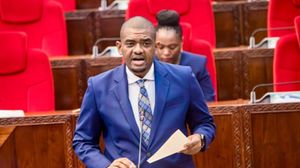
The Minister of State in the Prime Minister’s Office responsible for Policy, Parliament and Coordination, Professor Palamagamba Kabudi, briefs journalists on the 2025 report on narcotic drugs in the country in Dodoma on Friday. On the right is the Commissioner General of the Drug Control and Enforcement Authority, Aretas Lyimo. PHOTO|SAID KHAMIS.
Dodoma. Tanzania has recorded concrete progress in the fight against drug trafficking and abuse following intensified nationwide enforcement operations and strengthened regulatory measures.
The Minister of State in the Prime Minister’s Office (Policy, Parliamentary Affairs and Coordination), Professor Palamagamba Kabudi, told journalists in Dodoma on May 29, 2026, that the country’s anti-narcotics drive delivered measurable results in 2025 through enhanced implementation of national strategies aimed at reducing the supply and demand for illicit drugs, mitigating their social and health impacts, and strengthening cooperation at national, regional and international levels.
He said authorities seized a total of 1,074.72 tonnes of narcotic drugs during operations conducted across various regions in 2025. The haul included 1,014.06 tonnes of cannabis, 26.36 tonnes of khat, 3.20 tonnes of skunk cannabis and 29.52 tonnes of kratom, a newly identified psychoactive substance derived from the Mitragyna speciosa plant.
Prof Kabudi noted that although cannabis remained the most commonly seized drug, the volume confiscated fell by 55.97 per cent compared with 2024. He attributed the decline to the destruction of cannabis plantations in 2024, tighter enforcement measures, and expanded public awareness campaigns targeting cultivation communities.
He further disclosed that authorities intercepted a new narcotic substance, kratom, in Dar es Salaam, where 29.52 tonnes were seized after being imported disguised as fertiliser. Subsequent investigations confirmed the substance was a controlled narcotic.
Seizures of khat increased by 42.88 per cent compared with 2024, a rise the minister linked to strengthened surveillance and enforcement, particularly along border points and established trafficking routes.
The government also stepped up inspections at customs checkpoints, transport terminals, courier services, and firms handling precursor chemicals and controlled medicines to prevent diversion into illicit markets.
As a result, authorities seized 31.76 tonnes and 183.5 litres of precursor chemicals, alongside 2.36 kilograms and 160 millilitres of controlled medicines.
On enforcement, Prof Kabudi said 1,124 drug-related cases were filed in courts in 2025, while 1,373 cases were concluded, with the State securing convictions in 1,058 cases. He added that assets worth more than Sh3.3 billion linked to drug offences were confiscated.
Beyond enforcement, the government expanded treatment and rehabilitation services for people affected by drug dependence. A total of 85,425 individuals received treatment through mental health units in regional and zonal referral hospitals, methadone-assisted treatment clinics, and sober houses nationwide in 2025.
Public education campaigns were also intensified through community outreach programmes, schools, and media platforms, reaching an estimated 25 million people during the year.
Kabudi said Tanzania had strengthened cooperation with local and international partners through intelligence sharing, capacity building, and joint operations targeting trafficking networks.
He said the government would continue working with stakeholders to eliminate drug trafficking and abuse, commending institutions involved in enforcement and rehabilitation efforts, and stressing that coordinated action remains central to sustained results.