Dar es Salaam. The United Nations Development Programme (UNDP) Tanzania has signed Memoranda of Understanding (MoUs) with nine higher learning institutions aimed at strengthening graduate employability, practical skills development, innovation, and career readiness among young people across the country.
The agreements, signed on May 28, 2026 in Dar es Salaam, formalise and expand collaboration between UNDP Tanzania and the institutions through student-focused programmes, innovation initiatives, strategic dialogue, and enhanced institutional engagement.
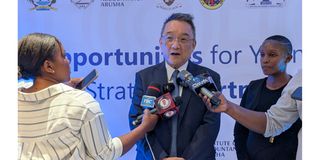
Speaking during the signing ceremony, UNDP Tanzania Resident Representative Shigeki Komatsubara said the partnership reflects a shared commitment to preparing young people for an increasingly dynamic and competitive global environment.
“The transition from university into the world beyond should not be left to chance. Young people should graduate not only with a degree, but with exposure, experience, and a clearer sense of direction,” he said.
He added that the partnership establishes a long-term framework designed to bridge the gap between academic learning and labour market realities, while strengthening pathways for young people to transition into employment, entrepreneurship, and leadership roles.
The collaboration will be implemented under the UNDP Young Talent Development Programme, which brings together universities, development partners, and private sector actors to promote career readiness, mentorship, innovation, and practical learning opportunities for students and recent graduates.
The partner institutions include the University of Dar es Salaam (UDSM), the State University of Zanzibar (SUZA), the University of Dodoma (UDOM), Dar es Salaam Institute of Technology (DIT), the Institute of Accountancy Arusha (IAA), Arusha Technical College (ATC), St Augustine University of Tanzania (SAUT), Mbeya University of Science and Technology (MUST), and the Nelson Mandela African Institution of Science and Technology (NM-AIST).
Through the agreement, UNDP Tanzania and the participating institutions will jointly implement career development initiatives, competency-based learning, mentorship programmes, innovation and entrepreneurship support, applied research, and enhanced engagement with employers and development partners.
The initiative also includes structured activities such as skills development workshops, internships, fellowships, innovation challenges, guest lectures, and professional networking opportunities for students and graduates.
It further seeks to position higher learning institutions as active contributors to Tanzania’s development agenda through innovation, research, youth leadership, and practical solutions to national challenges.
Speaking on behalf of the participating institutions, Deputy Rector for Academic, Research and Consultancy at the Institute of Accountancy Arusha (IAA), Grace Temba, said the collaboration marks a significant step towards strengthening links between universities and real-world opportunities.
“As universities, we provide academic knowledge, but partnerships like this help connect students to practical experience, mentorship, and wider opportunities. Those connections are vital in preparing young people for the future,” she said.
According to available data, Tanzania produces nearly 60,000 graduates annually. However, many continue to face challenges in transitioning into the labour market, largely due to mismatches between academic training and workplace demands, as well as limited direct linkages between universities and employers.