Tanzanian tycoon urges African firms to fund continent’s future
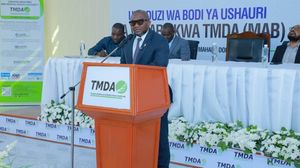
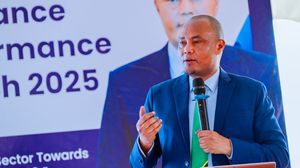
Tanzanian businessman Edha Nahdi (third left) with fellow panelists during a side event organised by the Bill & Melinda Gates Foundation as part of the 2026 Africa CEO Forum in Kigali, Rwanda. PHOTO | COURTESY
Kigali. Tanzanian businessman Mr Edha Nahdi has challenged Africa’s private sector to reduce reliance on foreign donors and take a leading role in financing the continent’s future, warning that Africa risks slowing its own development if local companies fail to act.
Speaking at the 2026 Africa CEO Forum here, the Group Managing Director of Amsons Group said African firms must move beyond corporate rhetoric and become active players in healthcare financing, industrialisation and infrastructure development.

“We can no longer depend on external solutions,” Mr Nahdi said during the summit, which brought together more than 2,500 business leaders, policymakers and investors from across Africa.
“The blueprint for Africa’s growth depends entirely on local manufacturing, shared regional infrastructure and corporate ownership of our social challenges,” he said.
Mr Nahdi made the remarks while participating in two high-level panel discussions on maternal healthcare and Africa’s urban infrastructure crisis, positioning himself among East African corporate leaders advocating African-led solutions to the continent’s development challenges.
Speaking at a side event organised by the Bill & Melinda Gates Foundation, Mr Nahdi urged African businesses to help bridge widening healthcare financing gaps as international aid support continues to decline.
The session, titled The $7 Question: Why Africa Cannot Afford to Lose a Generation and What Business Can Do Now, focused on the economic risks facing the continent if investment in maternal and child healthcare falls.
Citing findings from the World Health Organization showing that every dollar invested in maternal and child healthcare can generate up to seven dollars in broader economic returns, Mr Nahdi said the issue should no longer be viewed as charity.
“Safeguarding the health of mothers and children is not philanthropy. It is economic preservation,” he said.
“As Africa’s sons and daughters of the soil, we are more obligated to safeguard the health of our mothers and children than foreign donors.”
He added that the private sector must use its operational expertise and institutional capital to build strong domestic healthcare financing systems capable of supporting future generations.
Mr Nahdi later turned his attention to urbanisation, warning that Africa’s cities could become increasingly unaffordable unless countries urgently strengthen their industrial base.
During another panel discussion titled Nuts & Bolts: The Silent Bottleneck Behind Africa’s Urban Expansion, he argued that Africa’s housing and infrastructure ambitions would remain difficult to achieve if countries continued relying heavily on imported construction materials.
“The silent bottleneck behind Africa’s urbanisation is the high cost of imported construction materials and fragmented logistics systems,” he said.
Drawing on Amsons Group’s investments in cement manufacturing, liquefied petroleum gas and regional transport corridors, Mr Nahdi said African governments and businesses must invest aggressively in local production capacity.
“We cannot design or demand our way out of Africa’s housing shortages without scaling manufacturing capacity, strengthening supply chains and improving energy reliability,” he said.
According to him, dependence on imported materials continues to increase construction costs and delay infrastructure projects across many African countries.
He said deeper investment in regional manufacturing plants and transport infrastructure would help lower building material costs while making urban development more affordable and resilient.
The panel also featured executives from Saint-Gobain and focused on the industrial foundations needed to support Africa’s rapidly growing cities.
Mr Nahdi said Africa’s private sector must now think “in terms of scale” if the continent is to build sustainable economies capable of competing globally.
“Whether we are talking about protecting the health of our children or building the physical foundations of our megacities, Africa’s private sector must think in terms of scale,” he said.
His remarks at the Kigali summit come as African governments increasingly push for industrialisation, regional integration and reduced dependence on foreign financing amid shifting global economic conditions.
Register to begin your journey to our premium contentSubscribe for full access to premium content