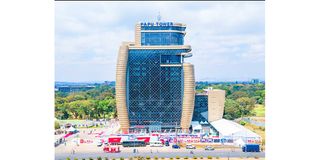
Arusha. The newly established PAPU International Conference Centre (PICC-Arusha), located at the iconic PAPU Tower in Arusha, is emerging as a strategic gateway to new business and investment opportunities in northern Tanzania, reinforcing the city’s growing role as a regional hub for diplomacy, tourism and trade.
As Arusha cements its position as the headquarters of major regional and international institutions, including the East African Community (EAC) and the African Court on Human and Peoples’ Rights, the launch of PICC-Arusha adds a critical piece of infrastructure needed to attract high-level meetings, investor forums and international events.
"The centre is well placed to accelerate economic momentum by convening decision-makers, mobilising capital and opening markets for local enterprises" said Mr. Francis Rwebogora the PICC's Commercial Director.
Designed to host meetings ranging from 25 to 420 participants, PICC-Arusha offers world-class facilities tailored for international conferences, trade exhibitions, corporate retreats, sectoral summits and public-private dialogues.
The centre features flexible auditoria, multiple breakout rooms, exhibition halls and fully equipped translation booths, meeting the technical and logistical standards required by multinational delegations, development agencies and regional organisations.
A catalyst for investment and enterprise.
Business leaders note that the presence of a modern, purpose-built conference facility in Arusha significantly enhances the city’s attractiveness to investors and global conveners.
By drawing high-profile conferences, investor roadshows and policy dialogues to the city, PICC-Arusha creates direct interaction between international financiers, government officials and local entrepreneurs.
This proximity is expected to accelerate deal-making, joint ventures and foreign direct investment (FDI), particularly in priority sectors such as agribusiness, clean energy, tourism, logistics and digital services.
For small and medium enterprises (SMEs), the centre offers new pathways to markets that were previously difficult to access. Trade exhibitions and sector-specific forums hosted at PICC-Arusha provide SMEs with a platform to showcase their goods and services to buyers, distributors and partners from across Africa and beyond. Such exposure can help local firms move up value chains, secure distribution agreements and build cross-border partnerships.
Building skills and innovation capacity
Beyond convening power, PICC-Arusha is also expected to contribute to capacity building and innovation. The centre can host training programmes, incubator summits and technical workshops aimed at upskilling local talent in hospitality, logistics, event management, technology and professional services.
These skills are increasingly critical as Tanzania seeks to diversify its economy and strengthen service sectors that support trade and investment.
By linking local professionals with regional and international experts, the centre can help transfer knowledge, foster innovation and enhance competitiveness among local businesses.
Strengthening regional integration
As a neutral, high-quality venue for intergovernmental meetings and cross-border business forums, PICC-Arusha is well positioned to support regional integration within the East African Community.
Mr. Rwebogora added that, the centre can play a role in strengthening trade corridors, harmonising standards and unlocking opportunities for regional supply chains.
With Arusha already serving as a diplomatic capital for East Africa, the availability of a modern conference facility further enhances the city’s capacity to host dialogue on trade, infrastructure, climate action and regional cooperation.
Economic ripple effects for Arusha
The impact of large conferences extends well beyond meeting halls. Industry analysts point out that major events drive demand for hotels, restaurants, transport services, catering, security and local suppliers, creating both temporary and permanent employment.
The clustering effect—where businesses locate near venues to serve a steady flow of visitors—can stimulate new commercial real estate developments, co-working spaces and specialised service providers. For Arusha, this translates into a more diversified and resilient local economy, less vulnerable to fluctuations in tourism seasons.
Built for connectivity and sustainability
PICC-Arusha blends modern infrastructure with a commitment to sustainability. High-speed connectivity, advanced conferencing technology and on-site translation facilities enable the hosting of hybrid events that combine physical and virtual participation. This approach broadens global reach while reducing travel-related emissions, aligning with emerging sustainability standards in the meetings and events industry.
The adaptable design of the centre allows organisers to tailor spaces to different event formats, from high-level diplomatic meetings to large-scale exhibitions and business networking sessions.
Opportunities for local partners
The centre’s operations also present direct procurement and partnership opportunities for local businesses. Event management firms, logistics providers, audiovisual service companies, caterers offering local cuisine, transport operators and artisans supplying décor and promotional materials all stand to benefit.
There is also scope for public-private partnerships, including collaborations with universities and vocational institutions to supply trained staff and fresh talent for events and hospitality roles, further embedding the centre within the local economy.
A call to action
Stakeholders are urging government institutions, development partners and private enterprises to leverage PICC-Arusha as a platform for investor forums, sector-specific expos—covering areas such as agriculture, clean energy, textiles and digital services—and buyer-seller meetings that generate tangible business leads.
Local chambers of commerce and SME associations are also encouraged to actively engage with the centre to secure exhibition slots, training opportunities and networking platforms that help their members scale operations.
More than a venue
PICC-Arusha is increasingly being viewed as more than just a conference facility. By attracting international events, fostering regional partnerships and expanding market access for local entrepreneurs, the centre has the potential to play a decisive role in transforming Arusha into a vibrant business nexus for northern Tanzania and the wider East African region.
For stakeholders ready to turn ideas into commercial opportunities, PICC-Arusha offers a strategic platform to connect, collaborate and grow.