Dar es Salaam. Tanzanian health experts have cautioned the government against hastily endorsing a new United States global health aid model, warning that poorly negotiated agreements could undermine data sovereignty and roll back hard-won gains in reproductive health.
The warnings come as Kenya’s High Court last week suspended the implementation of a $2.5 billion (Tsh6.13 trillion) health assistance memorandum of understanding (MoU) signed with the US, citing concerns over the sharing of sensitive personal and medical data.

Reproductive health specialists in Tanzania say the agreement, now under discussion in several African countries, could impose conditions that restrict access to reproductive health information and services if adequate safeguards are not established.
Although the full text of the MoU has not been made public, regional experts note that similar arrangements have previously caused confusion among service providers, reduced community outreach, suspended mobile clinics, and heightened fear among health workers of breaching donor conditions.
EngenderHealth Tanzania country director Moke Makoma said accepting such agreements without scrutiny could prove costly.
“Family planning is clearly not a priority under these arrangements, and the conditions may reduce access to reproductive health services, increase maternal deaths, and reverse gains made in family planning,” she said.
Dr Makoma warned that any reduction or restructuring of US support through MoUs could lead to the scaling down of critical reproductive health services.
UNFPA Tanzania Representative Jacqueline Mahon underscored the economic and social risks, noting that every dollar invested in family planning can save up to six dollars in emergency healthcare costs and wider socio-economic consequences.
A senior reproductive health expert told The Citizen that any policy limiting access to family planning or post-abortion care would have immediate and severe effects.
“Any policy that restricts family planning or post-abortion services will directly increase maternal mortality. Rural women will suffer the most,” the expert said on condition of anonymity.
These concerns have gained urgency following developments in Kenya, where a legal challenge has put the US-backed health agreement on hold.
Kenya court intervention
Kenya’s High Court issued interim orders barring authorities from implementing the MoU “insofar as it provides for or facilitates the transfer, sharing or dissemination of medical, epidemiological or sensitive personal health data.”
The case was filed by consumer rights groups, including the Consumer Federation of Kenya (Cofek), which argued that the agreement could expose Kenyans’ personal medical records and weaken the country’s strategic control over its health systems, particularly digital infrastructure such as cloud-based data storage.
Health Cabinet Secretary Aden Duale said on December 12 that the government would comply with the court order while contesting it.
“We wish to clarify that the current conservatory orders relate specifically to data sharing and do not suspend the broader health partnership,” he said.
Under the agreement, the US would contribute $1.7 billion (Tsh4.17 trillion), while the Kenyan government would provide $850 million (Tsh2.08 trillion), gradually assuming a larger share of health financing.
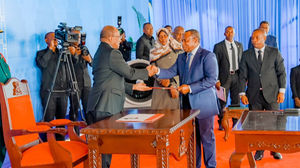
At the signing ceremony, US Secretary of State Marco Rubio described the deal as “historic”.
However, public concern has grown in Kenya amid fears that the MoU could allow external access to sensitive medical records, including HIV status, tuberculosis history, and vaccination data.
President William Ruto sought to reassure citizens, saying the Attorney General had reviewed the agreement “with utmost diligence” to ensure Kenyan law governs citizens’ data. The US has not publicly responded to the data privacy concerns. The case is scheduled to return to court on February 12, 2026.
Broader shift in US aid
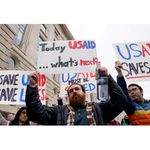
The contested MoU is part of the newly launched America First Global Health Strategy, introduced months after the closure of the US Agency for International Development (USAID).
Under the new approach, Washington is moving away from channelling aid through non-governmental organisations and international agencies, instead favouring direct bilateral agreements with recipient governments.
The US has already signed similar agreements with Rwanda, Lesotho, Liberia, and Uganda.
Experts warn that unless African governments negotiate strong protections, the new aid architecture could increase unintended pregnancies, unsafe abortions, and maternal deaths, while placing a heavier financial burden on already stretched public health systems.
They argue that countries such as Tanzania must prioritise data sovereignty and safeguard reproductive health gains, which they say are central to national development and the well-being of future generations.
Register to begin your journey to our premium contentSubscribe for full access to premium content