Unesco pledges support to boost Tanzania higher education, advance gender equality in ICT

Lecturers and academicians from higher learning institutions during a training session aimed at enhancing the use of ICT to build digital capacity among girls and women. PHOTO | HAMIDA SHARIFF
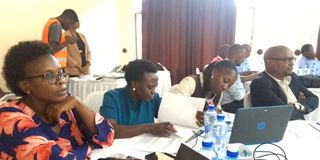

Morogoro. The United Nations Educational, Scientific and Cultural Organization (Unesco) has pledged to continue partnering with Tanzania to strengthen higher education systems, with a renewed focus on promoting gender equality in the use of technology.

The commitment was announced by Unesco Country Representative Michael Toto during the opening of a training session for lecturers and academicians from higher learning institutions, aimed at enhancing the use of Information and Communication Technology (ICT) to empower girls and women.

Mr Toto said the collaboration seeks to ensure that women and girls are not left behind in the digital era, noting that disparities in access to and use of technology remain a major concern.

“Girls and women continue to face various challenges in the use of ICT. This is why Unesco is working closely with stakeholders, particularly higher learning institutions, to build the capacity of experts who can address these gaps,” he said.

He added that the organisation will sustain its partnership with Tanzania to advance inclusive education and equip learners with the digital skills required in a rapidly evolving global landscape.

An ICT officer in the Ministry of Education, Science and Technology, Emanuel Mabula, welcomed the initiative, saying it comes at a critical time when education systems are adapting to fast-paced technological change.

Mr Mabula said the government has already initiated a review of curricula to align education with labour market demands, especially in technology-driven fields.

“The use of technology is no longer optional. It is essential in preparing students for the future,” he said.

He added that ongoing improvements to the 2014 Education Policy (2023 edition) place strong emphasis on integrating ICT into teaching and learning.

According to him, the success of these reforms will depend largely on empowering teachers with relevant skills and competencies aligned with national priorities, including the Development Vision 2050.

Speaking on behalf of the Principal of the Dar es Salaam University College of Education (DUCE), Prof Florence Kyaruzi said the training is crucial in equipping lecturers with practical skills to integrate ICT into their teaching.

He noted that while national education policy recognises ICT as a key tool for promoting equity, its use remains uneven, with women and girls still underrepresented.

“Studies indicate that ICT usage is still low among girls and women, while men continue to benefit more,” she said.

A lecturer from the Open University of Tanzania, Dr Doreen Mushi, said the training will help improve teaching approaches and expand access to digital learning, particularly for female students.

She highlighted persistent barriers, including negative perceptions towards science and technology subjects, which continue to limit girls’ participation in ICT-related fields.