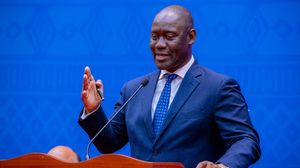
Why anti-corruption law is not tough enough : Minister
From left: The Minister of State in the President’s Office (Public Service Management and Good Governance), Ms Angellah Kairuki, Constitutional and Legal Affairs minister Harrison Mwakyembe and Prevention and Combating of Corruption Bureau director general Valentino Mlowola are briefed by Ms Mariam Juma on blood donation and collection in the Eastern Zone during an event organised to mark the start of Human Rights week at Mnazi Mmoja grounds in Dar es Salaam yesterday. PHOTO | SALIM SHAO
What you need to know:
The Minister of State in the President’s Office (Public Service Management and Good Governance), Ms Angellah Kairuki, said plans were underway to amend the Prevention and Combating of Corruption Act of 2007 as part of efforts to step up the war on corruption.
“The amendment will make the law more specific and make it possible for punitive action to be taken according to the severity of the offence committed,” she said.
Dar es Salaam. The anti-corruption law is not tough enough because it does not compel culprits to surrender money they steal from the government, a Cabinet minister said yesterday.
The Minister of State in the President’s Office (Public Service Management and Good Governance), Ms Angellah Kairuki, said plans were underway to amend the Prevention and Combating of Corruption Act of 2007 as part of efforts to step up the war on corruption.
“The amendment will make the law more specific and make it possible for punitive action to be taken according to the severity of the offence committed,” she said.
The law currently does not give the Prevention and Combating of Corruption Bureau powers to recover proceeds of corruption.
The government also cannot confiscate culprits’ property without proof being provided in court linking it with corruption. This, according to analysts, provides corrupt officials with a loophole to hide the loot they acquire through corruption.
Ms Kairuki said little progress was being made despite more people volunteering information on corruption.
“More and more whistleblowers are coming forward to volunteer information on corruption, but we feel that the PCCB Act does not prescribe exemplary punishment to those found guilty. We want to change that,” Ms Kairuki said at the start of Human Rights Week, which will precede Human Rights Day to be marked on December 10.
Tanzania enacted the Whistleblower and Witness Protection Act in 2015 to encourage people to volunteer information on crime.
Ms Kairuki said amending outdated and ineffective laws was the surest way of curbing the misuse and outright theft of public funds and ensuring accountability.
“We will not hesitate to amend any law that is no longer useful and beneficial to the country and the people in general,” she said.
PCCB director general Valentino Mlowola said the agency had stepped up the pace of investigating and prosecuting corruption cases, adding that he expected the prevalence of grand corruption to be drastically reduced in the next few years.
The Minister of Constitutional and Legal Affairs, Dr Harrison Mwakyembe, defended the controversial Media Services Bill that was passed by Parliament and assented to by President Magufuli last month.
He said the law was not draconian as portrayed in some quarters.
The Controller and Auditor General’s reports show that the government has been losing hundreds of billion of shillings annually in recent years due to embezzlement and corruption.
President John Magufuli launched a crackdown on corruption in civil service and misuse of public funds a few days after he was sworn in on November 5, last year.
His campaign promise to set up an anti-corruption court has been fulfilled following the establishment in July of the Economic, Corruption and Organised Crime Court, which is a division of the High Court.