Will AG defy the odd to end term with clean sheet?
What you need to know:
Mr Chenge partly oversaw the radar deal while serving as Attorney General. Although investigations by the Prevention and Combating of Corruption Bureau (PCCB) eventually cleared him, there is no doubt that the scandal dented his image and raised queries about his credibility and that of his office. And that was not all.
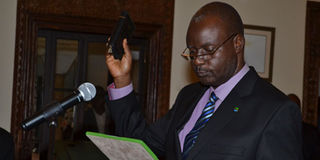
Dar es Salaam. Newly-appointed Attorney General George Masaju has a rare problem for someone coming into political leadership. He does not have to worry too much about being overshadowed by his predecessors--the latest ones, at least. His three predecesagsors all left office in disgrace, having been named in major scandals that cost the government billions of shillings.
President Jakaya Kikwete appointed Mr Masaju the chief government legal adviser last month, weeks after former AG Frederick Werema resigned for allegedly giving wrong legal advice that led to the controversial withdrawal of Sh306 billion from the Tegeta escrow account at the central bank.
Mr Masaju’s appointment has been received with both anxiety and high expectations that the chief government lawyer will restore the diminishing credibility of the AG’s office--which has taken a beating from the performance of his most recent predecessors---Andrew Chenge, Johnson Mwanyika and Frederick Werema. They left the sensitive office with their reputations shot to pieces after they were investigated over major corruption scandals.
Mr Chenge, Tanzania’s fifth Attorney General(1993-2005) was the first AG in the country’s history to be implicated in abuse of office scandals that cost him his position in government. He resigned in April 2008 as the Infrastructure minister after the United Kingdom’s Serious Fraud Office revealed that he had $1 million (Sh1.6b) in an overseas offshore account, which he allegedly received in the form of kickbacks from a controversial military radar deal between the UK’s BAE System and the Tanzania government.
Mr Chenge partly oversaw the radar deal while serving as Attorney General. Although investigations by the Prevention and Combating of Corruption Bureau (PCCB) eventually cleared him, there is no doubt that the scandal dented his image and raised queries about his credibility and that of his office. And that was not all.
His name popped up in another big scandal. This time, the Parliamentary Committee on Public Accounts named him among several individuals who were paid billions of shillings that were controversially withdrawn from the Tegeta Escrow account last year.
The Bariadi East MP is under enormous pressure to resign as chairman of the Parliamentary Committee on the Budget. The committee asked Parliament last month to take measures against Mr Chenge.
Mr Chenge was succeeded by Mr Johnson Mwanyika, who became Tanzania’s sixth AG. When he took office in 2005, he managed to maintain a reputation as a hardworking man of integrity. He was initially hailed for steering the Attorney-General’s Chambers smoothly and was also reputed to be incorruptible. Still, the ghost of scandals and allegations of abuse of office did not let him finish his career as AG without a hitch.
In 2008, Mr Mwanyika was accused of being one of the architects of the Richmond power generation scandal that shocked the nation. It led to the resignation of then Prime Minister Edward Lowassa and the dissolution of the Cabinet.
The Richmond scandal revolved around a $172 million emergency power generating contract that was given to a US-based company that turned out to be a shell corporation and failed to deliver the 100mw to the national grid.
A Parliamentary Select Committee that investigated the scandal proposed that Mr Mwanyika be sacked with immediate effect for his failure to properly advise the government on the deal. In July 2009, a government exonerated him but the move was strongly criticised by MPs. His retirement in October 2009 coincided with the deliberations of the report of the parliamentary team.
President Jakaya Kikwete picked Mr Frederick Werema in 2009 to succeed Mr Mwanyika. Unlike Mr Mwanyika, who was soft spoken and kept a low profile, Mr Werema was a tough-talking and quick-tempered AG. His five years as AG were a rough ride as MPs and politicians increasingly called for more government accountability in handling its affairs.
Serving as an ex-officio member of the Cabinet and Parliament, Mr Werema frequently had to defend the government in Parliament when the State was cornered by MPs and other politicians demanding more accountability in handling the government’s legal affairs. In the initial stages of the constitution-making process, he also had a tough time as the government and the opposition battled to have their way.
And when it came to scandals, Mr Werema was no exception. He ended his career as AG unceremoniously after he was accused of authorising the fraudulent transfer of about $120 million from Tegeta Escrow account.
A parliamentary committee that investigated the scandal recommended his sacking for giving the government wrong advice that led to the withdrawal of the money--a development that cost Tanesco and the government huge losses. According to PAC, Mr Werema failed to discharge his duty to conduct due diligence on the issue that saw forged documents used in the deal. Mr Werema maintains that his advice was misunderstood.
He wrote to President Kikwete on 16 December last year to say he was stepping down over his role in the Tegeta escrow account saga. His resignation prompted immediate calls for him to be charged in court. He wrote in his resignation letter that he was stepping down because his advice on the Tegeta escrow was misunderstood and created “turbulence”.
The big question now is whether the new AG will defy the odds and end his term as AG with a clean sheet. Mr Masaju was deputy AG before he went up in the world. He has also worked as President Kikwete’s adviser on legal issues and is known in legal circles as a fierce litigant ready to defend government interests at all cost.
In 2009, Mr Masaju led a team of senior state lawyers representing the government in a landmark appeal filed in the Court of Appeal against a High Court decision that allowed independent candidates to contest elections. He persuaded the court to nullify independent candidacy.
Whether Mr Masaju will successfully grapple with the hurdles of manning the AG’s office and restore the image of the position of the AG remains to be seen.