Youth energy innovators share Sh30m to scale solutions

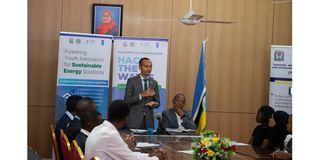
Ireland to Tanzania Programme Manager, Fazal Issa, explaining the hackathon, which forms part of efforts to implement Tanzania’s National Energy Efficiency Strategy 2024–2034.

Dar es Salaam. Three youth-led innovations have received a total of Sh30 million in seed funding after winning the Energy Efficiency Hackathon 2026, a national competition focused on practical solutions to Tanzania’s energy challenges.

The competition was organised by the Ministry of Energy in partnership with the Embassy of Ireland in Tanzania, the Tanzania Industrial Research and Development Organisation (TIRDO) and the United Nations Development Programme (UNDP).

Held in Dar es Salaam, the awards event recognised locally developed technologies aimed at improving energy efficiency and reducing costs in public and private facilities.

The hackathon is implemented under the Ushirikiano wa Kijani Project, supported by the Embassy of Ireland, and aligns with Tanzania’s National Energy Efficiency Strategy 2024–2034. It seeks to promote innovation, climate action and youth entrepreneurship in the energy transition.

More than 170 applications were received from young innovators. Five teams were shortlisted and taken through a three-day boot camp at TIRDO’s T-Hub, where they received technical mentorship, prototyping support and business development training before pitching to judges.

Three winners were selected for the practicality and potential impact of their solutions. Each team received Sh10 million in seed funding, alongside mentorship and linkages to financial institutions to support commercialisation.

CHAP Solutions developed an integrated smart room controller that uses occupancy and environmental sensors to manage lighting and ventilation in buildings, reducing electricity use and costs.

SEMS Innovators developed a smart energy management system that monitors and optimises electricity consumption in shared facilities such as campuses and hostels.

Maji Guard designed an artificial intelligence-based system that uses acoustic sensors to detect underground water leaks, reducing water loss and the energy required for pumping and distribution.

TIRDO Director General Prof Mkumbukwa Mtambo said the institution will continue supporting innovators beyond the idea stage, including testing and refining prototypes.

UNDP Energy Expert Sayuni Mbwilo said energy efficiency remains one of the most cost-effective ways to reduce costs, strengthen energy security and cut emissions, while supporting sustainable development goals.

He said combining funding, mentorship and access to finance helps transform early-stage ideas into viable businesses that can contribute to Tanzania’s energy transition.

The winning teams will continue receiving technical support as they refine their products and explore partnerships and market opportunities.