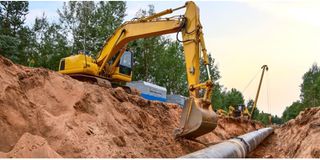
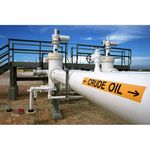
I think Tanzanians don’t speak about EACOP enough. We have our own preferred projects—the SGR, JNHPP, BRT, LNG, and at one point, Chato—but somehow, EACOP hasn’t quite captured our national imagination. If we think it to be a marginal project, we should be careful—that perception is not shared beyond our borders.
That much was evident last week. President William Ruto of Kenya announced a proposed deal with Yoweri Museveni of Uganda to establish a massive oil refinery in Tanga. Financed by the Nigerian industrialist Aliko Dangote, the plan involves integrating crude pipelines from South Sudan and Kenya to Tanga. We are talking about a 650,000 barrels per day behemoth that would rank as the eighth-largest refinery in the world.
The news broke the very day my article advocating for a refinery in Tanga was published. If some readers choose to believe I had inside information, I thank them for the compliment. The truth is simpler: I don’t move in such exalted circles yet. But if you write for as long as I have, occasionally, your analysis converges with unfolding reality. This was one such moment.
Yet, there was nothing coincidental about the logic involved. The case for refining crude locally is straightforward. It is about value addition, industrialisation, and retaining a greater share of the value chain within our own economies. There is nothing mysterious about economic transformation. It follows identifiable principles.
Back in 2022, I published an article with the headline ‘The European Union and politics of crude oil in East Africa,’ critiquing the EU’s hypocritical call for a one-year moratorium on the project. Their stance was wrapped in the green flag of environmentalism, but it carried the distinct scent of old-school gatekeeping. They wanted East Africans to pause and remain spectators in the global energy game. We cannot afford that luxury. This isn’t just about pipes and oil. It is about the will to lift our people from poverty.
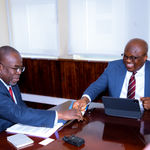
At the time, EACOP was under immense international pressure, and my article provided a much-needed counter-narrative. Soon after, some diplomats arranged a meeting for me with the EACOP leadership. I met the President and the Project Director at Coral Beach Hotel later that year. It was a privileged briefing that allowed me to look under the hood of the project.
The following year, I visited Paris under the French Young Leaders Invitation Program (PIPA). I was allowed to set my own agenda. Naturally, given that much of the opposition to EACOP originated in France, I decided to make it my secondary theme, after startup hubs. Out of 20 meetings I had in Paris, I held three meetings about EACOP: one with the directors of TotalEnergies—the majority shareholders with a 62 percent stake—and two with the project’s most vocal critics.
One critic was a highly respected French leftist writer. His English was a bit shaky, so he brought along a colleague, a PhD holder. The man was perplexed. He couldn’t grasp how an African could advocate for a project like EACOP. We exchanged notes. He was humble, and I watched him realise that the situation on the ground was far more nuanced than his Parisian office suggested. He promised to send a team to learn more.
The other was an independent writer, Thomas Bart. He had been to both Uganda and Tanzania, which gave us plenty to discuss. Unlike him, I hadn’t visited the Ugandan side, and I acknowledged the complexities regarding the relocation of Project Affected Persons (PAPs) there. But Tanzania is home; I knew the reality here better than he ever could. We parted on cordial terms.
Or so I thought.
A week later, I received a note about an article Thomas had written. In it, he claimed the French Foreign Ministry was a mere puppet for TotalEnergies—using my visit to Paris as his “smoking gun”. It was pure fiction. I wondered why he hadn’t bothered to verify his assumptions. While my hosts in Paris were apologetic, I was simply amused. I suppose you haven’t truly lived until you’ve inspired a Mzungu to write majungu about you.
Human beings are human beings everywhere.
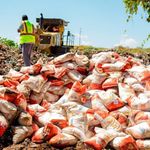
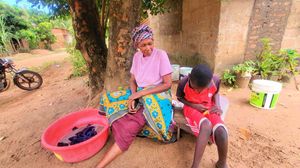
Over the years, my contacts at EACOP have kept me abreast of the progress. Of all the documents I have reviewed, my one consistent critique has been the quality of the housing for the PAPs. I argued that while the new houses were an upgrade from previous conditions, I think a giant like TotalEnergies could have delivered a higher standard. In comparable projects elsewhere, the benchmarks would have been higher.
Now, we have come full circle. EACOP is approaching completion, and global energy dynamics have shifted. With the conflict in the Middle East threatening global crude access, African nations find themselves acutely vulnerable. Suddenly, the strategic importance of EACOP is undeniable. It was always this important; we were just too slow to appreciate it.
The proposed refinery in Tanga is, therefore, not an isolated idea. It is a logical extension of EACOP, aligning it with the broader objectives of deepening regional integration, strengthening energy security, and advancing industrial capacity.