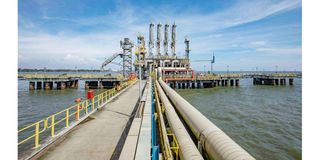
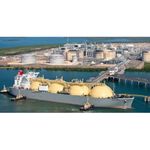
This week, senior executives from Equinor, ExxonMobil and Shell are expected in Dar es Salaam for what the government has described as the final round of negotiations on the $42 billion LNG Project.
Speaking in Parliament on April 24, Minister for Energy Deogratius Ndejembi told MPs that the commercial and tax frameworks had been settled, and that what remains is the legal architecture through which those bargains will be made binding. That distinction matters.
In projects of this scale, the legal stage is not a formality that follows the deal. It is the deal. It is where political commitments are translated into enforceable obligations, where fiscal assurances become stabilisation clauses, where local content is either made bankable or reduced to aspiration, and where the state decides how much flexibility it preserves for future governments and how much certainty it gives to capital.
A fortnight earlier, on April 16, the Minister of State responsible for Investment and Planning, Prof Kitila Mkumbo, confirmed that the Public Investment Bill will be finalised in the coming financial year.
I was invited to both budget sessions as a stakeholder, and the proximity of these developments is not incidental. Read together, they signal something more important: Tanzania is changing the architecture through which it bargains with capital, owns assets, and disciplines its institutions.
After more than a decade of negotiation, the question is no longer whether the LNG project should exist, but whether the legal framework will be strong enough to unlock capital while disciplined enough to protect the public interest over decades. Within this context, three legal questions matter most.
The first is stabilisation. How widely will the agreement protect investors against future legislative or fiscal change? Will it freeze the regime broadly, or preserve space for regulatory oversight? Will compensation be open-ended, or carefully limited?
The second is local content. It is one thing to promise Tanzanian participation; it is another to embed a binding framework that places Tanzanian suppliers, financiers and professionals within the commercial life of the project. If drafted as rhetoric, it will collapse under operational pressure instead of becoming the bridge between gas and the domestic economy.
The third is dispute resolution. The seat of arbitration, governing law, treatment of tax disputes, and the scope of sovereign immunity will determine whether the agreement is merely investable on paper or resilient in practice. These clauses define how risk is priced.
The Public Investment Bill addresses the same architecture from the inside. The Office of the Treasury Registrar oversees 308 entities valued at Sh92.3 trillion, including 91 commercial institutions. The Bill proposes a stronger investment management framework, a Public Investment Fund to mobilise capital, competitive recruitment for leadership, greater autonomy for commercial entities, and tighter performance monitoring. For investors, this goes directly to counterparty risk.
When capital partners with a Tanzanian state entity, the questions are practical: who controls governance, how conflicts between political and commercial mandates are managed, how dividends are treated, and what happens when performance falls short. The Bill, if well drafted, can professionalise these answers and shift state entities from administrative instruments to managed assets.
There is, however, a third piece that will determine whether any of these delivers.
The Fourth Five-Year Development Plan is estimated at Sh477 trillion, with around 70 percent expected from the private sector and a significant portion linked to PPPs. Yet project preparation has historically been underfunded at Sh1 billion per year for the last 4 years.
Bankable projects are not announced. They are built. They require feasibility studies, financial modelling, legal structuring, environmental assessments, risk allocation and credible procurement frameworks. Without this groundwork, even the strongest legal architecture cannot produce a credible investment pipeline. This is where Tanzania’s ambition will either accelerate or stall. Strong policy and a long project list are not enough without disciplined preparation that brings projects to financial close.
The LNG agreement, if concluded well, will show whether the country can negotiate a megaproject that withstands both political cycles and commercial scrutiny. The Public Investment Bill will show whether the state can manage its portfolio as a coherent institutional asset.
Amne Suedi is an international lawyer, Honorary Consul of Switzerland in Zanzibar, and Chair of the Switzerland-Tanzania Chamber of Commerce.