Josephine Christopher is a senior business journalist for The Citizen and Mwananchi newspapers
Mwananchi Communications Limitted
Dar es Salaam. Tanzania’s economy remains on a steady growth path, even as a World Bank report and economists warn that the broader African recovery remains fragile and exposed to global shocks that could undermine recent gains.
The World Bank’s latest Africa Economic Update: Making Industrial Policy Work in Africa, released in April 2026, projects sub-Saharan Africa’s economy to grow at 4.1 percent in 2026, unchanged from 2025. However, the report cautions that rising global risks threaten to erode the region’s fragile recovery, particularly as geopolitical tensions and supply chain disruptions intensify.
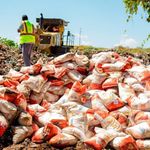
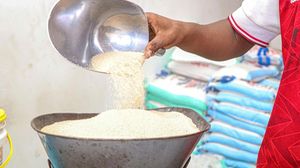
The report further warns that rising geopolitical tensions, particularly conflict in the Middle East, are already affecting global energy and food systems. It notes that rising oil and liquefied natural gas prices, coupled with disruptions to fertiliser supply chains through the Strait of Hormuz, could increase production costs and push food inflation higher across the region.
Reacting to the report’s findings economists said the projected growth across sub-Saharan Africa masks underlying vulnerabilities that could weaken economic gains if left unaddressed.
They cited geopolitical tensions, volatile energy markets, and weakening investment flows as among the key risks facing the region.
Economists said such pressures could compel central banks in oil-importing economies to tighten monetary policy to contain inflation. While necessary, these measures could slow domestic growth and weaken household purchasing power.
Associate Professor of Development Economics at Dar es Salaam University College of Education (DUCE), Abel Kinyondo, said African economies must first improve productivity to strengthen competitiveness before they can withstand global shocks.
He urged governments to prioritise intra-African trade, noting that the continent continues to import goods that could be produced or sourced internally.
“Countries like Nigeria and Angola have oil. Why should we depend on the Middle East?” he asked. He added that Africa must fully leverage its comparative advantage and trade more within the continent rather than relying heavily on external markets.
Prof Kinyondo also pointed to structural barriers within the continent, including restricted mobility for African entrepreneurs, which he said undermines integration efforts despite initiatives such as the African Continental Free Trade Area (AfCFTA).
He noted that without stronger regional cooperation and improved cross-border trade systems, Africa risks remaining dependent on external markets that are vulnerable to geopolitical disruptions.
Tanzania’s prospects
Another study, the World Bank’s Global Economic Prospects 2026, projects Tanzania’s economy to grow by about 6.2 percent, broadly consistent with the Bank of Tanzania’s outlook.
The central bank estimates that growth reached 5.9 percent in 2025, driven by agriculture, mining, and construction, while Zanzibar’s economy expanded by 6.8 percent supported by tourism and manufacturing.
For the first quarter of 2026, BoT projects continued momentum, with mainland growth at around 6 percent and Zanzibar at 7.2 percent. Moody’s Ratings has also reaffirmed Tanzania’s B1 credit rating with a stable outlook, citing sustained investment in manufacturing, mining, tourism, and transport as key growth drivers.
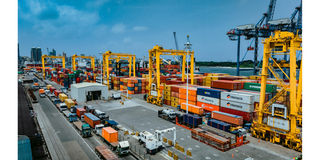
Chief Executive Officer of the Institute of Management and Entrepreneurship Development (IMED), Donath Olomi, said Tanzania’s economy has remained relatively insulated from global shocks due to diversification across sectors. He noted that trade flows have not been significantly disrupted, reflecting improved resilience and adaptability in the economy.
“We have diversified our sources of income,” he said, pointing to tourism, gold, and traditional exports as key stabilisers of foreign earnings. Dr Olomi further stressed the importance of non-alignment in global geopolitical tensions, warning that alignment with major powers can expose countries to indirect economic retaliation risks.
He added that Tanzania’s broad export base has helped cushion the economy against external shocks, reducing overreliance on any single market or commodity.
While Tanzania remains relatively steady, analysts caution that the wider regional recovery remains fragile and highly exposed to external shocks.
Rising energy costs, disrupted supply chains, and potential investment slowdowns could test Africa’s resilience in the coming years.
Register to begin your journey to our premium contentSubscribe for full access to premium content