EDITORIAL: Give people safe water, step up hygiene drive
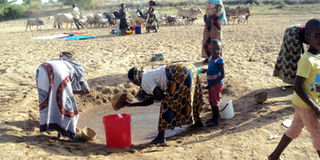
Ibaga villagers in Mkalama District, Singida Region, fetch water yesterday from a pond on Kisukwani River, the main source of the precious liquidfor the villagers. The river, which has dried up, left the dwellers in an acute shortage of water. PHOTO | GASPER ANDREW
What you need to know:
The 1,700 villagers share the water source with livestock, which exposes them to waterborne diseases such as bilharzia, dysentery and typhoid. That people actually share water from the same “container” with livestock is unacceptable. Let’s be blunt about it. We do not need a doctor to tell us this.
Water is life, the saying goes. Yet many Tanzanians die not for lack of the precious liquid but for drinking it when it is contaminated and unsafe for human consumption. That is why we consider most valid the concern expressed by the medical officer in-charge at Mwanshimba Dispensary in Tabora, Dr George Kavella, who noted that the health of 17,000 people in the ward is at risk because they drink dirty water from a dam.
The 1,700 villagers share the water source with livestock, which exposes them to waterborne diseases such as bilharzia, dysentery and typhoid. That people actually share water from the same “container” with livestock is unacceptable. Let’s be blunt about it. We do not need a doctor to tell us this.
The Geita case is just a microcosm of the huge problem that Tanzania faces. Although the situation here is an extreme case, water is actually available. It just happens to be unsafe, given that people share it directly with animals. Of the country’s 44 million people, 20.2 million lack access to safe drinking water. This is 46 per cent of the population. Further research would likely unearth the fact that an even lower number of Tanzanians get water that is clean and safe.
Safe water is that which you may drink straight from the tap without boiling it and not get infected with diseases. Drinking water straight from the taps in Dar es Salaam, for instance, would be suicidal.
While efforts are being made to supply the people with clean piped water, campaigns to educate the people on the need to boil their drinking water must be stepped up. It is the only way to avoid water borne diseases.