GUEST COLUMNIST: Social and economic issues at stake when upgrading city slums
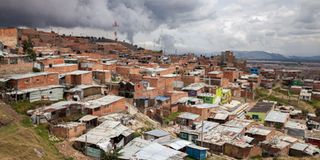
In sub-Saharan Africa, over 55 per cent of the urban population are estimated to live in areas categorised as slums and informal settlements. These slums and informal settlements are largely the physical manifestations of urban inequality, socially and economically. They embody the exclusion of poor urban households from cities’ formal economy and its environmental amenities like green spaces.
People living in these areas are also more vulnerable to the impacts of extreme weather events associated with climate change. Waste collection is poor, so pollution levels are high. This means that slums have a negative effect on natural ecosystems. Their presence can cause environmental degradation and deplete natural resources such as timber.
In other words, slums represent an intertwining of the socio-economic and environmental problems of urbanisation. But many government attempts to upgrade slums in Africa focus largely on the environmental issues and ignore the social and economic dynamics.
Studies in Addis Ababa and Nairobi have shown that people moved from slums into new housing experience a loss of community connection and in some cases cannot afford life outside the slum.
This was echoed in research I conducted in an area called Cosmo City outside Johannesburg, South Africa. People who had been moved there from an informal settlement felt less safe and were battling financially. My findings, and those from Kenya and Ethiopia, suggest that a community oriented approach is necessary. Merely moving people without taking their social and economic concerns into consideration is not the way to deal with the issue of urban slums.
Case studies
The Ethiopian government’s current approach is to clear slums and develop new housing in their stead. Households are relocated from shacks in slums to newly developed high-rise apartments. A recent study examined the environmental and social aspects of this clear-and-redevelop approach in Arat Kilo slum and the Ginfle high-rise apartments in Addis Ababa.
The study found that the move had some environmental benefits. It marginally reduced the amount of resources consumed by households, particularly water and energy (apart from gasoline). There was also a small reduction in the quantity of solid, liquid and gaseous waste generated.
But the high-rise apartments were strikingly less liveable. The study found that while 80 per cent of those interviewed felt happy living in the slum, only 50 per cent were happy in the high-rise flats. And 95 per cent felt secure in the slum – but only 7 per cent felt the same way in the new apartments. Trust also declined: 97 per cent said they’d trusted their neighbours in Arat Kilo but only 34 per cent trusted their neighbours in the new apartments.
Kenya’s government takes a similar approach to Ethiopia’s through its Slum Upgrading Programme. It constructs high-rise blocks of flats to replace slums.
Over the years, since 2010, portions of Kibera – which is Nairobi’s largest slum have been cleared and households relocated. Most recently, Kibera residents have been moved into 822 housing units within 21 blocks of 4-storey buildings in Soweto East, a zone of the slum. There are plans to develop another 2072 housing units on cleared parts of Kibera in the next few years.
But about half of those who officially received houses in the new apartments in Soweto East no longer reside there. These units have either been given away, sold or rented out.
One beneficiary told the study’s author that she still buys her groceries in the slum because it’s cheaper. She also spends her weekends in slum, visiting her friends and neighbours there. She has lived in the apartment for about three years and doesn’t know any of her neighbours.
This all suggests that Kenya and Ethiopia’s governments are ignoring social and economic factors when relocating people from slums. It is important for any upgrading of slums and informal settlements to not only improve environmental quality, but also to boost people’s overall quality of life.