Have modern times diluted major religious festivals?
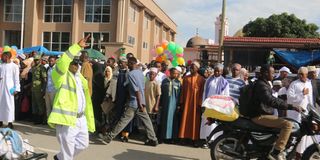
A traffic police officer stops vehicles to allow Muslim worshippers to cross the road in Dodoma on March 21, 2026. PHOTO | HABEL CHIDAWALI
By Mwita Chacha
Two important religious festivals fall close together this year: Idd ul-Fitr in March and Easter (Good Friday, Easter Sunday, and Easter Monday) in early April.
Traditionally, religious festivals have been moments of deep spiritual reflection, moral discipline, and communal unity. They have long served as spiritual anchors in human societies. Across cultures and faiths, these occasions are meant to remind believers of faith, humility, gratitude, and compassion.
However, in today’s rapidly evolving world, many argue that modern lifestyles and consumer culture have gradually diluted the spiritual essence of religious festivals.
From Idd ul-Fitr and Lent to Diwali and Christmas, the original meanings of these celebrations increasingly compete with modern influences such as commercialisation, social media, and shifting social priorities.
Historically, religious festivals provided opportunities for spiritual reflection and communal unity. For Muslims, Idd ul-Fitr marks the end of Ramadhan, a sacred month devoted to fasting, prayer, self-discipline, and charity.
The festival celebrates gratitude to God and compassion toward the less fortunate. Central to Idd is the obligation of giving charity (Zakat ul-Fitr), ensuring that even the poorest members of society can participate in the celebration.
Similarly, Lent, observed by Christians in the weeks leading up to Easter, is a period of fasting, repentance, and spiritual preparation. It encourages believers to practice sacrifice, humility, and moral reflection.
In Hindu tradition, Diwali—the festival of lights—symbolises the triumph of good over evil and light over darkness. It represents inner purification, renewal of faith, and the strengthening of family bonds.
Christmas, which commemorates the birth of Jesus Christ, emphasises hope, compassion, generosity, and love. Traditionally, it has been a time for prayer, charity, and community bonding.
These festivals were therefore not merely social events, but profound spiritual experiences intended to nurture moral values and deepen faith.
In modern society, however, many religious festivals have become heavily commercialised. Shopping promotions, advertising campaigns, and consumer spending often dominate the public narrative around these occasions.
Christmas is perhaps the most widely cited example. What was once primarily a sacred observance has increasingly become associated with gift shopping, elaborate decorations, and retail sales. In many places, the festive atmosphere begins weeks—sometimes months—before December 25.
Similarly, Diwali has seen a rise in consumer culture, with growing emphasis on purchasing new clothes, decorations, electronics, and gifts. While celebration is an important part of the tradition, critics argue that commercial pressures can overshadow its deeper spiritual symbolism.
Even Idd ul-Fitr, which emphasises charity and humility, has in some communities shifted toward more extravagant celebrations.
Expensive clothing, large social gatherings, and lavish feasts can sometimes draw more attention than the core values of compassion and generosity that Ramadhan seeks to instil.
These trends do not erase the spiritual dimension of these festivals, but they can shift the focus from reflection to consumption.
Another major influence is the rise of social media. Platforms such as Instagram, Facebook, and TikTok have transformed how people experience and share celebrations.
Festivals are often presented through carefully curated images of decorations, meals, outfits, and family gatherings. While this can strengthen cultural identity and foster a sense of shared celebration, it can also encourage comparison and performance.
The focus may gradually shift from inward spiritual reflection to outward display, where visibility and social approval take precedence over deeper meaning.
Modern lifestyles also play a role. Urbanisation, demanding work schedules, and globalisation have reduced the time many people can dedicate to traditional practices.
For instance, the full observance of Lent—which historically involved weeks of fasting, prayer, and church participation—can be difficult for individuals balancing professional responsibilities.
Similarly, migration and urban living often separate families from the traditional community structures that once played a central role in festival celebrations. As a result, many traditions have been simplified or adapted to fit contemporary life.
Despite these challenges, religious festivals continue to hold deep cultural and spiritual significance. Many communities actively strive to preserve their traditions and pass them on to future generations.
Acts of charity during Ramadhan, community service at Christmas, spiritual gatherings during Diwali, and religious observances during Lent all demonstrate that the core values of these festivals still resonate with millions around the world.
The challenge for modern society is not to resist change, but to ensure that the deeper spiritual and ethical messages of these festivals remain central to their celebration.
Modern times have undoubtedly transformed how religious festivals are observed. Commercialisation, social media, and changing lifestyles have introduced new dynamics that can shift attention away from their spiritual roots.
Yet the essence of festivals such as Idd ul-Fitr, Lent, Diwali, and Christmas remains deeply embedded in human culture. Their enduring significance lies in their ability to remind people of moral values, spiritual reflection, and the importance of community.
The question, therefore, is not whether modern times have diluted religious festivals, but whether societies are willing to preserve their deeper meaning while adapting to the realities of modern life.
May your festival season be restful, considerate, caring, and filled with sincere happiness.
Mwita Chacha is Head of Business Strategy and Human Capital Services at MnC Consulting in Dar es Salaam. [email protected]