Moral pathways for JPM’s Cabinet: A polite reminder
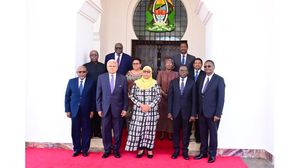
President Magufuli in a group photo with some ministers and their deputies immediately after their swearing in at State House in Dar es Salaam recently. The new Cabinet shoulders immense responsibility in fulfilling Tanzanians’ expectations. PHOTO| FILE
What you need to know:
At the heart of this long wait are both JPM’s push for change, and desire by many Tanzanians for a reconstruction of their lives as individuals and communities. Public opinion suggests that Tanzanians have resolved to follow a path of integrity and consensus. This is the path of ethical management of their affairs.
At last Tanzania has a full new cabinet that took President John Magufuli over forty days to form. He was sworn in on November 5. The last four dockets to fill were Finance and Planning; Education, Science and Technology; Works, Transport and Communication; and Natural Resources and Tourism. According to JPM, he was “still looking for the right people”. The words “right people” connotes ethical requirements needed for the appointment.
At the heart of this long wait are both JPM’s push for change, and desire by many Tanzanians for a reconstruction of their lives as individuals and communities. Public opinion suggests that Tanzanians have resolved to follow a path of integrity and consensus. This is the path of ethical management of their affairs. This means, they want people to hold certain positions on merit, not favouritism. This must start with the highest positions in the country – ministerial offices. The citizens’ voice suggests that they are tired of leading miserable lives, and they have realised the power they have towards bringing in the change they want.
Now, this is a brief and polite reminder to ministers and their deputies that they need to be aware of their ethical responsibilities and should be prepared to act within the confines of their legal jurisdiction.
Tanzanians have demonstrated that they want to enter into a new era – one that reforms their lives. They can no longer condone moral decay that has held them down for so long. They want to achieve a ‘better life’, whatever the concept means.
Many have questioned themselves whether the level of the standard of their lives is decent enough. JPM’s ministers will have the ethical requirement to ensure Tanzanians attain the level of life as they desire it. This will be achieved only if ministers and other leaders respond to their moral obligations.
Ministers will also be expected to live by example. They must not seem alienated to the day-to-day struggles of the common Tanzanian. So, key societal values must be upheld.
They should act solely in terms of the public interest and maintain selflessness. Since integrity had started to be regarded as an old and useless value, our polite reminder is for ministers to avoid placing themselves under any obligation to people or organisations that might try inappropriately to influence them in their work.
We call upon them to be vigilant, sensitive and fight corruption. We call upon them not to act or take decisions in order to gain financial or other material benefits for themselves, their families, or their friends.
Sensitively enough is the value of objectivity especially now when ‘high speed’ is the language of the day. They must act and take decisions impartially, fairly and on merit, using the best evidence and without discrimination or bias. This is only possible if they will be aware of the value of accountability. They should always remember that they are accountable to the public for their decisions and actions and must submit themselves to the scrutiny necessary to ensure this.
In recent years Tanzania has experienced an outcry for openness. JPM members of the cabinet shall be required to act and take decisions in an open and transparent manner. In order to successfully reconstruct Tanzania, information should not be withheld from the public unless there are clear and lawful reasons for so doing.
They should know that honesty or being truthful has to be embedded in the entire leadership machinery where each of the JPM member of the cabinet is politely reminded to exhibit all these principles in his or her own behaviour. As they joyfully and actively promote and robustly support these principles and be willing to challenge poor behaviour wherever it occurs, they should always remember that Tanzanians are eagerly waiting to see the appointed members of the cabinet behave in ways that do not fall short of the standards expected of them. Will this moral pathway be adopted or past pitfalls celebrated? Let us wait and see!
Dr Alfred Sebahene is a senior lecturer at St John’s University of Tanzania, Dodoma and a consultant and researcher in Public Life Ethics, Anti-Corruption Work, and Public Theology. [email protected]