Nyerere’s legacy, Mbundi’s mandate: The test facing EAC’s new secretary-general
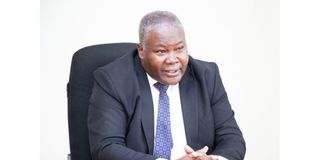
Newly appointed East African Community secretary- general Stephen Mbunfi, who will officially assume office on April 25. PHOTO | FILE
By Mugendi Nyaga
Tanzania gave Africa Mwalimu Julius Nyerere, the pan-African statesman who championed African unity. Even when his East African federation dream did not materialise, Nyerere never abandoned the vision of East African political unity.
Now, Tanzania has given the East African Community its new Secretary-General, Stephen Patrick Mbundi, who assumes office on April 25. The profound question facing him is whether he will draw inspiration from Nyerere’s pan-African legacy to advance the East African socio-economic liberation cause, or whether he will merely administer the Secretariat from narrow national lens.
As an outsider, his predecessor Veronica Nduva inherited a Community on the brink of collapse. Despite severe financial constraints, she facilitated stabilisation of an institution that had drifted into paralysis and begun to lose the confidence of citizens.
Mbundi is not an outsider to Jumuiya. In the last 20 years, he has risen through ranks in Tanzania’s Ministry of EAC Affairs from a Principal Economist to Director (Political, Defence and Security Affairs) and more recently, to Permanent Secretary.
Having led Tanzania’s delegations in technical and ministerial sessions across three Kenyan and three Tanzanian presidencies, he carries institutional memory that few current EAC officials possess. He has built relationships across partner state bureaucracies and understands EAC’s technical and political architecture and its intersection with national politics.
East Africans are counting on that depth of experience and institutional memory to deliver tangible results. The question is whether Mbundi uses this experience as foundation for innovative problem-solving, or as a constraint that dismisses new ideas with “we’ve tried that before.”
The bureaucratic trap
At the Summit, Heads of State decried the “massaging” of their decisions by bureaucrats and ministers, delaying implementation. Indeed, some EAC members practice what many diplomatically call “thorough consultation”. In practice, this is a consultation carousel, where decisions circle endlessly through technical committees and ministerial meetings but never arrive at action. Meanwhile, integration initiatives lose momentum while national interests are quietly protected through procedural delays.
Having participated in this very carousel for years as Tanzania’s negotiator, there is a legitimate concern whether Mbundi’s leadership style will perpetuate this pattern in Arusha. The question is whether he will align with the gate-keeping officialdom that explains why integration initiatives “can’t work,” or become a reconciling facilitator, advising how to make them work faster.
Clear mandate
The new EAC Development Strategy provides Mbundi with a clear mandate: full implementation of the Common Market, operationalisation of Monetary Union institutions, finalisation of the Confederation constitution making process and institutional reform.
Partner states continue to maintain barriers to trade and free movement, while key Monetary Union institutions, such as the East African Monetary Institute, remain non-operational despite years of commitments, jeopardising single currency preparations. Some members are even resisting progress toward a Confederation before these economic foundations are complete. The constitutional process itself has been a closed-door affair, posing serious legitimacy risks.
Tanzania, alongside other partner states, has been party to some of these delays including non-adoption of the EAC single Tourist Visa 12 years after launch, partial implementation of free movement of persons and labour, non-ratification of key protocols and delays in conducting national consultations on the Confederation constitution. Mbundi has been a key architect of these positions. The question is whether he will now facilitate full implementation of these joint commitments or defend Tanzania’s approach from Arusha.
On institutional reform, he will have to choose between focusing on fundamental strategic issues such as strengthening the Secretariat’s capacity, or consuming Ministers’ time with trust-eroding administrative and personnel battles. Strategic transformation requires evidence-based decision-making anchored in established institutional procedures.
No excuse for failure
These priorities depend on political will from the Summit, Ministers and national officials. The Secretary-General administers and implements rather than co-decides. He cannot force partner states to act against their perceived interests. But this is not an excuse for inaction.
The Secretary-General directs what issues are prioritised in background papers that inform Ministerial discussions. That determines which challenges receive attention, how they are framed, which Partner State concerns are amplified or reconciled, and whether the proposals arrive ready for approval or requiring “further consultation”. This is why the facilitator versus gatekeeper choice matters absolutely. Even when political will seems limited, a transformative Secretary General will prepare technical groundwork, identify win-win outcomes and create conditions for political courage so that ministers’ approvals become easier.
Mbundi also assumes office flanked by committed integrationists, President Museveni, Council Chair Rebecca Kadaga and Rwanda as Rapporteur. All are credible political champions who want integration to succeed. This support raises expectations significantly.
The Community is under close observation. When integration stalls, fingers mostly point to Arusha. How Mbundi leads will determine whether his tenure becomes a turning point or another squandered opportunity.
Mugendi Nyaga is an actuary and policy analyst. [email protected] X: @nyagacm