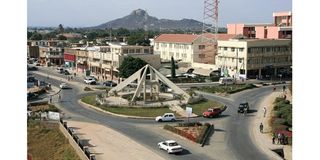
Why Dodoma’s inner ring road matters now more than ever
By Mohamed Besta
Dodoma is no longer just Tanzania’s political capital; it is steadily transforming into a vibrant urban centre whose infrastructure must keep pace with its expanding role. As the city grows in both population and economic importance, the question of mobility becomes increasingly urgent. Efficient, safe, and convenient movement is no longer a luxury—it is the backbone of a functional and forward-looking capital. It is within this context that the Dodoma City Inner Ring Road Project (6.4km) emerges not merely as a construction initiative, but as a defining step in reshaping how the city moves.
For many years, Dodoma has experienced the strain of mixed traffic patterns, where heavy vehicles and long-distance transport have had little choice but to pass through the heart of the city. This has led to congestion, delays, and increased safety risks for residents and commuters alike. The Inner Ring Road offers a transformative solution by creating a modern four-lane dual carriageway designed to redirect through-traffic away from the city centre. In doing so, it introduces a new logic of movement—one that separates long-haul freight from local urban activity, thereby easing congestion and restoring order to the city’s transport network.
The implications of this shift are profound. Travel times are expected to improve significantly, not only for private motorists but also for public transport and service delivery vehicles. Businesses will benefit from more predictable logistics, while residents will experience less time lost in traffic. This is how infrastructure quietly but powerfully shapes productivity and quality of life.
Equally important is the project’s strong emphasis on safety. Too often, road infrastructure in rapidly growing cities struggles to keep up with the needs of all users, particularly pedestrians and public transport passengers. The Inner Ring Road addresses this gap by integrating sidewalks, bus bays, service roads, and modern street lighting into its design. These are not cosmetic additions; they are essential components of a safer urban environment. By reducing conflict points between vehicles and pedestrians and ensuring orderly public transport operations, the project directly contributes to lowering the risk of accidents and enhancing overall road safety.
Yet mobility is not only about efficiency and safety—it is also about convenience and inclusivity. A well-functioning city is one where movement is accessible to everyone, whether one is walking, commuting by bus, or driving. The structured design of the Inner Ring Road promotes a more predictable and less stressful travel experience. Pedestrians gain safer pathways, commuters benefit from organized pick-up and drop-off points, and drivers encounter smoother traffic flow. In subtle but meaningful ways, the project enhances the everyday experience of moving through the city.
What makes this initiative particularly compelling is its alignment with the broader vision for Dodoma’s development. The project is anchored in the Dodoma National Capital City Master Plan (2019–2039), ensuring that it contributes to a long-term, coordinated approach to urban growth. The careful selection of priority sections—based on urgency, expected impact, and planning considerations—demonstrates a deliberate and strategic approach to infrastructure investment. It reflects an understanding that sustainable cities are not built overnight, but through consistent and well-planned interventions.
The journey toward implementing this project has also highlighted the value of strong international partnerships. The collaboration between the Government of Tanzania and the Government of Japan, through JICA support, has brought not only financial resources but also technical expertise and adherence to high standards in procurement and execution. The successful bid assessments marks a significant milestone, underscoring the commitment to delivering infrastructure that meets global benchmarks while addressing local needs.
Beyond its immediate function as a transport corridor, the new dual carriageway Dodoma Inner Ring Road (DIRR) is poised to act as a catalyst for broader urban transformation. Improved accessibility often leads to increased economic activity, encourages investment, and supports planned urban expansion. Reduced congestion also contributes to environmental benefits by lowering vehicle emissions and fuel consumption. In this way, the project aligns with a wider agenda of sustainable and resilient urban development.
As Dodoma continues to evolve, the importance of such infrastructure cannot be overstated. The Inner Ring Road represents a shift in how the city approaches mobility—from reactive solutions to proactive planning, from congestion to circulation, and from fragmented movement to an integrated urban system. It is a clear statement that the future of Tanzania’s capital lies in building infrastructure that serves people first.
Ultimately, this project reminds us that roads are more than physical structures; they are enablers of opportunity, safety, and connection. By improving how people and goods move, the Dodoma City Inner Ring Road is helping to shape a city that is not only more efficient, but also more liveable and inclusive. In that vision, one can see the outline of the Dodoma we aspire to build—a capital that truly works for all.
Mohamed Besta is Chief Executive of Tanzania National Roads Agency (TANROADS)