In June 2023, I visited Majdanek, in Poland, one of the 1000+ concentration camps Nazi Germany built to kill millions of Jews. The barracks were wooden, the watchtowers unremarkable, the gas chambers chillingly functional.
But what struck me most was not Majdanek’s architecture of death, but the ordinariness of it all.
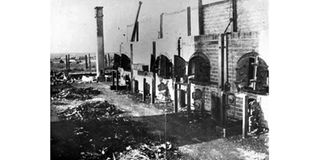
In this camp, 1200+ ordinary men and women operated the machinery of death—clerks, guards, drivers, officers. People who might have lived next door, who might have smiled at their children before reporting for duty.
Evil here was not spectacular. It was banal—woven into the routines of work. In three years, those very people slaughtered 78,000 at Majdanek.
The most shocking thing about Majdanek is not the scale of death, but the ordinariness of its perpetrators.
They were not born killers. They became killers because their government ordered it, because they were paid, because their thoughtlessness was easier than moral courage.
Evil was committed by apparent nobodies—people who surrendered their humanity to bureaucracy and ideology.
This is the question Hannah Arendt wrestled with. Observing the trial of Adolf Eichmann in Jerusalem in 1961, she coined the phrase “the banality of evil.” That word banality means dull, ordinary, boring.
Eichmann was a Nazi SS lieutenant colonel who orchestrated the logistics of the Holocaust—arranging trains, deportations, schedules that sent millions to their deaths. Yet in court, he did not look like a monster.
He was a bureaucrat. He insisted he was merely following orders, arguing that he harboured no hatred toward the Jews himself. Arendt’s insight was devastating: evil does not always announce itself with demonic grandeur. Sometimes it wears the face of a clerk or a police officer who refuses to think.
Arendt argued that Eichmann’s evil lay not in deep hatred or extraordinary malice, but in his thoughtlessness. He surrendered his moral responsibility to the system, becoming a “nobody.”
In her words: “The greatest evil perpetrated is the evil committed by nobodies—that is, by human beings who refuse to be persons.” Eichmann’s refusal to think critically, his inability to see the human consequences of his actions, made him complicit in one of history’s greatest atrocities.
Eichmann was not special. He was a normal person. And that is precisely what makes his case terrifying: if Eichmann could be that ordinary yet so evil, then perhaps any of us could be Eichmann.
That is Arendt’s warning. The boundary between ordinary life and extraordinary cruelty is very thin. Eichmann was not a mythical monster. He was a man who chose not to think, who allowed the machinery of bureaucracy to carry him along.
How often do we say, “I was just doing my job”? How often do we silence conscience because it is inconvenient to listen to it? “I am a police officer, a civil servant, or a soldier.” When we do what we do, we pretend that we are doing our jobs—but what we are really doing is refusing to think. And that is how atrocities get committed. When we refuse to exercise judgment, we open the door for cruelty to be normalised.
This is what we saw in Rwanda, in Nigeria, in Iraq and Syria—peoples living side by side for generations.
Then, when ideology, religion, ethnicity, or something else is weaponised, neighbours turn on neighbours, colleagues on colleagues, and normal people become agents of destruction.
The ordinariness of evil implies that the risk is within us all.
This is not about history. This is about those entrusted with authority who harm the very people they are meant to protect.
They all shift responsibility upward, away from themselves. But Arendt dismantles this excuse. Eichmann was executed not because he gave orders, but because he carried them out. “Just doing my job” is not a defence.
Hannah Arendt’s theory, centred on the “banality of evil,” argues that the greatest atrocities are often perpetrated not by fanatical monsters, but by ordinary people who surrender their capacity for moral thought.
People commit horrors not out of profound malevolence, but through profound thoughtlessness.
This is enabled by systemic evil, where political structures make atrocity appear as a normal, administrative duty—allowing everyday people to participate in unspeakable acts while believing they are simply doing their jobs.
The lesson is uncomfortable but essential: our defence begins in the private moment when we choose to think. Eichmann teaches us that evil thrives when people refuse to be persons.
Majdanek teaches us that ordinary people can become executioners. We have to choose vigilance, thought, and moral courage as a defence against evil.
Silence may be tempting, especially when speaking openly about injustice is dangerous. Yet we must think. We must remember. Atrocities are often committed by people who look like us and who live among us. We have to be sober.
We have to refuse thoughtlessness. That is the challenge Arendt left us. That is the challenge we must accept.
Charles Makakala is a Technology and Management Consultant based in Dar es Salaam
Register to begin your journey to our premium contentSubscribe for full access to premium content