Zambia votes on the future it has begun to build

A declaration first: I count Hakainde Hichilema, President of the Republic of Zambia, as a friend. Readers should weigh what follows with that knowledge. Friendship can cloud political judgment. But it can also provide a close view of character, of how a leader behaves when the cameras have gone, the speeches have ended and the available choices are all difficult.

In 2021, in the pages of Tanzania’s leading English daily, The Citizen, I argued that a change of leadership in Zambia could benefit both Tanzania and Zambia. Five years later, as Zambians prepare to vote on August 13, that proposition deserves to be revisited, not on the evidence of hope, but of experience.

Zambia’s election belongs to Zambians. Its consequences, however, will not stop at the border.

The country sits at the meeting point of eastern, central and southern Africa. It borders eight nations, produces one of the world’s most strategically important minerals and depends on corridors through its neighbours to reach global markets. Zambia’s success or failure therefore travels through copper prices, power lines, railway wagons, fuel pipelines and the trucks that cross Tunduma and Nakonde.

Over the past five years, Tanzania and Zambia have moved beyond the language of historical friendship towards the harder business of economic partnership.

Consider the Port of Dar es Salaam, perhaps Zambia’s most consequential piece of infrastructure that Zambia does not own. Cargo moving between Zambia and the port has risen by 130% from 1.5 million metric tonnes to 3.5 million since 2021, restoring Zambia’s place among the two largest users of Tanzania’s gateway to the Indian Ocean. For a copper-producing country without a coastline, access to an efficient port is not a diplomatic convenience. It is a condition of competitiveness.

The same logic applies to energy. Tanzania and Zambia are building the interconnector that will eventually link the Eastern and Southern African power pools. Tanzania has completed the short cross-border section between Tunduma and Nakonde; the much larger Zambian network is being built towards full operation. Once complete, the system will allow Zambia to import electricity when drought weakens its hydroelectric generation and export power when it has a surplus. Tanzanian Cabinet of Ministers has already approved 500MW power exports to Zambia.

This matters after the devastating drought of 2024 exposed the danger of depending too heavily on one source of electricity. A mine cannot expand on promises of power. A factory cannot employ people during prolonged load-shedding. Regional interconnection turns national vulnerability into shared resilience.

The two governments are also pursuing a new multiproduct petroleum pipeline alongside the ageing TAZAMA system, which has carried fuel from Dar es Salaam to Ndola since 1968. Combined with the planned rehabilitation of TAZARA, these projects could rebuild the physical spine connecting the Copperbelt to the Indian Ocean.

These are not glamorous undertakings. Pipelines, substations, ports and railway concessions rarely stir crowds at political rallies. But nations are transformed by precisely such patient work.

Zambia wants to raise annual copper production to 3mn tonnes by 2031. That ambition will require investment in mines, but also reliable electricity, efficient railways, predictable border procedures and competitive access to the sea. The corridor through Tanzania is therefore not separate from Zambia’s development strategy. It is part of it. The rebound of two countries reminiscence of Kaunda-Nyerere eras of brotherhood during liberation is a strong vote of confidence to President Hichilema.

Yet the more important question in this election is what has happened inside Zambia.

Hichilema inherited Africa’s first pandemic-era sovereign defaulter. The country had stopped servicing parts of its external debt, investor confidence had collapsed and the government’s room to finance development had narrowed severely. Debt restructuring was long, frustrating and politically unrewarding work. It required persuading official lenders, bondholders and commercial creditors, each with different interests, to accept a common settlement.

The process is not entirely finished, but agreements now cover about 94 per cent of the external debt included in the restructuring perimeter. The World Bank estimates that public debt fell from 133 per cent of gross domestic product in 2023 to about 93 per cent in 2025. Zambia remains at high risk of debt distress, and it would be dishonest to suggest otherwise. But it is no longer standing where it stood in 2021.

The wider economy is also recovering. Annual inflation, which had risen painfully during the drought, fell to 6.5 per cent in July. The economy expanded by 7.7 per cent in the first quarter of 2026 compared with a year earlier. Such figures do not erase hardship. They do, however, suggest that the foundations of stability are being restored.

I also saw Hichilema’s governing character during the drought and the maize shortage that followed during 2022/2023.

As trading houses on both sides of the border positioned themselves to sell maize into Zambia at crisis prices, I became a go-between, carrying messages between the presidencies in Lusaka and Dar es Salaam. Hichilema did not leave the matter entirely to his cabinet or to the market. He took a direct interest and pressed for a government-to-government arrangement with Tanzania, rather than leave Zambian consumers exposed to the prices commercial suppliers were quoting.

The maize eventually entered Zambia at little more than half those indicative commercial prices.

He then insisted that emergency imports could not become permanent dependence. Zambia had to return to producing its own food. Maize production subsequently recovered from about 1.5mn tonnes in the drought-hit 2023/24 season to more than 3.6mn tonnes the following season, producing a national surplus. A further bumper harvest is expected this year.

I did not hear this story afterwards from an official seeking to polish the President’s image. I carried some of the messages myself. I watched a president choose to fight for cheaper food when it would have been easier to let the crisis take its commercial course.

The relationship between our countries has also become more human. During an address to Zambia’s National Assembly, President Samia Suluhu Hassan announced that Zambians could remain in Tanzania without a visa for as long as 180 days, twice the period provided under the ordinary SADC arrangement. It may appear a small administrative gesture. It is not small to the traders, students, tourists and families who move between Lusaka, Dar es Salaam and Zanzibar.

None of this is an argument for complacency.

Many Zambians remain bruised by the cost of living. Youth unemployment is still intolerably high. Load-shedding has punished households and businesses. There is also legitimate debate about whether the government has always balanced economic reform, political tolerance and the protection of civil liberties as carefully as it should.

External achievements do not put mealie meal on the table. Debt restructuring does not, by itself, give a graduate a job. A new power line matters only when it keeps a workshop open, allows a child to study and enables a factory to add another shift.

These frustrations should not be dismissed as impatience. They are the substance of democratic accountability. A government asking for another mandate must explain not merely what it has repaired, but how the repair will now change ordinary lives.

The question before Zambia is therefore not whether the past five years have been perfect. They plainly have not been. Nor is it whether every promise made in 2021 has been fulfilled. It has not.

The real question is one of direction.

A country can change course before the road has produced its full rewards. It can also continue along that road while demanding that its leaders move faster, listen more carefully and distribute the gains more fairly. Democracy allows citizens to insist on both continuity and correction.

The projects now taking shape remain unfinished: the power interconnector is still being built; the new pipeline remains a proposal to be financed and constructed; TAZARA’s revival must move from agreements to functioning trains; and the ambition to treble copper production is still some distance away.

Their incompleteness is not proof that nothing has been achieved. It is the reason the choice matters.

Zambia has also been designated the incoming chair of SADC at a moment when southern Africa badly needs practical economic integration. The region speaks often of integration but still trades too little with itself, moves cargo too slowly and generates electricity as though geography stopped at national borders. Hichilema’s experience of building corridors, opening markets and linking power systems would be relevant to that regional task.

For too long, African countries have described themselves by what they lack: landlocked, power-deficient, debt-distressed. Good leadership asks a different question: what can geography, neighbours and disciplined policy make possible?

Zambia is not merely landlocked. President Hichilema is transforming it to a  land-linked, a junction connecting the Copperbelt, the Democratic Republic of Congo, the Indian Ocean and the Atlantic corridors. That transformation requires more than concrete and steel. It requires consistency of policy and confidence between governments, investors and citizens.

This is not Tanzania’s election to influence, and Tanzania should not attempt to do so. But neighbours may properly observe what cooperation has produced.

As a Tanzanian who has watched our two economies rediscover one another, and who saw a leader choose his people’s stomachs over the easier arithmetic of a crisis, I offer this judgment: Zambia has spent five difficult years repairing foundations that had cracked. The house is not complete. Some rooms remain uncomfortable. Too many people are still waiting outside.

But before pulling down the scaffolding, Zambians should look carefully at what has already been rebuilt, what remains unfinished and which direction offers the stronger possibility of completing the work.

On August 13, they will vote not only on the record of one man. They will vote on whether the future Zambia began building in 2021 deserves the chance, under the uncompromising supervision of its citizens, to be completed.

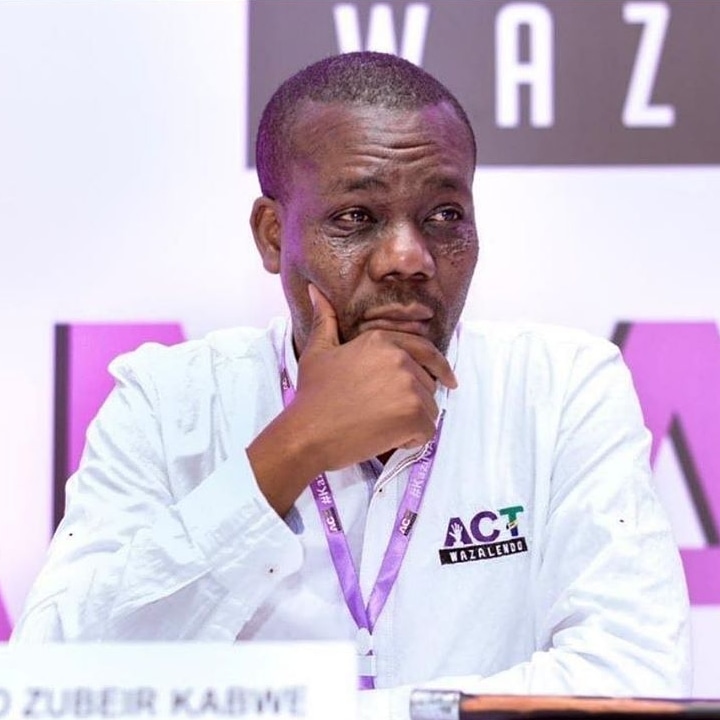
Zitto Kabwe is an economist, former Member of Parliament and former leader of ACT Wazalendo in the United Republic of Tanzania