Hopes and tears: The daily, costly journey of North Unguja's disabled students
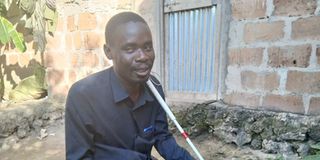
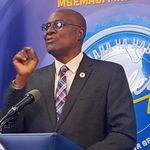
Visually impaired Khamis Hassan Makame speaks on Wednesday, July 15, 2026, on the daily struggles of securing inclusive education for children with special needs in North B District, North Unguja Region. PHOTO | JESSE MIKOFU
Unguja. Despite having a keen desire to access education, disabled people in the North Unguja Region still face a harsh reality.
A lack of inclusive schools, long distances, and high transport fares to the Urban West Region turn their dreams into a painful, bitter, and arduous daily journey.
At 8 am every morning in Kitope, North B District, visually impaired Khamis Hassan Makame stands by the roadside.
One hand grips his white cane, and the other holds his nursery-aged child as they wait for a commuter bus to the Kisiwandui Inclusive School in the Urban West Region.
Both Mr Makame and his wife are visually impaired, and their firstborn child shares the same visual impairment.
This forces him to make this arduous journey every single day to escort his son to school and back.
Though these immense hurdles shattered his own educational dreams, he is determined to fight for his son's future.
“I have no steady income, yet I spend over Sh4,000 daily commuting with my child. He is bright and deserves to learn, but I often wonder how long we can sustain these high costs,” a dejected Makame told The Citizen.
This suffering stems from one critical issue: North Unguja lacks inclusive schools for children with special needs, forcing the family to seek basic education outside their home region.
Beyond financial and physical distance constraints, Mr Makame also faces unfounded public ridicule, particularly from public transport operators.
“When they see you with a white cane, some conductors claim there is no space on empty buses. They just reject us,” he laments.
Mr Makame, recalls his own painful schooling days. “At Kitope Primary School, we struggled immensely because there were no specialised teachers.”
“We were simply integrated with regular students, completely ignoring our distinct learning and physical needs, with no targeted support offered,” he adds, suggesting that the government must intervene and build nearby facilities so they can finally avoid the daily ordeal.
Mr Makame’s plight is not unique, as the North B District Blind Association secretary, Ms Awena Hassan Seif, who also teaches at Kisiwandui, warns that many other special needs children are silently suffering under similar hardships.
“One student from deep within North B rarely attends classes. He stays home due to travel costs and extreme distance. He is very bright but severely limited by these constant struggles,” points out Ms Seif.
She advises the government to budget for special classrooms in every district, as blind pupils require specialised teachers and braille materials; forcing them into regular classrooms without adequate preparation is sheer systemic neglect.
Kitope Ward Imam, Sheikh Wadi Ali Mjengo, urged the community to dismantle all barriers preventing disabled children from accessing education.
Tanzania Assemblies of God (TAG) Kitope Pastor, Mr Emanuel Balingila, echoed this using biblical scriptures: “Anyone can become disabled through unexpected accidents. Disability is not by choice, and therefore, the fundamental right to equal education must be extended to everyone in our diverse society.”
This crucial advocacy is supported by the Community Empowerment in Rights and Good Governance project (CEJG Phase V), which is implemented by the Catholic Diocese of Zanzibar’s Development Department.
Project lawyer, Mr Peter Marwa, stressed that education is a fundamental human right enabling children to realise dreams.
The lawyer urged the government to decentralise services so that no child is excluded because of physical disability or the mounting challenges of long travel distances.
Beyond offering direct humanitarian aid, the project aims to sensitise the local community and mitigate challenges currently confronting individuals with special educational needs.
Mr Marwa said religious leaders, society, and government must collaboratively protect the rights of disabled citizens.
Consequently, the initiative in the North Region empowers communities and various civic and social groups to understand and champion their own human rights.
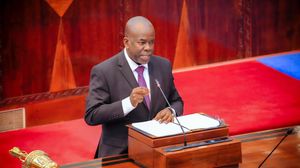
Education and Vocational Training Minister Lela Mohamed Mussa acknowledged these infrastructure and logistical challenges within several other regions.
“We recognise Kisiwandui as an established, trusted, inclusive school. While we have opened special facilities in South Unguja and South Pemba, the North remains underserved. However, our ultimate long-term plan is to construct them island-wide,” says Ms Mussa.
Education permanent secretary Khamis Abdulla Said emphasised that the ministry is prioritising the systemic empowerment of teachers.
“We recently recruited 90 inclusive education instructors, but our goal is to train every teacher in Zanzibar. This ensures that children with special needs can study anywhere without struggling to find qualified specialists,” said Mr Said.
Yet, the burning question remains: should a child’s educational potential be dictated by transport fares and gruelling daily commutes?
Until every region establishes standard inclusive classrooms, the academic dreams of many children will remain tied to long-distance journeys that carry both their hopes and tears along the way.
However, in the Ministry of Education's Sh1.1 trillion budget for 2026/27, no funds are allocated for building inclusive schools; instead, the government plans to increase the number of teachers trained in inclusive and life skills from 2,096 to a total of 2,500 active specialised educators.
It also targets growing special needs enrolment from 10,341 in 2025/26 to 10,500 in 2026/27, alongside distributing assistive devices to 50 of these needy young pupils.