Zanzibar AG urges stronger legal capacity in handling major loan agreements
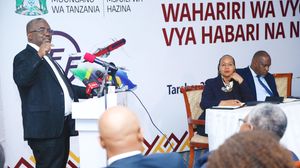
Deputy Attorney General of Zanzibar, Shaaban Ramadhan Abdalla (second left), speaks during the opening of a training session organised by CRDB Bank for government lawyers on legal aspects of loans in Unguja, Zanzibar. PHOTO | COURTESY

Unguja. The Attorney General has underscored the need for government lawyers to develop a comprehensive understanding of international law, financial agreements and negotiation techniques when handling large-scale loan contracts, amid growing demand for financing strategic development projects.
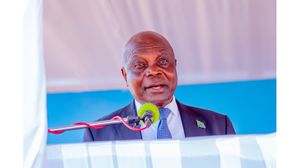
Speaking during a training session organised by CRDB Bank for government lawyers in Zanzibar on April 17, 2026, the Attorney General, Dr Mwinyi Talib Haji, said such expertise is essential to safeguard national interests.
In remarks delivered on his behalf by the Deputy Attorney General of Zanzibar, Shaaban Ramadhan Abdalla, Dr Talib noted that unlike concessional loans, commercial borrowing is subject to market-driven conditions, stricter repayment terms and higher accountability standards, often governed by complex legal frameworks.
He stressed that these characteristics demand a high level of diligence throughout the preparation, negotiation and implementation stages of loan agreements.
“The aim is to ensure the government does not enter into agreements that could undermine the economy in the long term,” he said.
Dr Talib observed that the use of international loan agreements has been rising rapidly, particularly in financing large-scale strategic projects. He added that under the eighth-phase government, demand for funding has increased significantly to support key sectors such as roads, ports, airports and healthcare.
To bridge the financing gap, the government has increasingly turned to a mix of funding mechanisms, including commercial loans. These agreements typically follow international standards and contain critical provisions such as governing law, dispute resolution mechanisms—especially international arbitration—sovereign guarantees and risk-sharing frameworks between parties.
“Given this complexity, it is clear that government lawyers must have a strong grasp of international law, financial contracts and negotiation strategies to protect national interests,” he said.
He further emphasised that all borrowing arrangements must undergo thorough legal scrutiny by the Attorney General’s Chambers before being signed, noting that lawyers must ensure terms are fair, transparent and enforceable, while identifying and mitigating potential risks in advance.
Chief Legal Officer of CRDB Bank, Mr Pascal Mihayo, said the bank has maintained close collaboration with the government in facilitating major financing arrangements.
“We have been handling these loans jointly with the government under the Attorney General’s Office. Based on our experience, we saw the need to organise training and discussions to strengthen cooperation in negotiating such agreements,” he said.
Mr Mihayo explained that the training covered all stages of loan agreements, including pre-signing, execution and post-contract management.
“Signing a contract is not the end. There are ongoing obligations that both parties must monitor. That is why we have come together to build capacity,” he said.
He added that while loan agreements previously took up to six months to conclude, such initiatives are expected to shorten the process and enable quicker access to development financing.
He cautioned that poorly structured agreements could result in losses for the government, underscoring the importance of rigorous review to safeguard national interests.
Meanwhile, Zanzibar Branch Manager for CRDB Bank, Ms Fatma Nassor, said the initiative is expected to unlock more opportunities by strengthening legal frameworks that underpin investment and business growth.
“This workshop will open up further opportunities for major government projects. We are ready to continue collaborating to ensure our country adheres to strong legal principles,” she said.