Zanzibar legislators flag weak accountability in public service

Unguja. Members of the House of Representatives have said that key principles of good governance have been eroded in Zanzibar, calling on the Ministry of Constitution, Legal Affairs, Public Service, and Good Governance to take urgent responsibility for restoring standards to improve efficiency in public service delivery.

The legislators further claimed that internal divisions among leaders within government offices have created factions, undermining employee performance and reducing overall productivity.

They also alleged that the judiciary, though constitutionally independent, has been interfered with and is sometimes subjected to external influence, a situation they said is weakening its effectiveness.

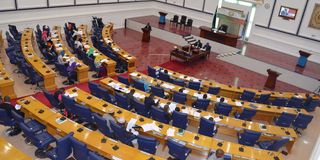
The concerns were raised on Wednesday, May 13, 2026, during debate on the ministry’s budget estimates in Chukwani, Unguja, where members argued that signs of weak governance were increasingly visible across institutions.

They said that if the ministry intends to promote civic education, it must first address governance failures within state structures.

During the debate, Pandani Representative, Prof Omar Fakih Hamad, ACT Wazalendo, said that although the ministry had outlined plans to promote governance education, the same principles were not being practised within institutions. He pointed to six key areas he said were being neglected.

He listed them as participation, efficiency and quality of work, accountability, transparency, equality, and inclusiveness.

“There are many issues, but these are some of the key ones missing in Zanzibar’s governance system. Participation is lacking. In the civil service, there is no efficiency and quality of work, which is why the government is outsourcing services to foreign companies,” he said.

“Accountability is weak, transparency is absent, and equality is not upheld. These are critical issues that must be addressed,” he added.

However, Minister of State in the Second Vice President’s Office, Mr Hamza Hassan Juma, said collaboration with private firms does not indicate a shortage of skilled public servants, but is instead provided for under laws aimed at improving efficiency through partnerships.

Chumbuni Representative, Makame Mohamed Sufiani, CCM, said some leaders in government institutions were forming groups that divide staff, thereby weakening institutional performance.

He said many leaders were resistant to criticism and often penalised employees who spoke out.

“Groups are being created within public institutions. Leaders are dividing employees and do not like being told the truth. Anyone who speaks out is seen as problematic and ends up facing difficulties at work,” he said, urging the ministry to curb the trend.

Ole Representative, Mr Seif Hamad Suleiman, ACT Wazalendo, said governance principles should begin within the Revolutionary Government of Zanzibar’s security institutions, which he said appeared less informed about rights compared to citizens.

Mtambile Representative, Mr Alley Masoud Alley, ACT Wazalendo, and Paje Representative, Mr Jaku Hashim Ayoub, also said there was inequality in public service and in the delivery of justice.

“Equality among public servants is lacking in our institutions in Zanzibar. Institutions differ in terms of benefits, meaning basic public service principles are not being observed,” said Mr Alley.

Women’s Special Seat Representative Moza Mohamed Khamis, ACT Wazalendo, said the judiciary, though constitutionally independent, lacked practical autonomy and continued to face interference.

“The judiciary does not appear to have real independence despite being a constitutionally autonomous institution,” she said.

She also highlighted a shortage of judges at the High Court, saying the number of cases had increased while staffing levels remained low, leading to delays in hearings. Zanzibar currently has 15 judges.

“There are many directives that interfere with court operations. This undermines its independence,” she said.

Earlier, presenting the budget, Acting Minister of State in the President’s Office for Constitution, Legal Affairs, Public Service and Good Governance, Mr Suleiman Masoud Makame, outlined 10 priority areas and requested the House to approve Sh123.682 billion for implementation.

The priorities include strengthening electronic systems in the public service, promoting ethics and good governance, intensifying anti-corruption measures, and improving auditing and oversight of public resources.

Other priorities include completing key judicial infrastructure projects, introducing performance accountability agreements for leaders, and strengthening training programmes for public servants.

The plan also covers reforms in legal institutions, development of the Pemba branch of the Institute of Public Administration, strengthening the Anti-Corruption and Economic Crimes Authority, and initiating construction of a law school and an Islamic university.