Zanzibar seeks higher taxes on alcohol, wigs and amusement

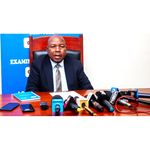
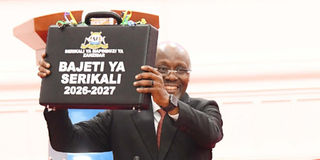
Dr Juma Malik Akil, Zanzibar’s Minister for Finance and Planning, displays the briefcase containing the Revolutionary Government of Zanzibar’s main budget speech during its presentation at the House of Representatives in Unguja, June 11, 2026. PHOTO | COURTESY

Unguja. The government of Zanzibar has proposed a series of tax increases on products including alcohol, wigs, artificial flowers and entertainment tickets, while offering tax relief for people with disabilities, small and medium-sized manufacturers and vocational training, as part of Sh8.5 trillion budget for the 2026/27 financial year.

Presenting the budget in the House of Representatives, Minister for Finance and Planning, Dr Juma Malik Akil said government revenue is projected to rise to Sh8.5 trillion, up by Sh1.5 trillion or 22.11 percent from the Sh6.9 trillion budget for 2025/26.
“These projections are based on policy reforms, various revenue collection strategies, and concessional domestic borrowing planned for the implementation of strategic projects during the 2026/27 financial year,” Dr Malik said.

The minister said the government expects its dependence on external financing to continue declining, from 4.9 percent in 2025/26 to 2.8 percent in 2026/27, largely due to reduced donor support and stronger domestic revenue mobilisation.

The budget also allocates Sh449.8 billion for gender-responsive development projects, with the government saying the funding will help ensure public resources are used more efficiently and that development benefits reach all citizens equitably.

Revenue measures

To strengthen domestic revenue collection, the government has proposed several changes to tax laws and levies.

Entertainment and media

One of the areas is entertainment tickets where a 10 percent excise duty on tickets for sports stadiums, entertainment venues and recreational facilities will be introduced.

The government expects the measure to raise about Sh2.27 billion, while the Ministry of Information, Culture and Sports will be required to implement electronic ticketing systems.

Excise duty on cable television services will be aligned with mainland Tanzania at seven percent, up from five percent.

The adjustment is expected to generate Sh1.27 billion.

Transport and infrastructure

Excise duty will be introduced on imported vehicles with engines below 1,000cc, and motorcycle import fees will increase from Sh30,000 to Sh50,000.

The vehicle measure is projected to raise Sh1.75 billion.

Passenger port charges for travel between Unguja and Pemba and between Zanzibar and mainland Tanzania will increase.

Travel between Zanzibar and the mainland will rise from $2 to $3, while travel between Unguja and Pemba will rise from $1 to $2. The changes are expected to add Sh1.75 billion.

The levy on air passengers will increase from Sh2,000 to Sh4,000. The government said the increase is intended to support investment in air transport infrastructure.

Consumer products and health-related measures

Excise duty on wigs, artificial hair, false eyelashes and artificial nails will rise from 25 percent to 30 percent.

The government expects the measure to raise Sh1.37 billion and says it aims to curb the use of products it considers harmful to human health.

A 20 percent excise duty will be introduced on imported artificial flowers, leaves and fruits.

The government said the measure is intended to address environmental concerns and waste management challenges.

Excise duty on cosmetics will increase from 10 percent to 15 percent.

A 20 percent excise duty will be introduced on UV/LED nail-drying machines. The government cited health risks associated with ultraviolet exposure.

A levy of Sh500 per kilogram will be imposed on imported sausages and related products. The stated objective is to discourage consumption of such products.

Alcohol and tobacco

Excise duty on imported spirits and wine will rise from Sh6,000 to Sh7,000 per litre.

Excise duty on imported beer will increase from Sh803 to Sh1,500 per litre.

Excise duty will increase from Sh55,896 to Sh65,000 per thousand sticks.

The government expects the alcohol and tobacco measures to generate about Sh1.25 billion, which it says will be used to strengthen health services.

Tax relief measures

The budget also includes several tax relief proposals aimed at supporting vulnerable groups and productive sectors.

Tax relief is proposed for imported wheelchairs, prosthetic limbs, visual and reading aids, white canes, braille equipment and disability-accessible toilets.

Stamp duty on commercial vehicles will be reduced by 25 percent, with payment integrated into the vehicle inspection process.

The Skills Development Levy (SDL) will be reduced from 4 percent to 3 percent to support vocational training and youth employment.

Tax relief on imported raw materials will be extended to small and medium-sized manufacturers that are not registered with the Zanzibar Investment Promotion Authority (ZIPA).

“This measure is expected to encourage investment in the manufacturing sector and strengthen the economy,” Dr Malik said.

Clampdown on abuse of tax exemptions

The minister said the government had observed misuse of tax exemptions granted to investors, government-funded projects and donor-funded projects.

To address the problem, a joint taskforce involving the Tanzania Revenue Authority (TRA) and the Zanzibar Revenue Authority (ZRA) will be established to monitor the use of exemptions.

The government warned that any exempted goods found to be diverted, sold or transferred to unauthorised parties would attract legal action. The crackdown is expected to increase revenue by Sh5.72 billion.

Debt remains sustainable, says government

As of March 31, 2026, Zanzibar’s public debt stood at Sh3 trillion, of which Sh2.987 trillion was domestic debt and Sh14.6 billion external debt.

“The current situation shows that Zanzibar’s debt remains sustainable, meaning the government can continue borrowing to finance productive development projects that contribute to economic growth,” Dr Malik said.

The budget also emphasises investment in electricity infrastructure, renewable energy, digital technology and statistical systems to support long-term economic development and improve domestic revenue collection.