Zanzibar to recruit 1,300 health workers in major drive to ease hospital overcrowding
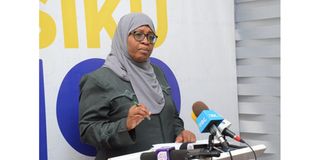
Minister of State in the President’s Office (State House), who also serves as Acting Minister for Health in Zanzibar, Saada Mkuya, speaks to journalists on the government’s plans in the health sector.
Unguja. The Revolutionary Government of Zanzibar has announced plans to recruit 1,300 health professionals to tackle staff shortages and improve service delivery across the islands.
The new recruits are expected to be deployed mainly to dispensaries and health centres, where shortages at lower-level facilities have contributed to overcrowding at major referral hospitals.
Speaking on March 18, 2025, the Minister of State in the President’s Office, who also serves as Acting Health Minister, Dr Saada Mkuya, said the government had identified a critical need for medical personnel and was taking urgent measures to strengthen health services.
“We plan to advertise 1,300 positions in this sector. Most of these professionals will be placed in dispensaries and health centres to improve services and reduce pressure on higher-level hospitals,” Dr Mkuya said.
The minister made the remarks during a briefing on government efforts to ease hospital overcrowding, part of a review of the first 100 days of President Hussein’s second term.
As of February 2026, the doctor-to-patient ratio in Zanzibar has improved from one doctor per 6,272 patients to one per 2,963 patients. The World Health Organization recommends a ratio of one doctor for every 1,000 patients.
Dr Mkuya said shortages at lower-level facilities force patients to seek treatment at major hospitals, creating significant congestion. He urged young Zanzibaris to apply once the positions are advertised, stressing that local applicants would be prioritised.
In terms of specialist staff, the government plans to increase the number of consultants from 126 in 2024/25 to 136 in 2025/26, with 53 currently in training. Specialist doctors have also risen from three to four, including two cardiologists, a radiologist, and a nephrologist specialising in kidney care and transplants. Specialist nurses have increased from 95 to 107, with 13 still in training.
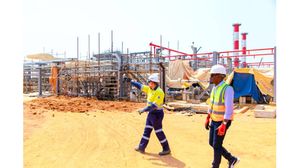
Despite infrastructure improvements, shortages persist. The government is constructing four regional hospitals in South Unguja, North Unguja, South Pemba, and North Pemba, with a total investment of Sh129 billion.
The North Unguja regional hospital in Mahonda, funded by the Government of Oman, has completed 95 percent of the Mother and Child Health building and is expected to open in March 2026. Construction of the main hospital building, contracted to Cross World Construction Ltd in January 2026, is scheduled for completion within 18 months.
Dr Mkuya said the initiatives have contributed to reductions in maternal and infant mortality, with maternal deaths falling from 145 per 100,000 live births in 2023 to 123 in 2025, and infant mortality declining from 13.2 per 1,000 live births in 2023 to 10.7 in 2025.
Residents continue to report long waits due to staff shortages. “Recently I took my child to the hospital, but because of the number of patients and limited staff, we left in the evening without being attended to,” said Khamis Hakunaga.