Revealed: The dark side of Dar’s booming meat trade
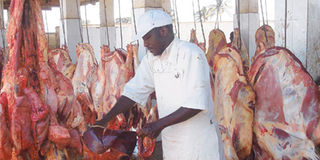
Some of the butcheries, which supply meat in Dar es Salaam were found to have dirty fridge door handles, inadequate washing facilities for staff, poor lighting and damaged flooring.
Food regulators say butchers need to be well dressed with gloves on.
What you need to know:
A month ago, Dar es Salaam witnessed an unprecedented shortage of beef in most of its butcheries. Beef virtually became the most difficult product to find in the local food market.
The reason for such a shortage was clear. Tanzania Food and Drugs Authority (TFDA) had conducted an impromptu visit to six abattoirs based in Dar es Salaam and ordered their closure due to poor hygiene.
Dar es Salaam. Do you have any idea of where that kilo of meat you dice up on your cutting board comes from? Before you brag that you are a good cook, think about your health.
A month ago, Dar es Salaam witnessed an unprecedented shortage of beef in most of its butcheries. Beef virtually became the most difficult product to find in the local food market.
The reason for such a shortage was clear. Tanzania Food and Drugs Authority (TFDA) had conducted an impromptu visit to six abattoirs based in Dar es Salaam and ordered their closure due to poor hygiene.
Do you have any idea of where that kilo of meat you dice up on your cutting board comes from?
Before you brag that you are a good cook, think about your health.
A month ago, Dar es Salaam witnessed an unprecedented shortage of beef in most of its butcheries. Beef virtually became the most difficult product to find in the local food market.
The reason for such a shortage was clear. Tanzania Food and Drugs Authority (TFDA) had conducted an impromptu visit to six abattoirs based in Dar es Salaam and ordered their closure due to poor hygiene.
As a result, four abattoirs of Vingunguti, Ukonga Mazizini, Mbagala Sabasaba and Tegeta were shut.
Poor hygiene standards
Section number six of the Regulations of Food Hygiene of 2006 gives the TFDA the mandate to ban slaughter facilities that don’t meet hygienic standards.
“Meat went missing in butcheries because we had to close the abattoirs due to safety and quality issues,” explains Mr Emmanuel Alphonce, TFDA’s Eastern Zone manager.
According to the TFDA’s official, their inspection of the otherwise popular abattoirs established that there were several hygiene issues that were regularly compromised and overlooked.
“During the inspection that we conducted on May 12, we discovered that these slaughterhouses had no toilets nor running water, they also did not have lairages (buildings to house the animals before they are slaughtered),” adds Mr Alphonce.
The move meant that goats, sheep and cattle from upcountry had to be slaughtered at the two remaining abattoirs of Kimara, which were given a clean bill to continue operating by the TFDA.
“It is true that there was a major shortage of meat in town at that particular time, but we did not want to leave anything to chance especially when Dar es Salaam was experiencing heavy rains, we closed them for public safety,” says Mr Alphonce.
He confesses that even though there were veterinarians at every slaughterhouse to check if the cows, goats and sheep were fit for human consumption, owners of such abattoirs still ignored health regulations.
Health hazard
The TFDA official says spills of animal blood have been a common sight on the floors of these slaughterhouses, and that the slaughtered animals are not stored in a hygienic manner, exposing the meat to some bacterial infections.
“The authorities at the abattoir must meet the new conditions as well or we will continue closing them down, they need to ensure the infrastructures are in place,” warns Mr Alphonce, citing renovation of water infrastructure as one of the conditions.
A worker at a slaughterhouse in Vingunguti who preferred to remain anonymous fearing that he will lose his job once he speaks to the media, says owners of the abattoirs do not take health issues into account when running their businesses and are only keen on extending their profit lines.
Not for meat lovers
“At Vingunguti for instance, more than 100 animals are slaughtered per day. How these animals are slaughtered will come as a shock to most meat lovers,” he says.
The butcher says animals’ cadavers and blood get scattered all over in the abattoirs, whereas the slaughtered meat is not well preserved as it waits to be ferried to the butcheries.
“If you are meat lover and happen to visit such places, you will give it a second thought next time you decide to buy meat,” he says.
But the closure of such slaughterhouses is just a tip of the iceberg.
Mr Joshua Chonya, a butcher at Kimara Suka who occasionally visits sale yards and abattoirs tells Sound Living that some things that are witnessed in sale yards and abattoirs are best kept untold.
Even in the presence of veterinarians, not all meat get inspected and approved by the medical experts to be sold on the counters of butcheries.
“At some point, the veterinarians get overwhelmed and lose count and check of the slaughtered animals, they end up declaring them fit for human consumption even without stamping,” he informs Sound Living .
High demand equals lower standards
Citing the recent closure of four abattoirs, Mr Chonya says the two remaining slaughterhouses in Kimara were overcrowded by animals, proving it difficult for the few veterinarians to check on the health status of the animals.
“Butchers from the affected part of the city brought their animals to Kimara…the situation became a bit tough for the veterinarians, to the extent that some of the meat was just declared fit for human consumption, but also mind you that the demand of meat in some parts of the city was very serious,” he says.
Early this year, National Ranching Company (NARCO) General Manager John Mbogoma noted that NARCO had outlined its plans to construct a modern abattoir at Ruvu in Coast Region which will have the capacity of slaughtering 800 cattle a day.
This, he noted was due to the fact that there was an increased demand for high quality in the market and prepared under high hygienic conditions to suit international market standards.
“We expect the construction to start in June this year that’s why we hereby invite interested contractors to pick tender documents from the NARCO headquarters. We welcome both local and international contractors who have required qualifications to do the job,” he noted.
While Mr Chonya suggests that the problem could be attributed to the shortage of slaughterhouses and veterinarians in the city, it seems that the whole essence of the local meat supply market leaves a lot to be desired.
Mr Raymond Wigenge, TFDA’s director of food safety, points an accusing finger at the butchers saying the onus of cleanliness starts with them.
He says: While we have cracked a whip on abattoirs, butchers also have a role to play in ensuring that the meat on sale is well persevered.
Mr Wigenge says at the moment, most of the butchers tend to violate health regulations while retailing meat. “The meat that is on sale should be on hooks and not on the hogs while the butchers need to be well dressed with gloves on, I have not seen this happening lately,” he complains.
The TFDA official adds that the butcheries need to be well equipped with powerful and working refrigerators to preserve meat while also having knives, cleavers and bone saws that are cleaned every day and stored in a clean environment.
But what surprises Mr Wigenge is the fact that some of the butchers carry the fresh meat from abattoirs on their shoulders while there are special hooks that can serve the purpose.
“While offloading the meat from transporting vehicles, the butchers need to use special hooks and not their shoulders or bare hands, they always need to be clean,” he advices. The health of consumers in Dar es Salaam, with a population of nearly five million people is now at risk with many consuming meat slaughtered in undisclosed and unofficial locations.