TZ records sharp drop in openness in budget issues
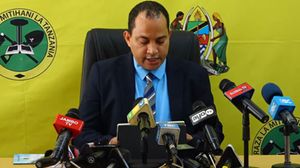
Kigoma-Urban Member of Parliament Zitto Kabwe
What you need to know:
Stakeholders, who gathered on Thursday during the breakfast debate hosted by the Policy Forum, also expressed their concerns on declining credibility of the national budget and executive tendency of implementing projects without consulting Parliament.
Dar es Salaam. Tanzania’s sharp fall in its scores in the Open Budget Survey (OBS) has triggered calls for a national dialogue on how to rescue the country from haphazard formulation and implementation of budgets.
Stakeholders, who gathered on Thursday during the breakfast debate hosted by the Policy Forum, also expressed their concerns on declining credibility of the national budget and executive tendency of implementing projects without consulting Parliament.
Debating the findings, Kigoma-Urban Member of Parliament Zitto Kabwe said the national dialogue was imperative, noting that the non-transparent budget poses a big threat in the realisation of national development goals.
“Although the country has good procedures for budget preparation, starting from the grassroots up to the top, procedures nowadays are not followed,” observed Mr Kabwe, who is the former chairman of the Parliamentary Public Accounts Committee (PAC).
According to him, the parliamentary budget committee should not be left with the oversight role, saying not always parliamentary interests are in agreement with those of the public. A political science lecturer at the University of Dar es Salaam (UDSM), Dr Richard Mbunda, said there is a bad tendency nowadays of implementing projects without involving Parliament.
“The country does not have sound budget rules that conform with international standards,” Dr Mbunda observed.
Presenting the OBS findings at the dialogue, OBS country researcher Godfrey Boniventura said the country was moving backward in terms of OBS performance.
He said Tanzania has plunged in the 2016/17 OBS report in all identified indicators after scoring 10 marks out of 100 compared to 46 scored in 2015/16.
The OBS findings suggest that the country has scored 15 and 41 marks out of 100 in the areas of citizen participation and budget oversight respectively.
Uganda has topped the East African Community (EAC) member states after scoring 62 marks followed by Kenya and Rwanda with 48 and 36 marks .