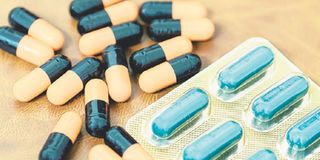
Antibiotics cannot treat viral infections and are rendered useless in the following conditions; cold, flu, bronchitis and most coughs. PHOTO| AFP
What you need to know:
Bacterial resistance is one of the biggest problems faced by modern medicine today and we (health workers) are to blame for it. The irrational prescribing of antibiotics coupled with poor adherence has increased resistance two folds over the last decade. Also, research and development for newer antibiotics has dropped drastically over the years which means it will take even longer to get new forms of antibiotics than ever before.
Imagine a world where a small ear infection and the prospect of undergoing surgery would most likely end up in death. Imagine a world ruled by bacteria, where humans cannot protect themselves. This is a grim thought. However, it is not far fetched, taking into consideration the increasing bacterial resistance to antibiotics.
Bacterial resistance is one of the biggest problems faced by modern medicine today and we (health workers) are to blame for it. The irrational prescribing of antibiotics coupled with poor adherence has increased resistance two folds over the last decade. Also, research and development for newer antibiotics has dropped drastically over the years which means it will take even longer to get new forms of antibiotics than ever before.
Dr Margaret Chan, Director General of the World Health Organization recently said, “Resistance to antibiotics could bring an end to modern medicine as we know it.” During the past year, numerous strains of bacteria resistant to Colistin were found in China, Europe and the United States. This has raised serious concerns around the world as Dr Tom Frieden, Director of the Centers for Disease Control and Prevention (CDC) said in Washington recently, “It is the end of the road for antibiotics unless we act urgently.” The lack of knowledge on antibiotic use is also a major factor contributing to the poor adherence and misuse of these medications.
A study conducted by WHO across 12 countries showed that 3 out of 4 of the people have misconceptions on antibiotic use.
Common Antibiotic Myths:
Myth: “Antibiotic resistance” means that humans are becoming resistant, not bacteria.
Truth: Antibiotic resistance means bacteria are becoming resistant to the antibiotic. This occurs due to inappropriate and overuse of antibiotics.
Myth: The only people at risk of an antibiotic-resistant infection are those that take drugs regularly.
Truth: Anyone can acquire antibiotic-resistant bacteria be it in a hospital or at a playground.
Myth: Antibiotics can treat a cold and flu
Truth: Antibiotics cannot treat viral infections and are rendered useless in the following conditions; cold, flu, bronchitis and most coughs.
Myth: The decrease of symptoms after antibiotic use means all the bacteria have been killed
Truth: The decrease of symptoms means most bacteria have been killed. However, few would remain until the completion of the dose. Thus, completing the dose is necessary.
Here are some important Do’s and Dont’s
Practice good hygiene and sanitation: Washing your hands and avoiding close contact with a person suffering from an infection will prevent you from acquiring it.
Complete the full course of the drug: It’s important to take all of the medication as prescribed, even if you are feeling better. If you stop using antibiotics before the prescribed period, some of the bacteria may not die and they will develop resistance.
Do not save antibiotics: You may think that you can save an antibiotic for the next time you get sick, but an antibiotic is meant for your particular infection at the time. Never take any leftover medicine.
You may have a viral infection and antibiotics are useless when it comes to treating them. If your doctor did not prescribe antibiotics, they may be a very good reason for it.
Do not purchase antibiotics after self-diagnosing:. Only take anti-biotics after being prescribed by a doctor. By taking a few steps, people can play their part in preventing antibiotic resistance.