Nairobi. African governments are increasingly exploring alternative ways to finance infrastructure, moving beyond conventional external borrowing toward capital-market instruments, pooled investment vehicles, and domestically anchored funds.
Policymakers and market participants say the shift reflects tighter debt constraints, rising currency risks, and a policy push to mobilise long-term local capital for transport, energy, and social infrastructure while reducing reliance on foreign-currency loans.
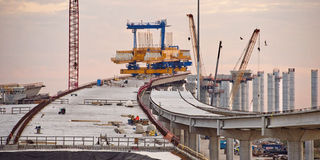
“By pivoting toward domestic capital mobilisation, countries are effectively attempting to match long-term infrastructure liabilities with stable, locally sourced funding, while simultaneously deepening domestic financial markets,” according to Shem Joshua, a Kenyan public finance management expert.
Across the continent, the infrastructure financing gap is estimated at between $68 billion and $108 billion annually, while domestic institutional capital, led by pension funds and insurers, now exceeds $1 trillion.
Yet less than five percent of these long-term savings are invested in infrastructure or productive assets, according to the Africa Finance Corporation.
Countries are, however, moving to tap into these domestic capital pools. South Africa’s debut Infrastructure and Development Finance Bond in November 2025 illustrates this transition.
According to the National Treasury, the government raised R11.8 billion (approximately $693 million) in its first-ever infrastructure bond sale, R7.0 billion (approximately $412 million) in 10-year notes at an interest rate of 8.575 percent, and R4.8 billion (approximately $281 million) in 15-year paper at an interest rate of 9.13 percent. Total bids exceeded R26 billion ($1.5 billion), yielding a 2.2-times subscription rate.
The bond forms part of the government’s domestic borrowing programme under the 2024 Medium Term Budget Policy Statement, designed to boost infrastructure investment and develop long-term financing instruments.
Finance Minister Enoch Godongwana described it as “a tool to scale public-sector pipelines and embed private-sector participation.”
Proceeds will finance projects approved under the Budget Facility for Infrastructure (BFI), spanning energy, water, transport, and social infrastructure.
The revamped BFI now operates four annual bid windows, up from one, improving project throughput and predictability. In its first two quarters, 28 submissions were received, with nine advancing to detailed appraisal.
Disbursements are channelled through the Development Bank of Southern Africa’s Infrastructure Fund, linking capital release to milestones and reinforcing accountability.
Investor appetite has been reinforced by improving macro signals: South Africa’s first S&P Global Ratings upgrade since 2005, easing power constraints, stronger-than-expected revenue collection, and a 2.8 percent export rise in October to R192.2 billion ($11.1 billion).
Kenya also offers an example of countries charging towards alternative infrastructure financing. On 15 December 2025, the Cabinet approved a National Infrastructure Fund and Sovereign Wealth Fund to pool privatisation proceeds and crowd in pension, private equity, and development capital for priority projects.
Initial capital is drawn from planned asset sales, aiming to support roughly KSh5 trillion (US$31 billion) in development over the next decade.
Elsewhere, Ghana’s fixed-income market has rebounded sharply, with GHS 214 billion ($12.8 billion) traded in 2025. Governor of the Bank of Ghana, Johnson Pandit Asiama, calls it “a new era of regional financial leadership,” positioning the country as a hub under the AfCFTA Financial Integration Framework.
Trading volumes plunged during the domestic debt exchange, from GHS 230 billion ($13.8 billion) in 2022 to GHS 98 billion ($5.9 billion) in 2023.
By October 2025, activity had fully recovered, reflecting restored investor confidence amid a macro turnaround: inflation fell from 54 percent to eight percent, the cedi appreciated 35 percent, and reserves cover nearly five months of imports.
GFIM (Ghana Fixed Income Market) innovations, including a centralized electronic trading platform and product diversification, have boosted transparency, liquidity, and private-sector participation.
Pension funds now hold over GHS 90 billion (US$5.4 billion) on the market, yet over 80 percent remains in short-term government securities, leaving long-term savings underutilized.
Ghanaian market analysts and development finance experts estimate that redirecting 5-10 percent of pension assets into structured infrastructure instruments could unlock roughly $1 billion annually for roads, solar plants, water networks, and digital infrastructure while delivering inflation-hedged returns.
Precedents in other countries show how pension-backed investments can fund hospitals, solar plants, and climate-resilient digital networks, generating strong returns and jobs. In Nigeria, the scale and sophistication of pension capital are particularly notable.
The country’s total pension fund assets reached ₦26.09 trillion ($14.6 billion) by September 2025, up 5.9 percent from the previous quarter, with Closed Pension Fund Administrators (CPFAs) driving a surge in offshore holdings.
Foreign money market instruments jumped 111.8 percent, reflecting both currency-hedging needs and a search for yield amid domestic market volatility. (bird story agency)
Currently, roughly 60 percent of retirement savings remain in government debt, with less than 10% in corporate securities.
The National Pension Commission (PenCom) has signalled a strategic pivot, encouraging funds to diversify into commercially viable infrastructure and private equity, rather than solely subsidized public projects. In North Africa, Morocco is leveraging capital markets to finance major infrastructure ahead of the 2030 FIFA World Cup.
The government plans a euro-denominated bond, its first since 2023, to raise roughly $2 billion for transport upgrades, stadium modernization, deep-sea ports, desalination plants, and green energy projects.
Lawmakers set a $6 billion foreign-debt ceiling for 2025, with one-third expected from bonds and the remainder from bilateral and institutional partners.
Morocco also leads Africa in sustainable finance. It accounts for over 97 percent of the continent’s green bond issuance, including a 2022 €92 million wind-powered high-speed rail bond. Central bank allocations allow 10% of reserves in green or sustainable bonds.
Egypt has focused on investor diversification. In October 2025, the government priced a $1.5 billion dual-tranche sukuk that attracted orders exceeding $9 billion.
Project-led financing is also reshaping frontier markets. In Mozambique, energy companies led by Eni reached a final investment decision on the Coral North FLNG project in 2025.
However, according to Joshua, this model is both an opportunity and a test.
“Successful mobilization of local capital could reduce dependence on foreign borrowing, lower debt-service pressures, and catalyze a more resilient, investable market ecosystem.”
“Conversely, failure to implement robust regulatory, fiscal, and operational frameworks risks disappointing investors and could undermine confidence in both local capital markets and broader economic reforms,” he added. (bird story agency)
Register to begin your journey to our premium contentSubscribe for full access to premium content