Bagamoyo Port’s arrival to shake East African trade map
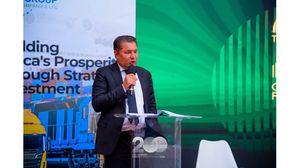
The Director General of TPA, Mr. Plasduce Mbossa (left), and the President of Africa Global Logistics (AGL) Ltd, Mr. Philippe Labonne (right), sign a Memorandum of Understanding (MoU) for cooperation on the design and construction of three new berths at Bagamoyo Port on 6 December 2025, at TPA Headquarters in Dar es Salaam.
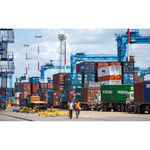
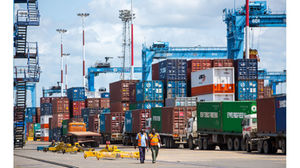
Dar es Salaam. The long-delayed construction of the Bagamoyo Port is finally taking shape, rekindling hopes of a major transformation in the speed, quantity and volume of cargo handled at Tanzania’s ports.
First conceived in 2004 as part of the Bagamoyo Special Economic Zone (BSEZ), tangible progress emerged in 2013 when Tanzania signed a framework agreement with China Merchants Holdings International (CMHI) and Oman’s State General Reserve Fund to develop the port. The Bagamoyo Port and the larger BSEZ were components of the Tanzania Mini Tiger Plan 2020, which sought to position the country as a leading trade and logistics hub in the region. At the time, the entire project was estimated to cost $10 billion (about Sh24.5 trillion).

After nearly two decades of anticipation, the Tanzania Ports Authority (TPA) has now signed a Memorandum of Understanding (MoU) with Africa Global Logistics (AGL) Tanzania Ltd for the design, construction and operation of three new berths at Bagamoyo Port.
The agreement, signed on December 6, 2025, at TPA Headquarters in Dar es Salaam, was endorsed by TPA Director General Plasduce Mbossa and AGL President Philippe Labonne. AGL, headquartered in France, is a subsidiary of MSC.
Speaking shortly after the signing, Mr Mbossa said the MoU marks the effective start of the long-awaited project. Under the initial phase, AGL will design and construct three modern berths out of the 28 planned for the port. The company will also construct two additional berths at Dar es Salaam Port.
“We expect construction of the three new berths at Bagamoyo to begin early January,” said Mr Mbossa. “We welcome more local and international investors to join the project, which aims to bring major transformation to port operations in the country.”
Mr Labonne said AGL’s decision to invest in Tanzania was influenced by the country’s stability, favourable investment environment and strategic geographic position as a key regional transport and trade hub.
“Tanzania is a fast-developing nation with a strong workforce,” he said. “Its strategic location provides access to multiple African markets and global trade routes. We believe this partnership will unlock numerous opportunities, including much-needed job creation.”
Construction of the three berths is expected to take 36 months. AGL was selected due to its wide experience in transport and logistics—including cargo handling, international shipping, customs operations and supply chain management. The company operates across sectors such as mining, oil, food and humanitarian assistance.
Capacity ahead of demand
Tanzania has witnessed significant growth in cargo volumes as it strengthens its position as a transport hub for land-linked neighbours including the Democratic Republic of Congo (DRC), Zambia, Malawi, Burundi, Rwanda, Uganda and others. In the 2021/22 financial year, TPA handled 20.6 million tonnes of cargo. That was an increase of 16.2 percent from 17.8 million tonnes the previous year. With ongoing improvements, Tanzania’s ports now handle 27.7 million tonnes, with plans to push the figure to 30 million tonnes by 2030. Mr Mbossa has previously emphasised that Bagamoyo Port is intended to be a deep-water port capable of accommodating vessels requiring depths of more than 17 metres. Dar es Salaam Port currently has a depth of around 14.5 metres.
This means vessels built under 4th Generation Shipbuilding Technology could berth comfortably at Bagamoyo but not at Dar es Salaam.
According to TPA, more efficient port operations will help reduce the cost of goods transported through Tanzanian seaports.
“If someone wants to bring in cargo on a vessel requiring a 17-metre berth, we must be able to accommodate it,” Mr Mbossa said during a past engagement with editors. “Our primary focus is not revenues, but facilitating economic activity in a way that reduces costs for the final consumer.”
Connectivity
During a campaign rally in Kibaha in September 2025, the then CCM Union presidential candidate Samia Suluhu Hassan announced that construction of the long-awaited Bagamoyo Port was set to begin—renewing hope among residents who have waited many years for the mega project. She said the port would be developed jointly by the Tanzania Ports Authority (TPA), the Tanzania Railways Corporation (TRC) and private sector partners. The port will be connected to the standard gauge railway (SGR) through a 100-kilometre link from the Kwala dry port, and will feature modern, extended berths capable of handling larger vessels than those currently docking at Dar es Salaam Port.
“Bagamoyo Port will be constructed alongside a 9,800-hectare economic zone designed to boost production and attract industrial investment. These are transformative projects that will make Coast Region a major transport and logistics hub for the nation,” President Hassan said.
She added that the project will expand trade opportunities and strengthen the country’s economy.
“Our pledge is to oversee and advance these strategic developments for the benefit of national growth.”
Register to begin your journey to our premium contentSubscribe for full access to premium content