Dar es Salaam. Tanzania’s natural gas sector is set for increased local participation following Orca Energy Group Inc’s decision to exit its Tanzanian operations through the sale of its stake in the Songo Songo gas project.
Orca has signed a definitive share purchase agreement to divest all shares in PanAfrican Energy Corporation (PAEM), its wholly owned Mauritian subsidiary, to Taifa Gas Tanzania Limited and Amber Energy Investment L.L.C.-FZ.
Under the agreement, Taifa Gas will acquire a 49 per cent stake, while Amber Energy Investment will take a controlling 51 per cent share.
The transaction marks a change in ownership of one of the country’s key gas assets, which has played a central role in domestic gas supply and power generation.
Orca said its decision to exit Tanzania follows a review of operational risks, ongoing disputes and uncertainty over the extension of the Songo Songo development licence and production sharing agreement.
The company noted that discussions with authorities are still ongoing, but the terms and outcome of any extension remain unclear.
In its statement, Orca said continuing operations under such uncertainty would require maintaining significant cash reserves to meet potential obligations, including tax liabilities, capital expenditure commitments, development costs, and expenses linked to arbitration and litigation that could extend over several years.
“The decision allows the company to preserve cash for shareholder returns while shedding associated risks and liabilities,” Orca said, adding that the move is consistent with its broader strategy to unlock value from its Tanzanian operations.
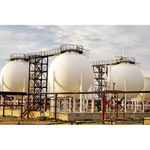
Orca said it expects the transaction to position the Songo Songo asset for its next phase of development under new ownership, led by Taifa Gas, which is active in liquefied petroleum gas importation, storage, distribution and export. Taifa Gas is owned by businessman Rostam Aziz.
Chairman David Ross described the Songo Songo project as a significant development for both the company and Tanzania.
“We are proud to have contributed to this project alongside the Government of Tanzania, the Tanzania Petroleum Development Corporation, and other stakeholders,” he said.
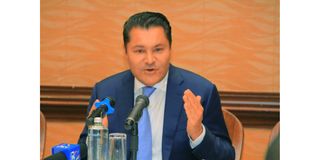
Tanzania Petroleum Development Corporation (TPDC) Director General Mussa Mohamed Makame said the deal reflects growing local participation in the energy sector.
“This is a positive development for Tanzania, as it opens the door for greater local participation in the gas sector,” he said.
He added that such transactions are common in the industry, with companies regularly entering and exiting markets through share transfers.
However, independent financial analyst Oscar Mkude said while the transaction supports increased local ownership, it also raises questions about investor sentiment.
He said the circumstances surrounding Orca’s exit could be interpreted by potential investors as a sign of underlying challenges in the investment environment.
“This could raise concerns among potential investors, as it may be interpreted as a sign of underlying challenges in the investment environment. It partly explains why many projects take longer to reach the actual investment stage,” he said.
Mr Mkude said that Tanzania still requires foreign capital to support large-scale investments in the energy sector.
“Local investors play a key role, but their capacity remains limited. We still need foreign investors to complement domestic efforts and ensure sustained growth in strategic sectors,” he said.
Background
PET entered into a Production Sharing Agreement (PSA) with the government and the Tanzania Petroleum Development Corporation (TPDC) in 2001, for exploration and development marketing and sales of additional gas from the Songo Songo Gas Field. PAET started successfully producing and supplying gas since 2004. The project is the first gas to power project in East Africa.
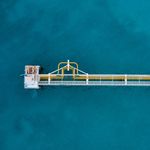
PAET owns and operates the eight current gas producing wells drilled on and slightly offshore Songo Songo Island (SSI). These wells feed gas to the Songas gas processing facility, which PAET operates on their behalf, and to the TPDC owned and operated National Natural Gas Infrastructure (NNGI) gas processing plant also on SSI. The gas is transported through a 225km pipeline to Dar es Salaam where it is fed at high pressure to several power generating plants, for generation of up to 70 percent of the Nation’s power demand, subject to seasonal variances. Some of the gas from SSI also enters the PAET owned and operated 50+km low pressure gas distribution ring main in Dar es Salaam, where it is fed to more than 40 industrial customers for captive power generation, combustion and industrial heating to produce a range of services and products including cement, textiles, cooking oils, detergents, steel products, glass and numerous famous national beverages.
Further to the supply of gas through pipelines, PAET also supplies Compressed Natural Gas (CNG) to a local hotel, an off-grid industry and to an increasing number of private and commercial vehicles via its distribution point at Ubungo. The supply of CNG to vehicles ensures cheaper and more environmentally friendly fuels are available to a wider range of Tanzanians an on increasing basis. PAET believes it can deliver significant benefits to Tanzania and Tanzanians through the expansion of this arm of its business.
Having commenced negotiations in Tanzania in 1991, and having been consistently producing gas since 2004, Tanzanians across a full range of technical and support trades make up more than 98 percent of the company’s workforce, in what is a highly professional company with a proven working knowledge of the safety, regulatory and legal frameworks within which we operate.
Register to begin your journey to our premium contentSubscribe for full access to premium content