Tanzania turns to risk mitigation to unlock large-scale investment
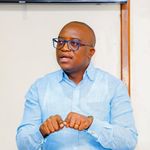
Minister of Finance, Mr Khamis Mussa Omar, speaks during the African Trade & Investment Development Insurance (ATIDI) board meeting held in Dar es Salaam. PHOTO | COURTESY
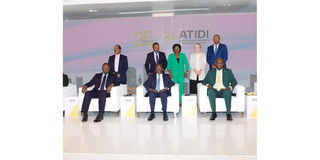
The meeting brought together senior government officials, financiers and private sector stakeholders to explore how innovative risk-management tools are improving project bankability and unlocking competitively priced financing
Dar es Salaam. Tanzania is increasingly turning to risk-mitigation mechanisms to unlock large-scale investment, with projects worth $7.8 billion (about Sh20 trillion) already supported through the African Trade & Investment Development Insurance (Atidi).
The minister for Finance, Khamis Mussa Omar, said the government is prioritising partnerships that reduce investment risk as part of efforts to attract capital into strategic sectors of the economy.
Speaking during Atidi’s board meeting in Dar es Salaam, Dr Omar said perceived risk has long been a barrier to financing major projects, particularly in infrastructure and energy.
“Unlocking Tanzania’s full economic potential requires strong partnerships that can mobilise capital at scale. Atidi plays a critical role in reducing risk, crowding in private investment and ensuring that high-impact projects move from pipeline to implementation,” he said.
The meeting brought together senior government officials, financiers and private sector stakeholders to explore how innovative risk-management tools are improving project bankability and unlocking competitively priced financing.
Atidi chief executive officer, Manuel Moses, said addressing risk remains central to unlocking Africa’s investment potential.
“The real constraint in Africa is not opportunity but risk. Without the right tools to manage it, capital cannot flow at scale,” he said.
He added that Tanzania, as one of Atidi’s founding members, continues to play a strategic role in the institution’s growth and remains a key market for catalysing trade and investment across the region.
According to Mr Moses, by reducing perceived risks and strengthening investor confidence, ATIDI is helping channel capital into infrastructure, energy and private sector projects that are critical for long-term economic growth and regional integration.
Atidi resident underwriter in Tanzania, Tusekile Kibonde, said the institution’s approach goes beyond insurance by helping stakeholders rethink how risk is assessed and managed.
“By supporting governments, lenders and investors to better understand and manage risk, we are enabling bankable projects that deliver tangible economic impact and strengthen regional connectivity,” she said.
Since its establishment in 2001 with support from the Common Market for Eastern and Southern Africa and the World Bank, Atidi has grown into Africa’s largest provider of trade credit and investment insurance, supporting more than $93 billion in investments and cross-border trade.
Ms Kibonde said Tanzania remained a key beneficiary, with more than 200 policies issued to date, supporting projects valued at $7.8 billion and maintaining a gross exposure of nearly $1.8 billion.
The institution’s support spans priority sectors including infrastructure, energy, telecommunications and affordable housing, areas seen as central to the country’s development agenda.
Among flagship projects is the standard gauge railway (SGR), which has enhanced transport efficiency between Dar es Salaam and Dodoma, reduced travel time to under four hours and strengthened Tanzania’s position as a regional trade and logistics hub.
The project has also contributed to lower carbon emissions, job creation and improved connectivity between the Port of Dar es Salaam and regional markets.
A high-level stakeholder workshop held alongside the board meeting, themed “Enhancing Tanzania’s Trade and Investment Landscape”, underscored the need to strengthen the country’s financial ecosystem to attract private capital and expand access to affordable financing.
Stakeholders said institutions such as Atidi are playing a growing role in de-risking investments, boosting investor confidence and accelerating the implementation of transformative projects.