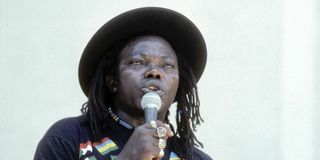
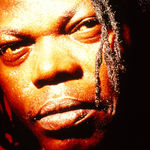
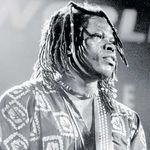
The Tanzanian diaspora community in Europe played a practical role in Remmy’s international popularity, a catalyst for his frequent tours across Europe
For those who experienced him live on stage, he was larger than life; he was among the finest Tanzanian musicians, unapologetic, raw and unfiltered. Yet as his fame grew, so did his closeness to everyday people. A true people’s champion.
The Tanzanian diaspora community, with Kenyans and Congolese in Europe played a practical role in Ramazani Mtoro Ongala’s international popularity, a catalyst for his frequent tours across Europe, the UK and North America.
His fame wasn’t a stroke of good luck; it was his thought-provoking lyrics at a time when Europe was hungry for authentic African music that made him the right African artist to join the WOMAD tour across Europe in the late 1980s and 1990s.
His daughter, Aziza Ongala, when travelling abroad, would always encounter fans who eagerly narrate to her their memories of his legendary father, whether their own encounter or what they heard their parents speak about Remmy as he toured across Europe and how the diaspora got to watch him perform live on the world stage.
A feat that even today, few Tanzanian artists have been able to accomplish or come close to. Aziza said, even though her Dad graced the European stages, he would equally give his full energy in each of the shows he performed in Tanzanian remote areas.
“There is no village or region across Tanzania my dad hasn’t visited; he would perform at local stages away from the glamour because he loved to perform for people regardless of the stage,” Aziza said. People gravitated towards Ongala for his authenticity and boldness.
Aziza remembers that he defined himself as a social commentator, a journalist and he loved to write and sing about the human condition.
He loved singing about everyday life, topics that touch everyone, whether it’s love, death, loss all ingredients that make up the human experience, for a lot of people, they related to that because everyone has lost someone or gone through hardship, many people have experienced poverty and some are rich but unhappy, its the genuine connection with people’s feelings that made his music resonate with so many people.
“He was able to articulate so well and people could relate to that,” his daughter said.
His Kiswahili songs became some of his favourite hits among Tanzanians in Europe and across the world. When his hit songs Kifo and Narudi Nyumbani were released, it solidified his international star status and soon promoters across Europe paid more attention.
The latter became a favourite among the diaspora who longed to go back home. It was like a part of home was embedded in that song; it cured homesickness, but the vibe was undeniable.
The song played in restaurants and bars frequented by East Africans, who introduced Remmy’s music to their European friends and soon he had a mass following among Europeans who spoke no word of Kiswahili.
His record deal with Real World Records from London had his songs recorded in more sophisticated studios and access to European distribution, which opened him up to a whole new fan base.
“The way he was able to articulate a good story at the same time make a good song is the reason he was in demand,” Aziza said.
The Kiswahili-speaking audience was growing in Europe and the DJs were collecting African music vinyls. Tanzanian music was gaining traction with Remmy at the forefront. Remmy kept a busy schedule, touring the world nonstop for 9 months a year.
His absence was felt by his children, but as a grown lady with children of her own, Aziza now understands she didn’t have an ordinary Dad.
People walk up to her and share their amazing experience with her dad and now she knows why she had to share him with the world.
“When I meet these people and they tell me about my dad, it’s like knowing him on a whole new level and it’s always very touching and it’s what keeps me going to keep the Ongala name alive,” she said.
In a time when most musicians were cautious to speak on issues that would upset the authorities. Remmy’s voice roared fearlessly, often using metaphors while addressing social issues, songs like Mrema dedicated to the Tanzanian politician known for his anti-corruption stance.
The song denounced corruption within the government, a subject not many Tanzanian musicians dared to write lyrics about, even today.
This was a dangerous trait for the Congolese-born musician; on a few occasions, he was threatened with deportation by the government, but that just made him more popular and propelled his fame.
“Tanzanians do not like to rock the boat, or shake the beehive, but he was bold, that was his personality,” Aziza said. In a different era, then, with no social media, Remmy was able to be more open to his audience.
He would often change lyrics to his songs when he performed live on stage, speaking on issues with undiluted lyrics that he would sometimes tone down in the recorded version.
Despite his numerous stints in Europe, Remmy never permanently settled there; his European wife had to move to Tanzania, where they raised their kids. At the time when many Africans dreamt of life in the West, Remmy was an African to the core.
He viewed Tanzania as his only home. Aziza remembers her mum saying that Remmy would frequently tour in Europe, but he never liked the cold; for him, he did it as a service to his fans in the diaspora. He saw it as his calling. His international fame didn’t shock him; it was very natural for him and didn’t change him.
He would speak to anyone from beggars in the streets to prominent leaders. But for his children, walking in public with their dad was a little intimidating; crowds of fans would gather around to greet him.
“One day he would have a show in a low-income neighbourhood, the next he would perform at the affluent Kilimanjaro hotel; it was all the same for him,” Aziza explained.
Remmy came to Tanzania as part of the Congolese (then Zaire) community that was welcomed under Nyerere’s ujamaa and pan-Africanism drive. Growing up in the streets as an orphan shaped his perspective on life. That was the reason he could challenge the authority and speak on the downtrodden and under-served.
His voice echoed across the world. Tanzanians in Japan, Australia, the UK and Europe were thrilled to see him on stage.
A breath of fresh air, an anomaly in the sea of obedient citizens who didn’t even dream to question how their country was running.
Aziza and her siblings launched the Ongala Music Festival in 2018. The goal was to honour his music and musicians of his calibre and preserve that part of Tanzania’s cultural history.
“Unfortunately, Tanzanians don’t really do enough to honour their heroes; there are a lot of musicians like Mbaraka Mwinshehe and many others that are not celebrated as they should be,” she said.
Aziza currently runs a music program at the British Council that celebrates his dad’s legacy as well as nurturing new young musicians who will carry the authentic Tanzanian music to the world.
His son Tom Ongala has taken the baton from his legendary dad. He is establishing himself as a musician. “He performed at the festival and I was surprised how much he sounded like our dad. It was scary,” Aziza explained.
Having lived abroad herself, she understands what kind of talent and love her dad had to be able to penetrate such a market.
“If you do not stand for something, you will fall for anything, they called him Remmy msema hovyo, muziki wa mnyonge. He branded himself as an underdog, the voice of the people and that was his appeal,” she added.