Board faces financial crunch to market Tanzania tourism
Tourism and Natural Resources minister Jumanne Maghembe speaks with Tanzania Tourist Board (TTB) staff during his recent visit in Dar es Salaam. With him are the ministry’s deputy permanent secretary Angelina Madete (middle) and TTB acting managing director Devota Mdachi. PHOTO|EMMANUEL HERMAN
What you need to know:
According to a five-year marketing blueprint rolled out in 2013, Tanzania aims at attracting two million visitors in 2017 from the current 1.1 million arrivals annually. However, the Tanzania Tourist Board (TTB) has been receiving as little as 35 per cent of the budget.
Dar es Salaam. Tanzania aims at increasing the number of tourists and earn more revenue but its budget to promote the country as a tourist destination is inadequate.
According to a five-year marketing blueprint rolled out in 2013, Tanzania aims at attracting two million visitors in 2017 from the current 1.1 million arrivals annually. However, the Tanzania Tourist Board (TTB) has been receiving as little as 35 per cent of the budget.
While the current budget stands at Sh5.4 billion, TTB says it needs between Sh15 billion and Sh17 billion per year for proper marketing of the destination.
TTB budget increased from Sh4.6 billion where it stayed for three years since 2012/13 to Sh5.4 billion in 2015/16, the amount which is termed to be little for the promotion activities locally and abroad.
“We are grateful to the government for providing this amount but when we are dealing with our competitors bigger budgets are needed so that we can meet our target,” says TTB acting managing director Devota Mdachi.
According to her, the board received only Sh550 million in the current financial year.
She said during the last financial year, the board received only Sh2 billion out of Sh4.6 billion which was set aside.
Tourism is Tanzania’s leading foreign exchange earner. It generates $2.2 billion (4.4 trillion) per year, according to the latest economic review of the Bank of Tanzania.
However, the World Bank argued in its 6th Economic Update published in January 2015 that the industry can grow and create more high-paying jobs and closer linkages with businesses and local communities if the government simplifies its system of taxes and fees and makes the sector revenue allocations more transparent.
The industry was estimated to have the potential to generate $16 billion (over Sh32 trillion) per year -- higher than Tanzania’s Sh22 trillion set for 2015/16 budget -- come 2025.
The earnings from tourism which employs close to half a million of Tanzanians are projected to reach $3.8 billion next year following the anticipated increase of the visitors.
Ms Mdachi called on the government to take a leaf from tourism books of other countries which have made a step ahead in the sector, prompted by good promotional budget.
South Africa’s budget is $180 million (about Sh360 billion) during the 2015/16 while that of Kenya stands at $50 million (about Sh100 billion).
The estimates for Zimbabwe and Uganda tourism boards stand at $13 million (about Sh26 billion) and $3.9 million (about Sh7.8 billion) respectively.
Ms Mdachi said Tanzania needed between Sh15 billion and Sh17 billion to properly implement promotional strategies which include international marketing targeting Germany, the UK and the US.
Recently, the Minister for Natural Resources and Tourism, Prof Jumanne Maghembe, promised that the government would increase the budget for tourism to attract more tourists.
Prof Maghembe, who made a promise when he visited TTB last week, stressed that the plan to increase budget was in line with the sector to double its contribution to the GDP to Sh8.8 trillion in the next two years.
“With a new intervention, we expect revenue to double and the number of arrivals to hit three million in the next two years,” he said.
Ms Mdachi said the board was also looking for a consultant who will help Tanzania reap higher from the big markets.
In addition to that, the board was in talks with Etihad Airways and Fly Dubai on the possible cooperation in marketing Tanzania.
Going by the 2014 data, most Tanzania visitors come from Africa at 525,938 arrivals followed by Europe and America, which bring in 362,382 and 124,218 tourists respectively.
East Asia brings in 70,986 arrivals while South Asia and Middle East account for 34,827 and 21,805 arrivals respectively.
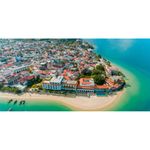
Tanzania’s tourism activities are still centred in the northern circuit and Zanzibar while the southern area remains unmarketed.
Apart from budgetary challenge, the board says other challenges are threats like the outbreak of Ebola in West Africa and terrorist attacks in East Africa.
In addition to that, the use of US dollar makes tourism in Tanzania expensive due to the fact that the greenback has strengthened against other currencies.