Dar es Salaam. There are few days in the Russian calendar that can lay claim over ‘Victory’ as May 9 can. Today is the day when they regained their sovereignty from invading forces of Hitler.
The Soviet Red Army’s counter-offensive against Nazi Germany—which verged on catastrophic in the war’s early days—ended with a triumphant march into Berlin in 1945.
Even in modern Russia the anniversary remains not only a massive public celebration, but an intensely personal one for citizens of Russian Federation and many of the former Soviet republics, whose collective casualties during World War II exceeded 25 million.
In fact, it is believed that Soviet human loss accounted for half of the total loss of the World War II, this is despite the initial distortions that put the figure at Seven million.
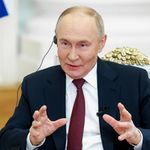
President Vladimir Putin encourages greater celebration of the day during his time, and when he addressed crowds in Red Square on previous occasions he made much of the historical triumph.
“The Soviet Union faced the most powerful assaults by the Nazis, but there is no force, and there will be no force, that could conquer our people,” Putin said during the parade in Moscow. May 9 has become the day to commemorate that staggering loss of life and one of Russia’s most popular holidays. But how did the Soviet Union find itself in such a compromising situation?
Having signed a non-aggression pact with Germany in 1939, Hitler’s invasion of June 1941 caught the USSR by surprise.
By the end of the year, the Germans had seized most of the Soviet Union’s western territory and surrounded Leningrad.
Leningrad’s horrific siege was one of the most lethal in world history. It lasted for 900 days, from September 1941 to January 1944. However, against all odds the city’s civilian population of almost three million refused to surrender, even though they were completely surrounded.
By the first winter of the siege there was no heating, no water supply, almost no electricity and very little food. Despite non-stop air and artillery bombardment, the city’s greatest enemies were hunger and the bitter cold. Exhausted people collapsed and died.
The streets were littered with dead bodies. The only life-line to the mainland was the ice of Lake Ladoga – known as the “Road of Life”.
Somehow, the city survived, its heroic resistance summed up in the motto: “Troy fell, Rome fell, Leningrad did not fall”.
The blockade took lives of at least 670,000 people, although some estimates suggest that as many as 1.5 million people died.
The Soviet losses were so great that, at times, the life expectancy of a newly arrived soldier was less than a day. Battles raged for every street, house, basement and staircase.
Areas captured by the Wehrmacht troops by day, were re-taken by the Soviet army at night to the further annoyance of the Germans.
This is why they dubbed this type of war Rattenkrieg – “rat war”, bitterly joking about seizing the kitchen but still fighting for the living-room. The city became the symbol of Soviet resilience and invincibility. The siege was commemorated by the Green Belt of Glory, a unique complex of memorials along the historic frontline.
To date you can still see warnings in St. Petersburg advising which side of the street is safe from the German shelling.
The outbreak of the Second World War found the Soviet Union unprepared for the conflict ahead.
Political purges had stripped the army of many of its experienced leaders while industrial production was slow in adapting to military needs.
But even when faced with war, the Soviet troops held out against the enormous German army, decimating and wearing it out, until a relieving force encircled the city compelling the invaders to surrender.
The crushing defeat at Stalingrad was unmatched in scale, spurring the Soviet drive towards victory… In May 1945 Berlin finally fell.
New weapons
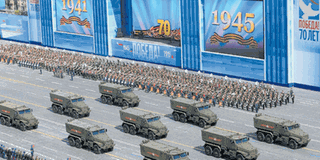
Today’s Victory Day Parade has also been used by Russian authorities to showcase new weapons at the Red Square, a moment of tremendous patriotism for Russians. Brad Lendon, a journalist with CCN writes that rehearsals for the event, which commemorates the 73rd anniversary of Nazi Germany’s surrender in World War II, began earlier this month, giving the world a glimpse of what’s coming.
Some of the weaponry the world is likely to see include the Sukhoi Su-57. This is Russia’s first homemade fifth-generation stealth fighter. Though the twin-engine jet first flew in 2010, it has yet to formally enter the Russian Air Force fleet.
The CNN quotes Russia’s defense minister as saying that two Su-57s were deployed to Syria in February for what he termed a “combat trial,” according to the state-run TASS news agency.
When it does officially become operational, the Su-57 will join the US-designed F-22s and F-35s and China’s J-20 as the world’s only in-service fifth-generation fighter jets. Russia’s new hypersonic missile, dubbed the Kinzhal, was carried by two MiG-31K jets during a rehearsal last week.
In unveiling the weapon on March 1, Russian President Vladimir Putin said, according to the CNN, that it is capable of traveling 10 times the speed of sound and maneuvering around anti-ballistic missile defenses, according to TASS. “It is a cutting-edge weapon, namely a hypersonic long-range missile capable of overcoming air and missile defenses. It is invincible, having serious combat might and potential,” Russian Deputy Defense Minister Yuri Borisov said in a TASS report recently. The YARS ballistic missile, also know as the SS-27, is a mobile-capable missile that can carry 10 nuclear warheads over a range of up to 12,000 kilometers, according to the Missile Defense Advocacy Alliance (MDAA).
Russia has 73 of the missiles in its inventory, with 63 of those being on mobile platforms and 10 being based in silos, the MDAA says.
“The missile has the capability to maneuver during flight and deploy both active and passive decoys which gives Yars the advantage against modern missile defense systems,” the MDAA says, according to the CNN. Russia first showed off its Armata T-14 main battle tanks in the 2015 Victory Day parade. Initial testing of the tanks is expected to conclude this year, followed by operational tests, according to a TASS report in February. Russia expects to have 100 Armata tanks delivered to its forces by 2020, Deputy Defense Minister Yury Borisov said in a 2017 TASS report.
The Armata “is a cutting-edge vehicle with an unmanned turret armed with a brand new 125 mm smoothbore cannon, which is the most powerful gun of its kind to date in terms of muzzle energy,” Russian media reported in 2015.The S-400 system has been compared to the US’ Patriot missile defense system and it can engage targets including manned and unmanned aircraft, cruise missile and ballistic missile, according to the Missile Defense Project (MDP) at the Center for Strategic and International Studies.
With a range of 400 kilometers, the mobile S-400 launchers have been deployed to protect Russian military units in Syria and the Crimea, the MDP reports. The S-400 is a big export priority for Russia, with sales to China and India, according to the MDP.
Russian media has also reported deals with to traditional US arms customers Turkey and Saudi Arabia in the past year. The Buk-M2 is a self-propelled, medium range missile system designed for air defense.
Russian media reports the system can track up to 24 airborne targets at one time and fire on four of those at ranges up to 25 kilometers in height and 45 kilometers in ground distance.
The Buk-M2 can also be used against targets on the ground and at sea.