African Entrepreneurship Award: This is the second competition award, since the African Entrepreneurship Award was introduced in 2014. The programme has been divided into three categories, including education, environment and uncharted. This means that an applicant’s idea should either bring positive impact in education or environment. An idea that has a high business impact and that has not been tested before in the continent was of utmost priority.
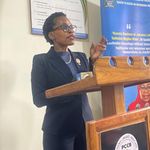
Last year was another remarkable year for the young entrepreneur Jenifer Shigori. With a bright smile on her face, Shigoli, 29, reveals her gratitude after winning an African young lady Entrepreneurship Award.
The award powered by BMCE Bank of Africa, aims to boost entrepreneurs and scale up their businesses across the continent. “Wining such an award at my age was not an easy achievement, but I’m glad I won and everyone is proud of me. I have become an icon to many youth who desire to achieve greatness in their lives,” the spirited winner speaks.
Shigori believes that many other young ladies can become successful entrepreneurs if they get enough encouragement.
Shigoli is a second born in a family of three. She comes from an educated family where her father is an engineer and her mother is a public social development officer in Dar es Salaam.
With an abundance of time on her hands as a result of being single, and with no children to take care of, Shigori uses most of her time focusing on her business.
She is a graduate in Law (LLB) from Tumaini University, Dar es Salaam campus.
The beginning
Her success story began in 2013 after she quit her legal profession to pursue a three-month manufacturing course. She sacrificed her legal officer position at the Attorney General’s Chamber on March 2012 after a year of service.
“I did not enjoy the job because I had a dream of owning my own project,” she says.
Shigori then acquired skills on making liquid soap and went on to start a business with Sh23, 000 as capital.
With her small capital she could produce at least 20 litres of soap a day, distribute it to households and hotels.
In the same year, Shigori registered her company named Malkia Investments LTD (MIL).
According to her, the company was licensed to produce, distribute and sell cleaning products. MIL provides a range of liquid detergents branded “BUBBLY”.
The company supplied bubbly cleaning products to all retail stores, supermarkets, hospitals, hotels, schools and cleaning companies.
Again in April 2014, she created a “Choo Salama Programme” in association with Tanzania Women Teachers Association (TAWOTEA) designed to create awareness on water, sanitation and hygiene in public primary schools.
Her target was to help community schools access safe water, improved sanitation and awareness on water-borne diseases.
“I have generated some money that helped me to start an industrial plant here in the city, producing the same product,” she says.
She has spent almost Sh3 million to set up a plant.
Ms Shigoli again came up with the idea of producing reusable sanitary pads in 2015.
Her idea was to help students who miss classes due to menstrual mishaps.
With the idea, she managed to win the African Entrepreneurship Award in the education category and was awarded $150, 000 (Sh327 million) as winning prize.
The sanitary pads seemed useful and affordable to many girl students.
Her ELEA pads were more environmentally friendly compared to commercially produced pads.
“My journey was not that simple, I have been experiencing hiccups but only Sh23, and 000 made me achieve great success,” she said.
Shigori joined the competition in February last year with a goal of getting money to expand her project.
The competition started with 8000 applicants, then 4300 in the second round and 187 in the third round.
Shigori was among 37 finalists from 22 countries who went in Casablanca-Morocco for final challenges. She emerged victorious at the end of the competition.
Apart from this award, Ms Shigoli has been able to win other different awards as well.
In March, 2015 she won a Tanzania Women of Achievement Awards (TWAA).
The awards recognised her as a woman who has gone an extra mile with outstanding performance in different fields due to the impact she brought to the society.
Again in December 2015 she was honored with a Young Entrepreneur of the year award by the Association of Tanzania Employers (ATE) & International Labor Organization ( ILO).
The awards recognised her as a young entrepreneur with outstanding performance and contribution in job creation.
Her company Malkia Investment Ltd has also won her different awards.
On December 2015, her company won an Africa Business Idea Cup (ABIC).
The award recognised her company’s idea as one with the most positive impact to the society.
On the night of her recent victory, holding her award tightly with respect, with an endless smile and a joyful face, Shigori was thankful for the support she gets from the government and other stakeholders in achieving her goals.
After winning the award, the government offered Shigori with a hectare of land in Kibaha, Coastal region to build a plant.
Besides, the Tanzania Private Sector foundation TPSF has promised to train her on entrepreneurship skills.
Moreover, her family, friends and other stakeholders also promised to support her with knowledge and material requirements.
“I thank the government for giving me the piece of land to enable me to expand my business,” she said adding her thanks to TPSF, her family and other people around her.
Shigori is not satisfied with the capacity of her industrial plant at Kimala mbezi, which has the capacity of producing only 2500 Elea pads a day
She plans to expand her business by building a new plant at Kibaha industrial area. This will be able to achieve that thanks to the piece of land granted to her by the government and the grand prize she won will be used for financing.
“Winning the $150,000 is critical to helping me reach my long life dream of having a big industrial plant to produce more pads and create more jobs,” she said
She plans to increase her production capacity to at least 10,000 pads per day from 2,500, she currently produces.
She believes after the completion of the plant by next year, she will be able to provide direct jobs to more than 45 people and other 5, 000 people will get work indirectly.
With such high capacity, Shigori dreams of conquering the East and Southern Africa countries with vast supply of the pads she makes.
“After dominating the local market, I plan to start exporting my products to other African countries soon because I have discovered that we share the same challenges when it comes in menstrual hygiene challenges to girl students,” she said.
The future certainly looks bright for the young and ambitious Shigori. With continued support from the government and other stakeholders, her contribution to the development of Tanzania will go higher from here.