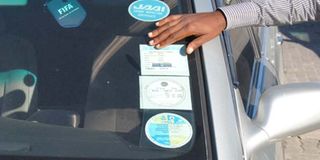
Inspecting your vehicle’s insurance sticker is essential so that you do not get duped by those selling illegally-owned, outdated ones. PHOTO|MICHAEL JAMSON
What you need to know:
But Tira handles a number of cases related to outdated and genuine but illegally owned stickers which are used against the Insurance Act No. 10 of 2009.
Dar es Salaam. Tanzania’s insurance market is free from fake vehicle stickers.That is the case for commercial and non-commercial vehicles, the Tanzania Insurance Regulatory Authority (Tira) says.
But Tira handles a number of cases related to outdated and genuine but illegally owned stickers which are used against the Insurance Act No. 10 of 2009.
According to Tira, there is a number of cases, some pending in court and others already ruled and convicts fined accordingly.
According to the Act, the convicted person faces a fine not exceeding Sh5 million or imprisonment of two years or both.
The Commissioner for Insurance of Tira, Mr Israel Kamuzora, states that he has never seen or heard any case involving fake auto insurance stickers in use in Tanzania.
“All our stickers are genuine, but what happens is that some people still own them illegally,” he said.
According to him, if a sticker is lost or stolen, Tira issues a public announcement so that whoever sees it reports to the authority.
Information from various zones shows there have been cases of illegal ownership of the documents, some of which end up in courts.
A Tira representative in Zanzibar, Mr Mohammed Amir, said there was a loophole among insurance companies which give an avenue for original stickers being stolen and be sold to car owners.
According to him, Tira issues the genuine stickers to insurance companies, which then issue to their brokers and agents who are supposed to sell them to customers.
Tira said the lack of proper handling of stickers from the authority to agents or brokers was one of the causes for illegal possession of stickers.
Problems also occur when the licence of an insurance dealer (insurance company, agent or broker) is revoked for misconduct, binding them to return the stickers to the authority.
“If the insurance company, agent or broker has the licence revoked, but fails to return the issued stickers immediately, they are invalid and whoever buys, owns them illegally,” said the Tira director of Legal Services, Mr Paul Ngwembe.
However, the Association of Tanzania Insurers (Ati) said reports concerning of the presence of fake vehicle stickers were rare.
ATI chairperson Maryanne Mugo, said the widespread concern in insurance was that of genuine stickers owned illegally.
The prevailing challenge of genuine insurance stickers being owned illegally is to some extent related to poor technology used in the whole process of insurance stickers.
Mr Oscar Kikoyo, the executive secretary of the Surface and Marine Transport Regulatory Authority’s Consumer Consultative Council, is calling for the dropping of the current paper document, because it makes it easy for some people to illegally possess genuine insurance stickers.
Ms Mugo told BusinessWeek that discussions were ongoing on the possibility of transforming insurance certification into electronic from manual. “The discussions are yet to be concluded for further steps to follow.” Mr Amir calls on the government to give more powers to the Commissioner of Insurance to punish misbehaving insurance companies, brokers and agents.
Under the Insurance Act No. 10 of 2009, the Commissioner of Insurance is mandated to fine offenders under sections 18,26,30,34 and 66 instead of offenders being prosecuted in court.
If an offender refuses to pay a fine, then he or she faces criminal prosecution in court.
According to the law, the commissioner shall issue an order to pay fines only if the offender admits in writing that he/she has committed the offence.
In addition, the Commissioner of Insurance may exercise powers vested in him under section 165 to issue a cease and desist order to any insurance registrant where in his opinion a person registered to conduct an insurance business is proven to conduct it in an unlawful or unethical manner.
The law also says the commissioner shall compound offence and issue an order to pay fine only if the offender admits in writing that he/she has committed the offence and section 162 is clear on it.
The Commissioner of Insurance or his representative, upon the consent of Director of Public Prosecutions may prosecute some insurers, brokers or agents in the court.