Africa must lead, not follow: ECSA-HC urges a bold new era in global health governance

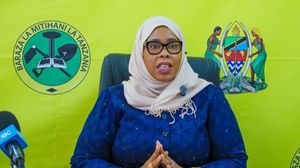
The Director General of the East, Central and Southern Africa Health Community (ECSA-HC), Dr Ntuli Kapologwe, delivers his welcoming remarks during the Global Health Diplomacy Workshop held in Lusaka on November 20, 2025

What you need to know:

  • Addressing delegates at the Global Health Diplomacy Workshop in Lusaka, Dr Ntuli said it was imperative for African nations to adopt a more assertive, united and strategic posture as the global health landscape undergoes profound transformation.

Lusaka. The Director General of the East, Central and Southern Africa Health Community (ECSA-HC), Dr Ntuli Kapologwe, has issued a clarion call for Africa to take its rightful place at the forefront of global health governance, insisting that the continent must no longer remain a passive observer in international decision-making.

Addressing delegates at the Global Health Diplomacy Workshop in Lusaka, Dr Ntuli said it was imperative for African nations to adopt a more assertive, united and strategic posture as the global health landscape undergoes profound transformation.
“Africa must not remain on the periphery of global decision-making,” he declared. “We must step forward as a region that speaks with one voice, negotiates with clarity, and asserts our right to shape global frameworks in ways that reflect our realities. This is the moment for Africa to be a proactive architect of global health governance.”

The workshop, convened on November 20, 2025 under the theme Leveraging the Pandemic Agreement, Revised International Health Regulations (IHR 2025), and the Right to Health to Advance Africa’s Global Health Diplomacy Agenda, brought together senior officials, diplomats and technical experts from across East, Central and Southern Africa.

The event was organised by ECSA-HC in partnership with WHO AFRO and EQUINET.

Dr Ntuli noted that Africa stands at a pivotal crossroads following the adoption of the Pandemic Agreement and the Revised IHR (2025).

“The global health architecture is shifting before our eyes, and the decisions made today will shape how our countries prepare for and respond to future threats,” he said.

He highlighted ECSA-HC’s longstanding investment in building regional health diplomacy capacity, describing the workshop as another step towards strengthening Africa’s collective negotiating influence.

He also announced the forthcoming ECSA-HC Certificate Course on Health Diplomacy, emphasising that Africa’s ability to shape global health governance hinges on cultivating a new generation of skilled negotiators capable of navigating complex international processes with confidence.

Opening the workshop, Zambia’s Permanent Secretary for Health, Dr Kennedy Lishimpi, reaffirmed the country’s commitment to strengthening regional and multilateral collaboration “Regional cooperation is no longer optional—it is the backbone of our collective health security,” he told participants.

Dr Lishimpi underscored the significance of the recently endorsed Pandemic Agreement, describing it as a framework underpinned by equity, solidarity and fair access—principles long championed by African nations.

He also highlighted the transformative potential of the Revised IHR (2025), which introduce stronger obligations for early detection, reporting and One Health integration.

However, he cautioned that Africa must engage with these global reforms judiciously: “We must safeguard our sovereignty, protect our people, and strengthen our resilience as these global instruments take shape.”

He further reminded delegates that diplomacy remains a vital pillar of health security. “Diplomacy in global health is just as important as vaccines or medicines. Without diplomatic strength, technical solutions cannot succeed.”

During a panel session, Dr Charles Kuria Njuguna of WHO Africa reflected on Africa’s negotiating experience during the drafting of the Pandemic Agreement.

He noted that while the continent fought tirelessly to keep equity at the centre of the discussions, “the struggle is far from over.”

“The question now is not what the agreements say, but how Africa ensures these commitments become reality,” he warned.

He stressed the continent’s urgent need for stronger technology transfer, the effective use of TRIPS flexibilities, expanded regional manufacturing, and enhanced surveillance capabilities.

“We cannot talk about preparedness if Africa does not have the ability to detect, produce and respond from within the continent,” he added.

ECSA-HC, which serves nine Member States and provides technical support to several additional countries, continues to play a central role in strengthening health systems, advancing regional cooperation and promoting evidence-based policy across the region.

The Lusaka workshop forms part of the organisation’s ongoing efforts to bolster health governance and preparedness.

It reaffirmed the region’s commitment to championing a unified and influential African voice in global health—one that leads, rather than follows, in shaping the future of global health security