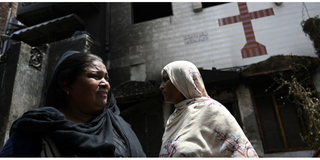
A blasphemy threat has allegedly been used against a Christian family whose land was reportedly seized by a Muslim neighbour in Gujranwala city, Pakistan.
Since 23 February, Sarwar Masih and his family have been facing serious threats after their neighbour allegedly warned them of blasphemy charges if they attempted to reclaim possession of their property.
A human rights organisation has called for the safety of Masih’s family and urged authorities to ensure justice against those accused of using blasphemy allegations to justify the illegal occupation of the Christian family’s property.
Human Rights Focus Pakistan (HRFP) stated that the perpetrators allegedly used blasphemy laws as a tool to facilitate unlawful land grabbing.
HRFP is urgently calling on the authorities to ensure the protection of Sarwar Masih and his family, conduct an impartial investigation into the matter, and bring those responsible to justice.
Following the alleged unlawful occupation of the home, the occupants reportedly displayed religious banners, Quranic verses, and images of Madina (Islam’s holy city) at the property, apparently to frame the dispute as a religious issue.
Sarwar Masih, his wife, and his brother told HRFP that they are under direct threat of blasphemy accusations if they attempt to reclaim their property.
They also expressed fears that any effort to remove the religious banners could escalate tensions and endanger not only their family but also the wider Christian community in the area.
Witnesses, including a 50-year-old Muslim neighbour, Muhammad Shahid, told HRFP that they have known the Christian family since childhood and confirmed that the property belongs to them.
According to the family, the occupants have issued threats stating that if anyone attempts to remove the religious banners, they will be falsely accused of blasphemy and houses in the area will be set on fire.
Furthermore, the perpetrators allegedly wrote a warning stating that anyone who tries to open the door would be accused of desecrating Islamic content.
HRFP’s investigation revealed that the Sarwar Masih family has resided on the property for over 70 years, with no prior legal disputes or court cases related to ownership.
The family described the threat of blasphemy accusations as a significant barrier to seeking justice, citing previous incidents in which Christian homes were attacked and burned following similar allegations.
Naveed Walter, President of Human Rights Focus Pakistan (HRFP), said the case reflects a disturbing pattern.
“This is not the first time land grabbers have allegedly used threats of blasphemy accusations to silence Christian families and force them to abandon their homes. In many cases, victims are attacked or left isolated, fearful, and compelled to relocate rather than pursue justice,” he said.
Walter also cited similar cases in which blasphemy threats escalated into false accusations and attacks stemming from personal disputes, property conflicts, and workplace tensions, including incidents such as the Faisalabad two nurses’ case and the Jaranwala violence.
He further stated that during the alleged illegal occupation of Sarwar Masih’s property, police officials failed to intervene and did not register a First Information Report (FIR) against the accused.
“The prevailing climate of fear surrounding blasphemy allegations often discourages timely action by authorities and community members,” Walter added.
HRFP highlighted that Pakistan’s blasphemy laws, particularly Sections 295-A, 295-B, and 295-C of the Pakistan Penal Code, have long been criticised by human rights advocates for their alleged misuse and for disproportionately affecting religious minorities.
The organisation called for comprehensive state-level reforms, including safeguards against false accusations, immediate protection mechanisms for vulnerable communities, and procedural reforms to prevent abuse of the law.
HRFP urged immediate protection for Sarwar Masih and his family, a transparent and impartial investigation into the alleged land grabbing and threats, legal accountability for those accused of misusing religious sentiments to settle personal or property disputes, and broader legal and institutional reforms to prevent the exploitation of blasphemy laws in this and similar cases.
Blasphemy laws are often alleged to be misused to settle personal scores against religious minorities, particularly Christians in Punjab, Pakistan’s most populous province.
The human rights organisation reaffirmed its commitment to defending the rights of marginalised communities and called upon civil society, the media, and state authorities to ensure justice and protection for all citizens, regardless of belief or religion, in line with the vision of Pakistan’s founder, Muhammad Ali Jinnah.
Aftab Alexander Mughal is the editor of Minority Concern Pakistan, and a former Executive Secretary of the Justice and Peace Commission of Pakistan.