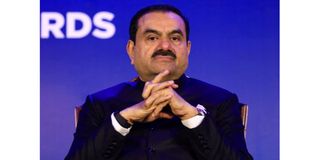
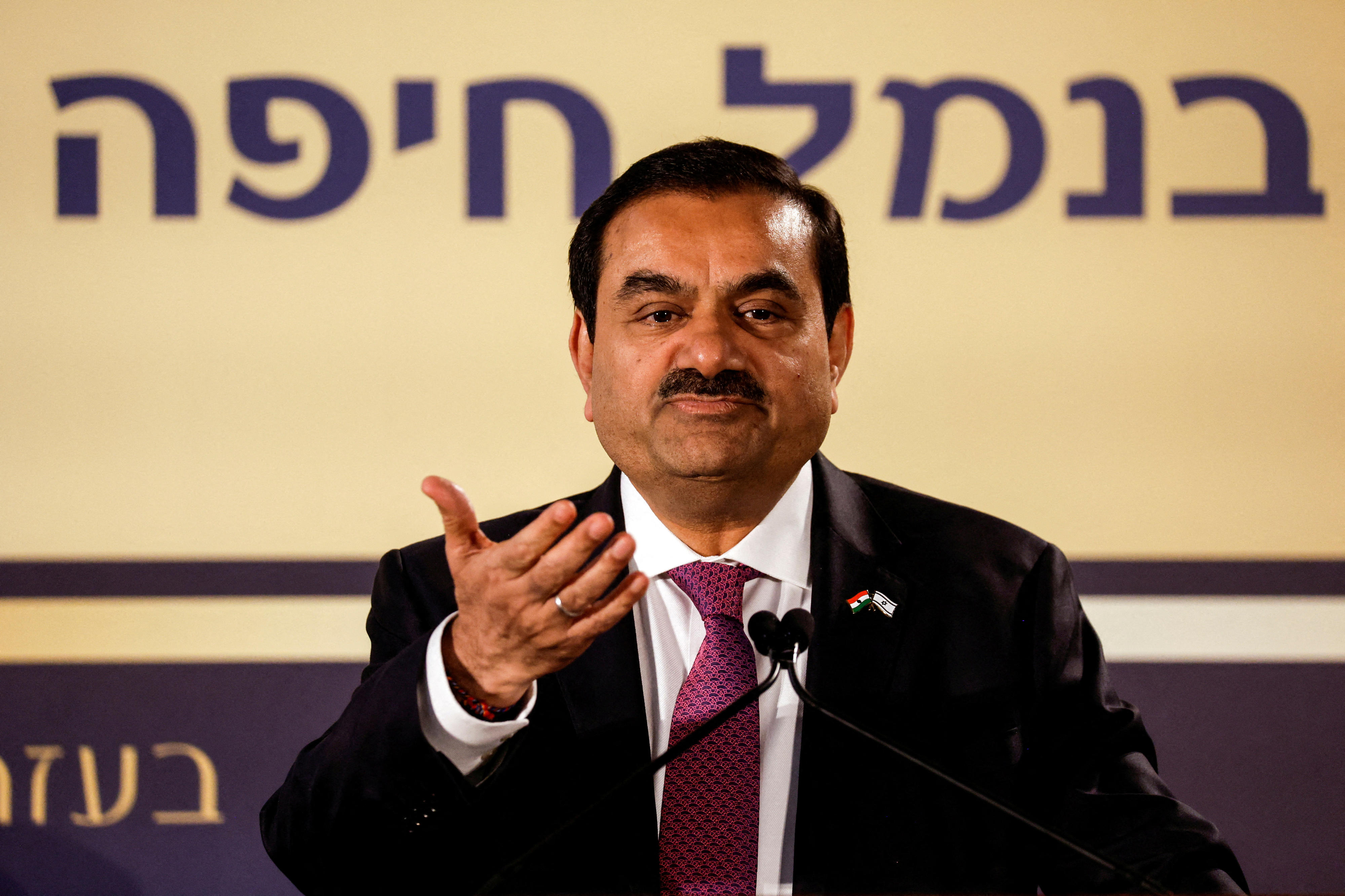
The US Justice Department is close to dropping criminal fraud charges against Gautam Adani, an Indian billionaire who has promised to invest $10 billion in the US economy, according to two sources familiar with the matter.
Adani on Thursday resolved a related civil fraud lawsuit brought by the Securities and Exchange Commission (SEC) over an alleged scheme to bribe Indian government officials, subject to court approval.
Adani Group did not respond to a request for comment from Reuters on the report of the criminal charges being dropped. It has previously called the allegations "baseless."
Shares of Adani Group companies pared early gains and were mixed on Friday in Indian trading. Adani Enterprises, the flagship of the group, rose as much as 3.2 percent in pre-open deals before trimming those gains to 0.8 percent in morning trade.
Adani Green Energy fell 0.08 percent, Adani Energy Solutions dropped 1.26 percent. Adani Ports and Special Economic Zone Limited rose 1.64 percent.
The possible dismissal of the criminal charges comes after Adani's lawyer, Robert Giuffra, who is also a personal attorney of U.S. President Donald Trump, told Justice Department officials in a presentation last month that Adani could not make its investment while the case was proceeding, one of the sources said.
Adani had publicly promised to invest the $10 billion and create 15,000 jobs in the U.S. after Trump's victory in the 2024 election.
Giuffra spent the bulk of his 100-page presentation arguing the case was weak because it did not have proper jurisdiction and lacked evidence, said the source, who spoke on condition of anonymity. Giuffra made a similar argument in court filings in the parallel SEC case last month.
Some prosecutors made clear that the $10 billion investment would not affect the case, one of the sources said. It's unclear if others saw it differently.
The Justice Department did not immediately respond to a request for comment.
It is the latest example of Trump's Justice Department seeking to abandon a high-profile criminal case brought by federal prosecutors during the tenure of his Democratic predecessor, Joe Biden.
Federal prosecutors had charged Adani in November 2024 over an alleged scheme in which they said he agreed to pay about $265 million in bribes to Indian government officials so his company could win approval to develop India's largest solar power plant.
Adani and his alleged co-conspirators raised more than $3 billion in loans and bonds by hiding their corruption from lenders and investors, prosecutors said. The Adani Group has consistently denied any wrongdoing.
Related civil fraud case resolved
Adani also faced a related SEC civil fraud lawsuit, which the securities regulator settled on Thursday subject to court approval, court records showed. Sagar Adani, his nephew, was also facing the SEC civil claims.
Adani and his nephew would pay civil penalties of $18 million, though neither would admit nor deny any wrongdoing, the court records showed.
Adani Green Energy (ADNA.NS), opens new tab said in a statement the two men and the SEC had filed with a New York court for the entry of a final judgement, which was now being awaited.
The Adanis' lawyers last month said their clients disputed there was any credible evidence supporting the bribery scheme alleged by the SEC. They also called the SEC claims "impermissibly extraterritorial," and said the bonds were never traded on a US exchange.
While the dropping of charges in the US would remove a major overhang from the Adani Group, Indian regulators are yet to close or rule on at least nine allegations that Adani Group and its offshore funds broke securities regulations, according to two sources with direct knowledge of the matter. The sources spoke on condition of anonymity as they were not permitted to speak to media.
The Securities and Exchange Board of India (SEBI) declined to comment.
Last year, SEBI dismissed three allegations against Adani and senior executives accused of stock manipulation, insider trading and not disclosing related party transactions. The claims had been made by U.S. short-seller Hindenburg Research.