Whither agriculture? Paradox of TZ industrialisation agenda
What you need to know:
The company says it had plans to establish a coconut processing plant locally three years ago, but the plans had to be abandoned after a thorough survey indicated that there was no enough raw materials to support a processing plant. “Bakhresa Food Products Ltd does not process coconuts locally at the moment but imports from Indonesia,” a Bakhresa Group Company (BGC) corporate affairs director, Mr Hussein Sufian says.
Dar es Salaam. The popular Azam UHT Coconut Cream is manufactured in Indonesia and imported into the country by the Bakhresa Food Products.
The company says it had plans to establish a coconut processing plant locally three years ago, but the plans had to be abandoned after a thorough survey indicated that there was no enough raw materials to support a processing plant. “Bakhresa Food Products Ltd does not process coconuts locally at the moment but imports from Indonesia,” a Bakhresa Group Company (BGC) corporate affairs director, Mr Hussein Sufian says.
The company will continue to import the product until such time when locally produced raw materials can satisfying industrial needs, he adds. The market potential the processed coconut cream known in the local parlance as ‘tui’ has for ages widely used as part of the recipes in most homes in both urban and rural areas in the country.
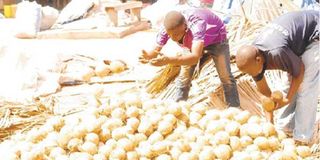
What is more interesting is that Tanzania is Africa’s largest coconut grower with an estimated 25 million coconut palm trees planted countrywide on approximately 265 000 hectares, producing 875 million coconuts annually.
It supports the livelihoods of about 12 million people living in coastal belt of Tanzania (Mtwara, Lindi, Kibaha, Mafia, Bagamoyo and Dar es Salaam) and Zanzibar islands, which is estimated at 26.6 per cent of the population in the country. Sufian adds that industries can’t find enough raw materials for coconut ‘tui’ processing because the demand for the unprocessed coconuts for other uses among Tanzanians is higher, which has sent the price of raw coconut up.
Among uses of raw coconut includes consumption of the fresh nuts (madafu) and industrial production of coconut oil.
However, experts say the low supply is because of inadequate farming of the crop. “In Tanzania, yield is low when compared to major coconut growing countries in the world due to lack of adequate resources to invest in technologies that would improve its production,” says Ms Neema Abdulla Khalfan, an agriculture expert who has conducted research on the crop.
Paradox
Analysts argue that the story of Azam Coconut Cream is an indicative of the paradox in the Tanzanian industrialisation agenda. Agro-processing has been regarded by experts as the natural initiation route into industrialisation for less developed countries like Tanzania.
But, while improved agricultural production served to, and even helped, spur industrialisation in the West with the resultant linkages between the two increasing farmers’ incomes, in Tanzania the agriculture sector has remained dilapidated. And efforts to stimulate its development has not yielded successful results despite serious, at times successful, past efforts to industrialize. However, the Azam Coconut Cream story shows that it is possible for farmers to be left out of the industrialisation bandwagon, analysts say.
Views from farmers
Farmers who spoke to The Citizen recently from the coconut farming zone of Kisiju in Mkuranga District, Coast Region painted a picture of a crop in decline. Thabit Shaban Sege, 62, who owns eight hectares of coconut trees has engaged in coconut farming for almost 50 years at Mavunja village.
“My family had over 1,000 coconut trees in the 1970s and we would harvest over about 40 to 70 nuts per tree, but both the number of palm trees and the yield have been decreasing over the years,” he said.
“We later apportioned the farm among members of the family and Mr Thabit received six hectares with around 400 coconut trees in 1999. Only 60 trees have remained. “Most of the trees died from an unknown diseases, infertile land and drought,” he explains. At best, one coconut plant can produce up to 100 nuts per year, but for the case of Mr Thabit, he gets only between 20-35 nuts per tree annually.
Abdullah Msati, 37, a resident of Kisiju also blamed inadequate rainfalls as a reason for low yield. “I planted new coconut palm trees a few years ago but they die of drought. I can’t even think of irrigation because I lack resources,” he laments.
He wishes the government provided some kind of assistance to farmers like him particularly in the form of modern seeds that are not prone to disease and can withstand drought. Kassim Hassan, 49, from Kisiju planted 875 coconut palm trees in the 1980s, but they died and he has only 150 trees left. “We have never seen an extension officer in this area. We have never received any farming inputs like pesticides, fertilizers, modern seeds. We are like orphans,” he said, adding that markets for nuts was also a problem. Most of their customers are middle-men who buy coconuts at low prices and sell them at a profit outside the village.
Mavunja village chairperson Saidi Mkopi does not deny Mr Hassan’s claims. He says the government’s current focus is on supporting cashew nut farming and not coconut farming. “The village government has built a collection centre for cashew nuts, but not for coconuts. Farming inputs for cashew nuts are also available,” he notes.
However, he admits that the number of people who engage in coconut farming in Mavunja is bigger than the number of cashew nut farmers. “In my view coconut farming should be revived because it pays more than cashew nuts. The coconut farmers harvest four times in a year compared to only once for cashew nuts,” he says. The lack of market, drought and absence of local processing factories discourage the coconut farmers.