CAG: 41 percent of public institutions operating at a loss as inefficiencies persist

President Samia Suluhu Hassan, receives the 2024/25 financial year report from the Controller and Auditor General (CAG), Charles Kichere, at State House on March 30, 2026. PHOTO | STATE HOUSE

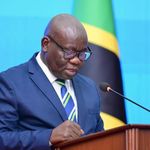
Dar es Salaam. The Controller and Auditor General (CAG), Mr Charles Kichere, has revealed that 22 out of 54 public institutions, equivalent to 41 percent, continue to operate at a loss due to unproductive investments, high operating costs, and weak internal control systems.

Presenting the audit report for the 2024/25 financial year in Parliament on Friday, April 10, 2026, the CAG said the situation is also driven by the institutions’ limited capacity to generate internal revenue and their heavy reliance on government subsidies, a trend that threatens long-term financial sustainability.

Data show an increase in loss-making institutions from 37 percent (19 out of 52) in 2023/24 to 41 percent (22 out of 54) in 2024/25, with total losses reaching Sh307.1 billion.

“The main reasons for the continued rise in these losses are poor performance, low returns on investment, and weak expenditure controls,” he said.

The report highlights several institutions leading in losses, including Tanzania Railways Corporation (TRC), Air Tanzania Company Limited, UDART, Mkulazi, National Ranching Company (NARCO), Tanzania Biotech Products Limited, Tanzania Geothermal Development Company (TGDC), TTCL Pesa, Keko Pharmaceutical Industries, Tanapa Investment, STAMIGOLD, and the University of Dar es Salaam Computing Centre (UCC).

According to the report, Air Tanzania recorded the highest loss at Sh191.19 billion, up from Sh91.79 billion the previous year, despite receiving a subsidy of Sh114 billion.

“TRC also continued to face efficiency challenges, while UDART recorded a loss of Sh15.78 billion. Freight volumes on the Central Railway Line declined from 302,714 tonnes to 246,824 tonnes, reducing revenue for the railway corporation,” the document reads in part.

The report further notes that government subsidies increased significantly from Sh29.08 billion to Sh137 billion, but without delivering direct efficiency gains.

The CAG explained that the reduction in total losses from Sh412.31 billion to Sh307.10 billion was largely due to operational subsidies rather than improved performance.

Additionally, the government invested Sh159.60 billion through development grants, but the CAG warned that such dependence has become a recurring burden instead of a sustainable solution.

The report also shows that 49 institutions have liquidity ratios ranging between 0.00 and 0.98, indicating an inability to meet short-term obligations.

Sixteen non-commercial public entities have continued operating under financial deficits for more than a year.

Meanwhile, wasteful expenditure in 16 institutions stood at Sh117.62 billion, a 68 percent decrease compared to the previous year.

However, irregular expenditure rose to Sh8.56 billion, involving payments that did not comply with laws, contracts, and accounting standards.

For Air Tanzania, the challenges were linked to high aircraft maintenance costs, salaries, leasing expenses, low passenger volumes on some routes, and stiff competition in the international market.

The CAG warned that without meaningful efficiency reforms, public institutions will continue to burden the government and increase the risk of economic instability.

To address the situation, he recommended fast-tracking the development and implementation of risk management systems and anti-fraud policies.

He also advised the establishment of risk registers to identify, monitor, and mitigate risks, alongside conducting regular assessments and reporting to internal boards of directors to ensure accountability and strengthen the performance of public institutions.