Article 143 of the Constitution of the United Republic of Tanzania, establishes the CAG, outlining its responsibilities and institutional mandate.
The Public Finance Act, Section 10, directs that the CAG works on behalf of Parliament, meaning audits are conducted for Parliament’s oversight.
Once the CAG completes an audit, the report is submitted to the President, who tables it in Parliament.
Parliament’s role is to scrutinise the report, question discrepancies, and act accordingly.
While the CAG audits all government accounts, Parliament oversees public sector management.
Thus, the CAG exists to support Parliament in auditing government spending.
Parliament itself does not audit but relies on the CAG’s work to hold officials accountable.
Section 11 of the Public Finance Act 2008 empowers the CAG to summon any government officer and question them on fund usage.
These powers ensure that, when applied effectively, corruption cannot thrive.
Both the CAG and Parliament operate with budgets to maintain efficiency.
Rather than blaming the CAG for perceived underperformance, Parliament must leverage audit reports to hold government accountable.
Historically, during President Jakaya Kikwete’s second term, CAG reports carried weight, and parliamentary committees held officials to account.
Ministers lost their posts when irregularities were exposed.
Historical accountability
In 2012, Ministers Mustafa Mkulo (Finance), Cyril Chami (Industry and Trade), Haji Mponda (Health), Omar Nundu (Transport), and William Ngeleja (Energy and Minerals) resigned following CAG reports, alongside two deputy ministers, Lucy Nkya (Health) and Athuman Mfutakamba (Transport).
Parliamentary committees—PAC (Central Government), LAAC (Local Government), and POAC (Local Authorities)—analysed the reports and presented recommendations, which full Parliament acted upon.
Since the 11th Parliament, no CAG report has been ignored.
However, in December 2018, then CAG Prof Mussa Assad expressed frustration that Parliament was weak, noting that reports exposing irregularities often yielded no action.
For example, the 2016/2017 report revealed Sh1.5 trillion unaccounted for, with no explanation.
Speaker Zungu’s opportunity
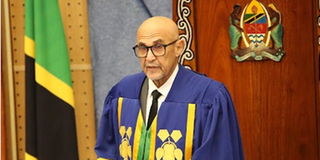
National Assembly Speaker, Mr Mussa Azzan Zungu, now has the chance to ensure CAG reports are acted upon.
An MP since 2005, Mr Zungu has witnessed parliamentary accountability in cases such as the Richmond scandal (2007–2008), Operation Tokomeza Ujangili (2013), and Tegeta Escrow scandal (2014).
He brings extensive experience: Chair of parliamentary sessions (2010–2015 and 2015–2020), Deputy Speaker (2021–2025), and now Speaker.
He is well-positioned to restore Parliament’s authority. Issues like the Arusha Stadium, where construction costs of Sh187 billion contrasted with a contract signed at Sh338 billion, require parliamentary intervention.
Citizens will welcome decisive action.
CCM’s role
With 98 percent of MPs belonging to CCM, it is effectively a CCM Parliament.
The party must ensure its members act to safeguard public assets and honour campaign promises.
CCM, through its secretariat, central committee, or NEC, must compel MPs to address CAG findings.
Reports ignored are a blemish on the party.
President Samia Suluhu Hassan, as CCM chair, need not wait until next year for the CAG to name offenders.
She could convene an NEC meeting this year to urge MPs to publicly discuss the report and hold those responsible accountable. Immediate action is possible.