Chadema proposes religious-led reconciliation as clerics point to lack of political will

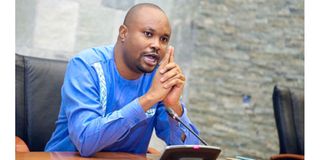
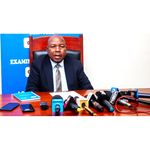
Chadema secretary-general, Mr John Mnyika

Dar es Salaam. As the opposition party Chadema proposes that religious leaders spearhead national reconciliation efforts, clerics have expressed readiness to mediate while warning of significant operational hurdles.

According to religious leaders, the primary obstacles to a successful outcome are a lack of political will among the conflicting parties, an absence of readiness to engage in genuine dialogue, and an unwillingness by political actors to compromise on held positions.

Political analysts argue that the prerequisite for any credible mediation is rebuilding trust between the government and religious bodies, following recent public friction that exposed mutual suspicion.

The developments follow a meeting held by President Samia Suluhu Hassan with leaders of 18 registered political parties to discuss national matters, including political reconciliation and the revival of the New Constitution writing process.

Chadema stance

Speaking on Monday, August 3, 2026, at the party’s headquarters in Mikocheni, Dar es Salaam, Chadema secretary-general, Mr John Mnyika, said while the party maintains its core political stance, it believes respected religious leaders possess the moral authority required to steer national healing.

"Those previously tasked with reconciliation have failed because while preaching peace, state organs and political opponents continue hostilities. We must read the signs of the times. As things stand, the nation requires healing and collective prayers led by Muslim and Christian clerics," said Mr Mnyika.

Mr Mnyika argued that religious leaders command greater public trust and societal acceptance than state-appointed committees currently handling reconciliation talks.

"Religious leaders should sit together, pray for the nation, call for repentance, and guide the country through this healing process," he said.

He added that trusted domestic spiritual leaders could act as internal reconcilers alongside international mediators to resolve the country's ongoing political impasse.

"Spiritual guidance is needed now more than ever. We thank the clerics who have spoken out and request that they continue standing against injustice with their prophetic voices," he stated, adding that the political environment affects the entire nation, not just Chadema and the ruling CCM.

Clerics' perspective

The National Muslim Council of Tanzania (Bakwata) executive council chairman, Sheikh Khamis Mataka, said religious leaders stand ready to advise and reconcile conflicting groups, provided the political actors demonstrate genuine commitment.

"For reconciliation to succeed, the primary parties involved must demonstrate readiness to be reconciled. If they show true political will, religious leaders are prepared to fulfill that duty," noted Sheikh Mataka.

Addressing concerns over political bias among certain clerics, Sheikh Mataka suggested using universally respected spiritual leaders to build consensus and maintain public peace.

The Christian Council of Tanzania (CCT) secretary-general, Reverend Moses Makunzo, echoed the sentiment, noting that national stability requires all stakeholders to compromise.

"Remember that religious leaders are also human and hold differing views. The fundamental question is whether those in power, political leaders, and their parties are willing to relinquish entrenched positions to sit at a common dialogue table," stated Rev Makunzo.

He emphasized that clerics rely on persuasion and dialogue, but their efforts remain constrained if political leaders refuse to listen to one another.

Expert analysis

A political science lecturer at the University of Dar es Salaam (UDSM), Prof George Kahangwa, welcomed the proposal to involve religious leaders but stressed that trust between the state and religious institutions must first be restored.

“A process of reconciliation between the government and religious leaders must precede broader national mediation, given recent public exchanges that signalled mutual mistrust,” observed Prof Kahangwa.

He noted that independent religious figures are better suited to mediate than retired political leaders, who are often perceived as loyal to their respective political parties.

“Utilising religious leaders is preferable to involving retired political figures who carry partisan baggage. A select group of prudent spiritual leaders with firm principles can execute this duty with high integrity,” he said, recommending the establishment of a formal reconciliation commission with a neutral secretariat.

Concurring with the analysis, the Legal and Human Rights Centre (LHRC) executive director, Ms Anna Henga, noted that while citizens maintain faith in spiritual leaders, identifying universally trusted figures remains a challenge.

“The key question is how we select trusted religious leaders for such a sensitive task. Priority should be given to clerics who have consistently defended truth and justice without fear or favour,” said Ms Henga, adding that some religious figures have compromised their standing in recent years by failing to address societal injustices.