From 50 to 2,000 vehicles: Kibaha plant expansion powers youth employment
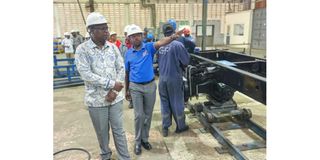
FACTORY TOUR: Deputy Minister for Industry and Trade Denis Londo (left) inspects vehicle assembly operations during a tour of the GFA Plant in Kibaha, Coast Region, on August 4, 2026. PHOTO | SANJITO MSAFIRI
Kibaha. Approximately 200 Tanzanian youths have acquired specialised vehicle assembly skills and secured employment at the GFA Plant in Kibaha, Coast Region, in a major boost to local job creation and skills development.
The milestone follows a successful technology and skills transfer scheme from foreign experts to local technicians, with Tanzanians now comprising 99 percent of the plant's total workforce.
Speaking on Tuesday, August 4, 2026, during a tour by the Deputy Minister for Industry and Trade, Mr Denis Londo, GFA plant manager, Mr Ezra Merei, said foreign technology transfer has substantially increased output while empowering domestic talent.
"We currently employ 200 workers, 99 percent of whom are Tanzanians. Through knowledge transfer from foreign experts, our local youths have gained the expertise needed to manage core technical operations independently," said Mr Merei.
He noted that annual assembly capacity at the plant has expanded dramatically from just 50 vehicles to 2,000 units, significantly boosting corporate revenue, government tax remittances, and employment opportunities.
Commending the plant's management, Mr Londo urged industrial investors nationwide to source more raw materials and components locally to deepen value addition and drive economic growth.
"Increasing the use of local raw materials creates more jobs for Tanzanians, enhances household incomes, and strengthens the national economy. The government remains committed to improving the investment climate so that industries continue to serve as pillars of national development," said Mr Londo.
He emphasized that national industrial policy focuses on adding value to domestic resources, expanding sustainable employment, and generating broader economic opportunities for local communities.
Kibaha residents welcomed the factory expansion, noting its positive impact on youth employment and the local informal economy.
"Industrial growth in Kibaha has significantly reduced youth unemployment and street loitering. Many young people are now gainfully employed, which has improved household incomes," said resident Mr Alfa Seleman.
Another resident, Ms Ester Michael, added that the factory's expansion has boosted secondary businesses, including food vendors and transport operators catering to factory workers.
"Whenever a plant expands, the surrounding community benefits immensely. Employment grows, small businesses thrive, and the local economy expands," she said.